

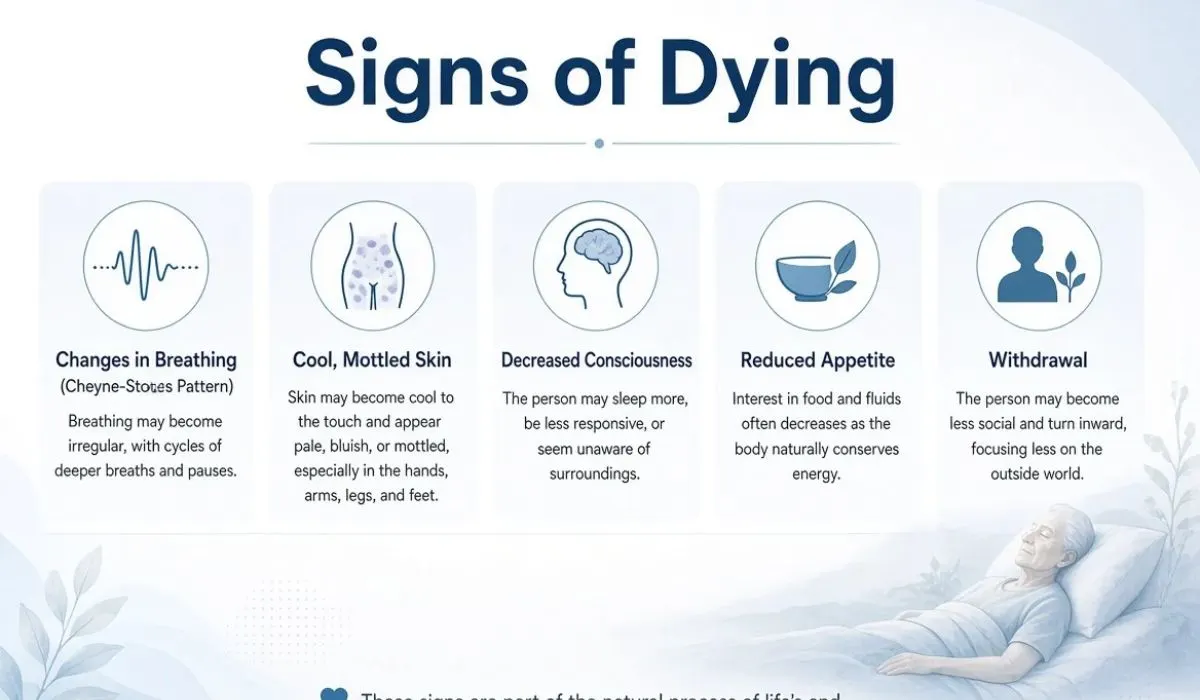
If you’re here, someone you love is probably getting close to the end, and you want to know what’s normal. The short version: more sleep, almost no appetite, breathing that changes, cold hands and feet, and a mind that drifts. All of that can happen as the body winds down, and most of it doesn’t hurt.
Table of Contents
It rarely happens all at once, either. A few weeks out, you might just see someone who’s tired in a way that rest doesn’t fix. They nap after breakfast, then nap again. Then the naps turn into most of the day, and when they do open their eyes, they’re back under in a few minutes. Families often tell hospice staff this is the part that scares them first, because it feels like they’re already leaving. Mostly it means the body is saving what little energy it has left.
Food goes next. Somebody who used to hover around the kitchen suddenly pushes the plate away. Then even water gets hard. I know how awful that feels when feeding people is how you’ve always shown love. But the National Institute on Aging says the body stops needing food at this stage, and forcing it can cause choking or nausea. Ice chips are fine. So is a wet sponge on the lips, which honestly might be the kindest thing you can do.
Breathing is the one that throws people. In the last days it can get fast, then slow, then stop for ten or fifteen seconds before it picks back up. Nurses call that Cheyne-Stokes breathing. You may also hear a wet rattle in the throat. It’s loud, and it sounds terrible, but hospice teams say the person usually isn’t aware of it. Turning them onto their side often quiets it down.
Then there’s the skin. Hands and feet go cool, sometimes the knees too, and you may see purple blotches, almost like a marble pattern. Blood is moving toward the organs that matter most, so the edges get less. A light blanket is enough. Piling on heavy covers just makes them uncomfortable.
The mental side surprises people more than the physical side. Your dad might call out to his brother who died years ago, or your grandmother might fuss with the sheets like she’s folding laundry. Some people get restless, and others go quiet and turn inward. Don’t argue or correct them. Just stay close, keep your voice low, and keep the lights soft. Hearing is believed to be one of the last senses to go, so keep talking even when nobody answers. Say the thank-yous. Say “it’s okay to rest” if that feels true.
You don’t have to handle this alone, and you shouldn’t try. If there’s sudden pain, breathing that looks like a struggle, or agitation that won’t settle, call the hospice nurse at any hour. They can change comfort medication over the phone. And if hospice isn’t involved yet, ask the doctor about palliative care. The World Health Organization describes it as care aimed at comfort and quality of life, and it doesn’t have to wait until the very end.
Look after yourself a little too. Eat something. Step outside for ten minutes. Let a friend take a shift. Nobody keeps vigil well on no sleep.
Quick answers
How long do the signs last?
It really depends. Sleepiness and poor appetite can show up weeks ahead, while mottled skin and irregular breathing usually mean days or hours.
Is it normal for a dying person to stop eating and drinking?
Yes, very. It’s one of the most common signs.
Can they still hear me?
Probably, until close to the end. Many hospice professionals encourage families to keep talking.
Does the rattling breath hurt them?
Usually not. It’s harder on the people listening than on the person themselves.
Who do I call if I’m not sure what’s normal?
The hospice nurse or the doctor. Calling early is never a bother to them.