
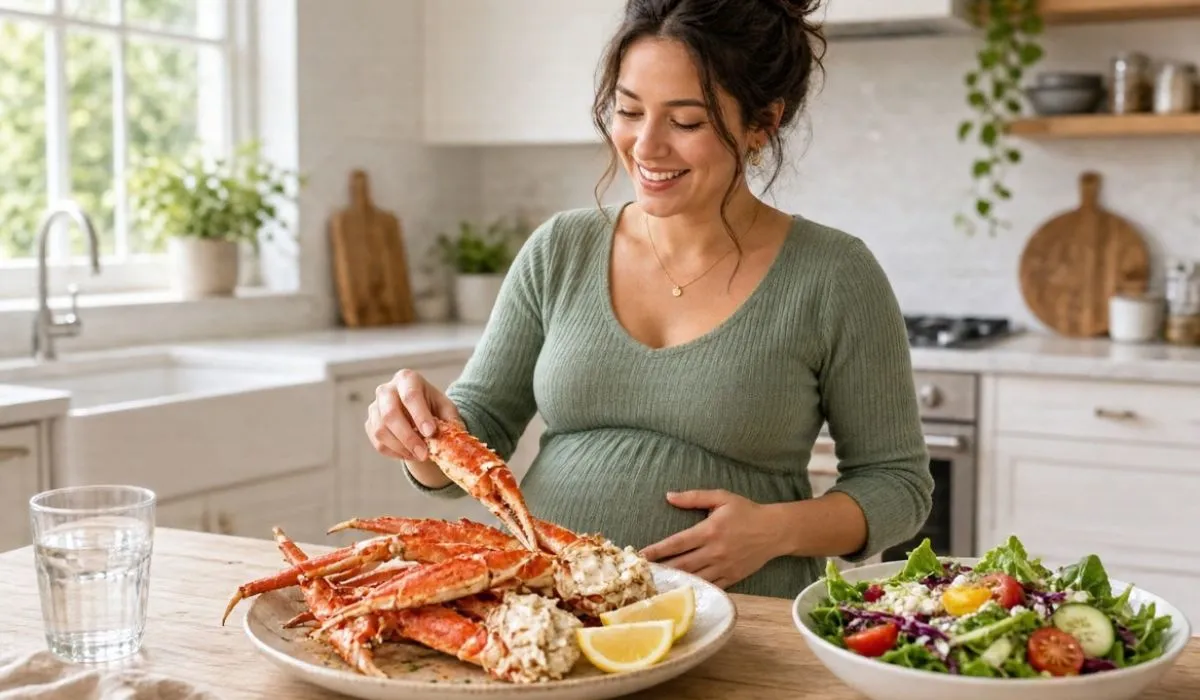
So you’re standing at the seafood counter, or maybe scrolling a takeout menu, and that craving for crab legs just will not quit. The good news: yes, you can eat crab during pregnancy. As long as it’s cooked through and you’re not going overboard on portions, crab is actually one of the more pregnancy-friendly seafood choices out there. So let that craving off the hook.
Table of Contents
That said, “safe” doesn’t mean “eat it however and whenever you want.” Let’s talk through what’s actually going on here, because a lot of what you’ve probably heard about seafood and pregnancy is more fear than fact.
Why crab gets lumped in with the “dangerous” fish (when it really shouldn’t be)
The second most people hear “seafood” and “pregnancy” in the same sentence, their brain jumps straight to mercury. And honestly, that instinct isn’t wrong to have — mercury can genuinely affect a baby’s developing brain and nervous system, which is exactly why pregnancy guidelines get so cautious around fish in general.
But here’s the thing: crab isn’t one of the offenders. The FDA and EPA actually put crab in their “best choices” category for seafood during pregnancy, right up there with salmon, shrimp, and sardines. It’s nowhere near the mercury levels you’d find in something like swordfish or king mackerel. So if crab has been sitting on your mental “probably not” list just out of habit rather than any real reason, this might be your sign to take it off.
What crab is actually doing for you and your baby
Beyond just being “not dangerous,” crab genuinely earns its place on your plate. It’s loaded with lean protein, and your body is asking for more of that as your baby grows. You’re also getting a nice dose of vitamin B12, zinc, and selenium — nutrients that support your baby’s nervous system while also helping with your own energy levels, which, let’s be real, could probably use the help right about now.
There’s a bit of omega-3 in there too, which plays a role in your baby’s brain and eye development. It’s not quite the omega-3 powerhouse that salmon is, but it still adds to that overall intake doctors like to see during pregnancy.
Okay, but how much is actually fine?
This is usually the part people just want a straight answer to, so here it is: most experts, including guidance from the American Pregnancy Association, point to about 8 to 12 ounces of low-mercury seafood a week. Think two to three servings, roughly palm-sized each.
Translation? A bowl of crab bisque one evening and some crab legs later in the week is totally reasonable. Crab for every single meal, every day, probably isn’t the move — but honestly, who’s even craving that much crab?
The one rule that actually matters: cook it all the way through
Here’s where the real risk lives, and it’s not really about the crab itself — it’s about how it’s prepared. Raw or undercooked crab can carry bacteria like Vibrio vulnificus, along with other bugs that cause food poisoning. Your immune system is already working overtime during pregnancy, so a bout of food poisoning can hit you (and your baby) harder than it normally would.
What that means in practice: skip the raw crab, skip crab sushi rolls made with anything uncooked, and make sure whatever you’re eating has been heated all the way through — you’re looking for an internal temperature of at least 145°F. If you’re grabbing pre-cooked crab from the grocery store or a seafood counter, it’s worth reheating it yourself just so you know exactly how it’s been handled. And a couple of everyday habits go a long way too: keep fresh or live crab refrigerated below 40°F (or packed well in ice), and use separate cutting boards for raw versus cooked seafood so nothing cross-contaminates.
What about imitation crab?
Quick note on this one, since it shows up in a lot of sushi rolls and salads: imitation crab, or surimi, is actually made mostly from white fish rather than real crab, and it’s generally low in mercury and pre-cooked, so it’s considered safe during pregnancy. It does tend to run higher in sodium and lower in actual nutrients than the real thing, though, so treat it more as an occasional stand-in than something to build your diet around.
A few things people commonly wonder about
If you’re in your first trimester and wondering whether crab legs are off-limits — they’re not. As long as they’re fully cooked, crab is considered fine throughout every trimester. Canned or pre-cooked crab meat is safe too, so long as it’s been stored properly and reheated before you eat it.
If you’ve got a shellfish allergy, pregnancy doesn’t change that equation — you’ll want to steer clear just like you normally would, and it’s worth chatting with your doctor about protein alternatives that work for you. And if you’re wondering whether crab or fish is the “better” choice, it’s less about better and more about different: fatty fish like salmon bring more omega-3s to the table, while crab shines for its protein, zinc, and B12. Having both in the mix over time is a solid approach.
As always, it never hurts to mention your diet to your OB-GYN or midwife, especially if you’ve got allergies or any existing health conditions they should know about.
FAQs: Crab and Pregnancy
Can I eat crab legs in my first trimester?
Yep, no need to wait. As long as they’re cooked all the way through, crab legs are fine at any stage of pregnancy, first trimester included.
Is canned or store-bought pre-cooked crab safe?
It is, as long as it’s been stored at a safe temperature and you reheat it properly before eating — think steaming hot, not lukewarm.
What about imitation crab, like in a California roll?
Generally safe, since it’s pre-cooked and made mostly from white fish rather than real crab. Just don’t expect the same nutrition punch as the real thing, and watch the sodium.
Will eating crab give me or my baby a mercury problem?
Very unlikely. Crab is one of the lowest-mercury seafoods you can eat, which is exactly why it’s on the FDA and EPA’s “best choices” list. The bigger thing to watch for is undercooked crab, not mercury.
I have a shellfish allergy — does pregnancy change anything?
No, unfortunately. If crab has always been a no for you, it still is. Talk to your doctor about other protein sources that’ll cover the same nutritional ground.
How much crab can I actually have in a week?
Somewhere around 8 to 12 ounces, or roughly two to three palm-sized servings. Plenty of room for a couple of good crab meals without going overboard.