
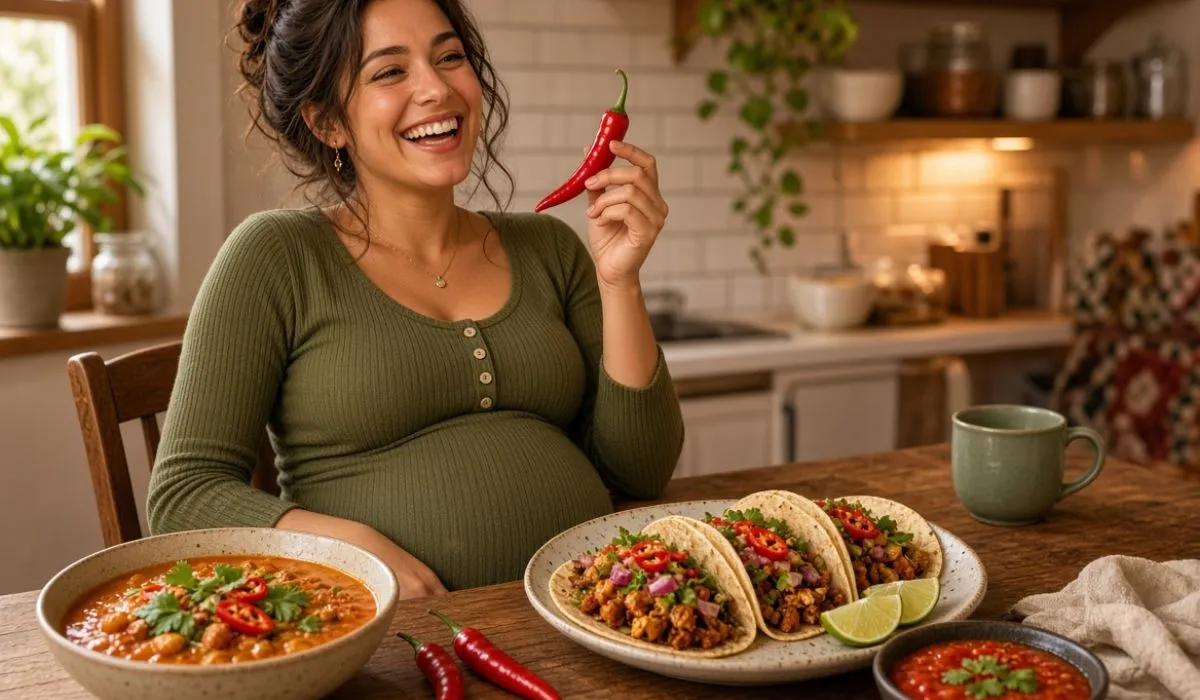
I still remember standing in my kitchen at eleven weeks pregnant, eating jalapeños straight out of the jar like they were candy, thinking, “what is happening to me?” Six months earlier I couldn’t handle a mild salsa. Now I was one bite away from asking for the ghost pepper sauce at a restaurant. If you’re going through something similar right now, first, hi, welcome, you’re not broken. Second, you’re definitely not alone.
Table of Contents
Turns out spicy cravings in pregnancy are incredibly common, and for most of us, completely harmless. It’s mostly your hormones messing with your taste buds and your body asking for a bit more comfort, a bit more flavor, a bit more anything. Unless heartburn or gestational diabetes is already an issue for you, there’s genuinely no reason to feel weird about reaching for the hot sauce again.
So let’s actually dig into it, why this happens, whether it’s safe, and how to keep enjoying it without paying for it later that night.
Why does this even happen?
Honestly, nobody has this fully figured out, cravings in general are still a bit of a mystery even to researchers. But a few explanations tend to hold up.
Your hormones are rewiring your sense of taste. Estrogen and progesterone shift what food tastes like, sometimes so dramatically that stuff you used to love now tastes like nothing. So your brain starts chasing something bolder to compensate, and spice fits the bill perfectly. Some of us also find spicy food genuinely helps with nausea or that stuffy, can’t-breathe-through-your-nose feeling pregnancy loves handing out, thanks to all the extra blood flow happening up there. And sometimes, it’s just comfort. A hot, flavorful bowl of something can feel like a hug on a day when your whole body feels unfamiliar.
You’ve probably also heard someone’s mom swear spicy food can send you into labor. Cute theory, not much science behind it. A few women do get mild contractions after a really fiery meal, but that’s your digestion reacting, not your uterus getting any kind of signal.
Okay but is it actually safe?
For most healthy pregnancies, yes, truly, go enjoy your curry. Spice on its own doesn’t hurt your baby, doesn’t cause birth defects, doesn’t trigger early labor. Doctors generally agree pregnant women can keep eating what they loved before pregnancy, spicy food very much included, unless there’s a specific reason to hold back.
Here’s the part worth knowing though. Pregnancy already loosens the muscle between your stomach and esophagus, which is exactly why heartburn shows up like an uninvited guest who just moves in, especially later on. Add chili, hot sauce, or a heavily spiced dish on top of that, and some of us find our reflux gets noticeably worse, even if spice never bothered us before.
And if gestational diabetes is part of your story, it’s usually not the spice causing trouble. It’s what tends to ride along with it, refined carbs, sugary sauces, fried sides, quietly messing with blood sugar while the chili takes all the blame.
When it’s worth paying closer attention
Most of the time, none of this really matters. But keep an eye on things if heartburn or GERD is already a regular thing for you, if spicy meals leave you feeling worse instead of better, if cramping or diarrhea shows up afterward, or if you’re already managing something like IBS. None of that means giving up spice completely, it just means being a little more thoughtful about how much and when.
How to keep enjoying it without the regret
You really don’t have to give this up. A few small tweaks make a real difference. Try dialing the heat down just a bit instead of cutting it out entirely, so you still get the flavor without your stomach staging a full protest. Eat spicy meals earlier in the day instead of right before bed, since lying down soon after a heavy, spicy dinner is basically an invitation for heartburn at 3am. Keep milk or yogurt around, the casein in dairy helps break down the compound that makes peppers burn, so it actually takes the edge off. Slow down, eat smaller portions, a stuffed stomach plus spice is a reliable recipe for reflux. And if one specific sauce always seems to be the troublemaker, just retire that one thing instead of giving up spicy food altogether.
A couple of things to watch out for
A lot of us panic and assume any discomfort after a spicy meal means something’s wrong with the baby. Take a breath, that’s almost always just digestion being dramatic, not your little one. Eating something very spicy on an empty stomach is another common slip, it makes acid irritation way more likely. And then there’s the opposite mistake, some of us cut spice out entirely out of pure fear, even when our bodies have never actually reacted badly to it.
Questions you’re probably sitting with
Can spicy food cause a miscarriage?
No. There’s zero scientific evidence linking spicy food to miscarriage at any stage of pregnancy. You can let that one go.
Can eating spicy food actually induce labor?
Not really. It might stir up your digestion and cause mild contractions late in pregnancy, but it’s not triggering true labor, whatever family lore says.
Is it okay to crave spicy food every single day?
Pretty much, yes, as long as it’s not wrecking your digestion and it’s part of an otherwise balanced diet.
Why does spicy food suddenly taste different now?
Blame the hormones. Shifting estrogen and progesterone change how sensitive you are to taste and smell, so familiar foods can taste sharper, blander, or suddenly irresistible.
Should I avoid spice if I have gestational diabetes?
The spice itself is fine. It’s the carbs, sugar, and fried sides that tend to come along with it that deserve the side-eye.