

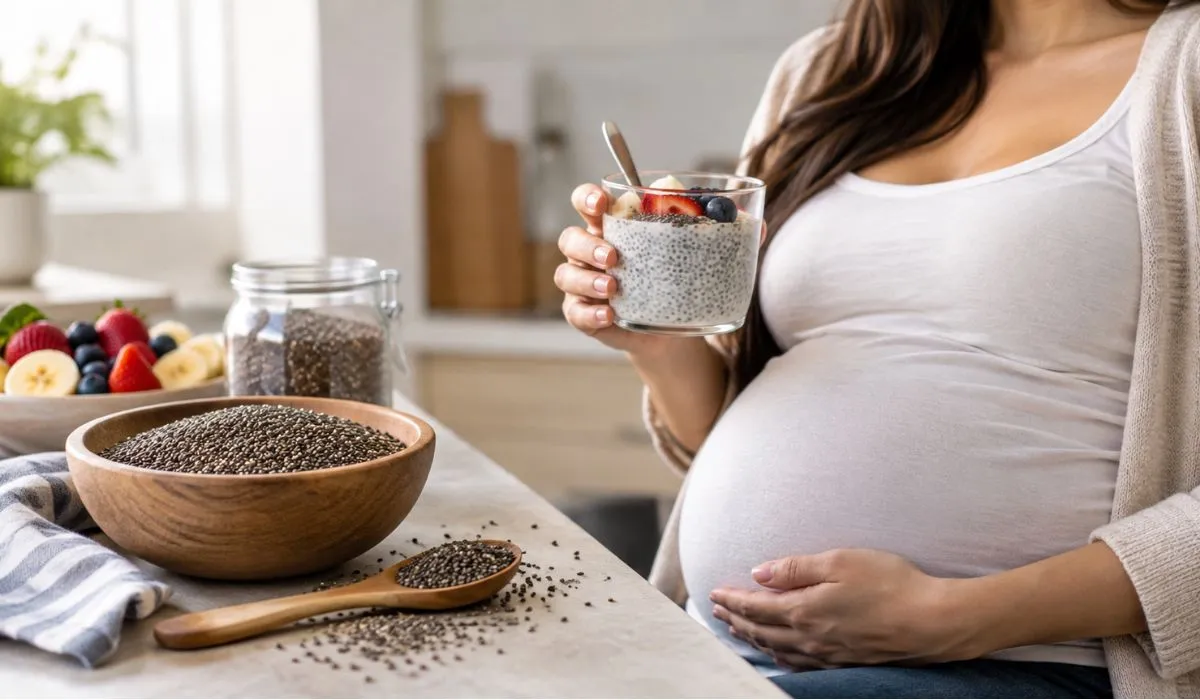
I’ll save you the suspense: yes, chia seeds are safe during pregnancy. You can stop squinting at the bag. A tablespoon or two a day is genuinely one of the easiest wins you can add to your routine right now — more fiber, more plant-based omega-3s, a little extra calcium, and almost zero effort. There’s just one small habit worth knowing before you dig in, so give me a minute.
Table of Contents
Pregnancy has a way of turning every single food into a question mark, doesn’t it? Sushi, deli meat, soft cheese… and now, apparently, chia seeds too. Fair enough — better to ask than to worry later. So let’s actually get into why so many people keep telling you to eat these little things, and the one thing to be careful about.
Why Chia Seeds Earn Their Hype in Pregnancy
They’re tiny — smaller than a sesame seed, if you’ve never really looked closely — but don’t let that fool you. Chia seeds carry a genuinely impressive amount of nutrition for their size: fiber, a bit of protein, calcium, magnesium, and ALA, a plant-based omega-3 fat. Your body takes that ALA and turns it into the same kind of “good fat” you’d normally get from fish oil.
That omega-3 piece matters more than people realize. Your baby’s brain and eyes are developing fast, and omega-3s help fuel that. The catch is that the richest omega-3 sources tend to be fish, and fish comes bundled with a whole mercury conversation that makes a lot of us second-guess our sushi order. Chia seeds sidestep that entirely. They’re not a substitute for your prenatal DHA or a good piece of salmon, but they’re a genuinely useful backup, especially if you’re vegetarian or just not really a fish-for-lunch kind of person.
Then there’s the fiber — and let’s be honest, most pregnant women need more of it than they’d like to admit. Hormones slow digestion down, and constipation is one of those pregnancy realities nobody quite warns you about until you’re in it. Chia seeds soak up liquid and turn into a soft, gel-like texture that adds bulk and helps things move along, usually more gently than a fiber pill from the pharmacy would.
On top of all that, you’re getting calcium and magnesium, which support your baby’s developing bones. And since chia is naturally gluten-free and fully plant-based, it fits into pretty much any way you like to eat.
The One Thing You Actually Need to Know
Here’s the part I’d want someone to just tell me straight, instead of burying it in a listicle: chia seeds can soak up to ten times their weight in liquid. Eat them dry — straight off a spoon, or sprinkled onto something without moisture — and then take a sip of water, and they can start swelling up before they’ve fully gone down. In rare cases, that’s led to real discomfort, even getting stuck in the throat.
Sounds alarming. It’s also incredibly easy to avoid. Let chia seeds sit in liquid for 10 to 15 minutes before eating, or just mix them straight into something already wet — yogurt, oatmeal, a smoothie, whatever’s in the fridge. Once they’ve turned soft and gel-like, you’re completely fine. Honestly, that one habit solves almost every worry people bring up about chia in pregnancy.
So, How Much Is Actually Okay?
Most pregnant women do just fine with 1 to 2 tablespoons a day. New to chia? Start with one tablespoon and see how your body handles it — pregnancy already brings enough bloating on its own without a sudden fiber overload joining the party.
One small note, if it applies to you: if you’re managing blood sugar with medication, chia’s fiber can change how your body absorbs glucose, which sometimes means your dosage needs a small tweak. Not a reason to skip chia — just a reason to mention it at your next appointment, especially if you’re dealing with gestational diabetes.
Easy Ways to Actually Eat the Stuff
No need to overhaul your meals for this one. Stir a tablespoon into your morning oatmeal, blend it into a smoothie, mix it into overnight yogurt, or let it sit in milk overnight with a little honey for a simple chia pudding. Not a fan of the texture? It disappears nicely into muffin or pancake batter — you’ll barely notice it’s there.
Quick Answers to What You’re Probably Wondering
Can chia seeds cause a miscarriage?
No. Nothing in the research ties normal food amounts of chia seeds to miscarriage or early labor.
Are chia seeds better than flaxseed during pregnancy?
Honestly, both are solid. Chia has the edge of being easy to eat whole, while flaxseed usually needs grinding to get the real benefit. Either one earns a spot in your kitchen.
Can I eat chia seeds in the first trimester?
Yes — they’re considered safe across all three trimesters.
Do chia seeds really help with pregnancy constipation?
For a lot of women, genuinely yes. The fiber and that gel-like texture can make a real difference, though drinking enough water matters just as much as the seeds themselves.