
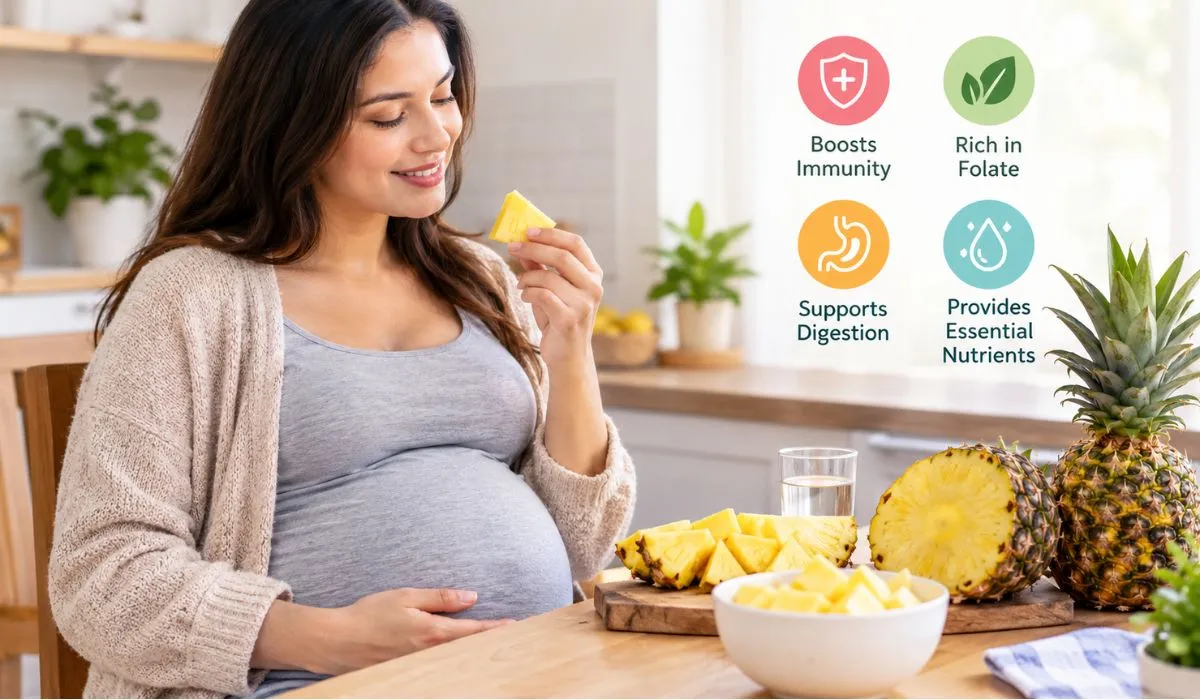
Here’s the honest answer: yes, eat the pineapple. Seriously. If someone’s been giving you grief about it, or you’ve been quietly avoiding it “just in case,” you can stop. It’s fine. It’s actually one of the better fruits you could be reaching for right now.
Table of Contents
I get why the worry exists, though. This is one of those pregnancy rumors that just never dies. So let’s actually sort out what’s true and what’s not.
Where This “Pineapple Is Dangerous” Idea Even Came From
You’ve heard it before, right? “Don’t eat too much pineapple, it can bring on labor.” Someone says it so seriously that you start second-guessing your fruit salad. But when you trace it back, the story is way less dramatic than the warning.
There’s an enzyme in pineapple called bromelain — most of it sits in that tough core nobody eats anyway. In a lab, scientists found that bromelain, when it’s isolated and given in a really concentrated dose, can soften the cervix. That’s the one true fact under this whole myth. The problem is nobody mentions the dose. To get that same effect from actually eating pineapple, you’d need to eat around seven to ten whole pineapples. In one go. Not a slice with lunch — seven to ten entire pineapples. That’s just not something anyone’s doing, so the “risk” isn’t really a risk at all when you’re talking about normal amounts of the fruit.
What Pineapple Is Actually Doing for You
Forget the myth for a second, because pineapple genuinely earns its place in a pregnancy diet.
It’s loaded with vitamin C — a single cup gets you most of what you need for the whole day. That’s not just about fighting off a cold, either. Vitamin C helps your body absorb iron better, and your iron needs go way up during pregnancy, so this is actually a nice little combo happening in one fruit.
It’s also one of the top natural sources of manganese, which helps with your baby’s bone and cartilage development. And the fiber — honestly, don’t skip past this one. Between hormones and iron supplements, a lot of pregnant women deal with constipation, and pineapple’s fiber can help keep things moving without needing to reach for a laxative or supplement.
It’s mostly water, too, which makes it an easy way to stay hydrated on days when you’re just sick of drinking plain water (we’ve all been there). And that bromelain people are so nervous about? In the small amount you actually get from eating the fruit, it can help with digestion and bloating rather than cause any trouble.
How Much Is Actually Okay to Eat
There’s no official limit you need to memorize, but a comfortable range is about one to two cups, a few times a week. One thing to keep in mind — pineapple is pretty acidic, so if you’re already dealing with heartburn (a classic second and third trimester thing), you might feel better eating it earlier in the day instead of right before bed.
A few small tips: go fresh over canned when you can, since canned pineapple is usually swimming in syrup. Pair it with yogurt or oats to make it more of an actual snack instead of just sugar. And skip bromelain supplements specifically — that’s a much more concentrated dose than the fruit, and not something to take without your doctor’s okay.
Myth vs. Fact
Myth: Pineapple can cause a miscarriage or trigger labor.
Fact: Eating the fruit itself, in normal amounts, is safe throughout pregnancy. The labor concern only applies to concentrated bromelain supplements, not the fruit you’d actually eat.
Quick Questions
Can I eat pineapple in the first trimester?
Yes, anytime during pregnancy is fine.
Is pineapple juice as good as the fruit?
Not really — juice usually has added sugar and loses the fiber, so fresh fruit is the better pick.
Will pineapple help bring on labor near my due date?
No solid evidence for that. It’s a myth that sounds convincing but doesn’t hold up.
Is canned pineapple safe?
Yes, just rinse off the syrup or choose one packed in juice.
What if my mouth tingles after eating it?
That can happen to anyone, pregnant or not — usually a mild sensitivity, worth a quick mention to your doctor.