

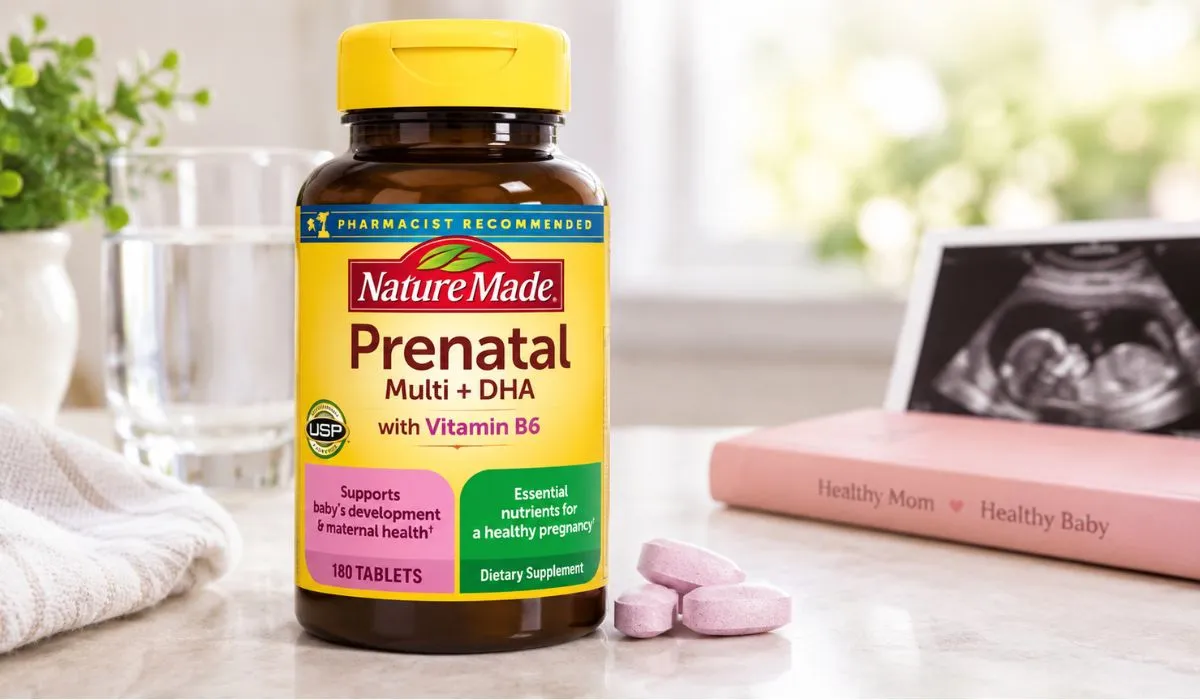
Nobody tells you that pregnancy turns you into someone who reads vitamin labels for fun in the checkout line. But here you are, and B6 keeps catching your eye. Good, because it should. If your mornings have stopped feeling like mornings and started feeling like something to just get through, this one nutrient might be doing more for you than you realize.
Table of Contents
Let’s talk it through like a friend would, not a textbook.
What This Vitamin Is Actually Doing for You
B6, or pyridoxine, sounds clinical but really isn’t complicated. It helps your body turn food into usable energy, which matters a lot when you’re growing a whole person from scratch. It also helps shape your baby’s brain and nervous system, and it’s tangled up in making serotonin and norepinephrine, the same chemicals behind your mood, and oddly enough, your nausea.
That nausea link is usually how B6 first gets noticed. ACOG and other maternal health groups point to research showing it can genuinely take the edge off nausea in early pregnancy. That’s a big reason doctors reach for it first, before anything stronger enters the picture.
It’s doing more than that too. B6 helps build healthy red blood cells alongside iron and folic acid, gives your immune system some backup, and helps keep blood sugar from swinging too hard. Quiet work. The kind nobody thinks to thank a vitamin for.
How Much Do You Actually Need?
About 1.9 mg a day, per the NIH, just a bit more than the 1.3 mg you’d need otherwise. Already taking a decent prenatal? You’re probably covered, no extra math required.
If nausea’s really got you down, some providers suggest a higher, separate dose, often alongside doxylamine, an antihistamine that pairs well with B6. Worth asking your OB about rather than guessing on your own, since even something this mild isn’t a “more is better” situation.
What to Look for on the Label
Not every prenatal treats B6 the same, so check instead of assuming. Look for something in the 1.9 to 25 mg range, listed as pyridoxine HCl or the more absorbable pyridoxal-5-phosphate, sometimes shortened to P5P. And B6 works best with company, paired with folic acid, iron, DHA, and vitamin D, since your body tends to use these as a team, not solo acts.
Still fighting nausea? Our guide on best prenatal vitamins for first trimester covers formulas picked for easier digestion.
A Few Things That Actually Help
Take it with food. One small habit, big payoff, for your stomach and for absorption. If B6 is your nausea tool specifically, splitting the dose morning and evening usually beats one big dose. And before layering a separate B6 supplement on top of your prenatal, check with your doctor first. It’s easier than you’d think to go over your intake without realizing it.
That’s one of the more common slip-ups, honestly, stacking supplements without tracking the total. The other? Quitting B6 the second nausea fades, when it’s still quietly supporting your baby well past those rough first weeks.
Questions Moms Ask a Lot
Does vitamin B6 really help with morning sickness?
It really does, for a lot of women. Usually the first thing doctors suggest before anything prescription-based.
Can I take extra B6 on top of my prenatal?
Usually yes, within reason, but check with your provider first.
Are there foods that naturally give me more B6?
Chickpeas, poultry, potatoes, bananas, and fortified cereals are all solid picks.
Will B6 clash with other nutrients in my prenatal?
Not at all. It works well alongside folic acid, iron, and DHA, which is why most formulas bundle them together.
When’s the right time to start a prenatal with B6?
Ideally before you conceive, or the moment you find out, so your body gets that support early, when it matters most.