

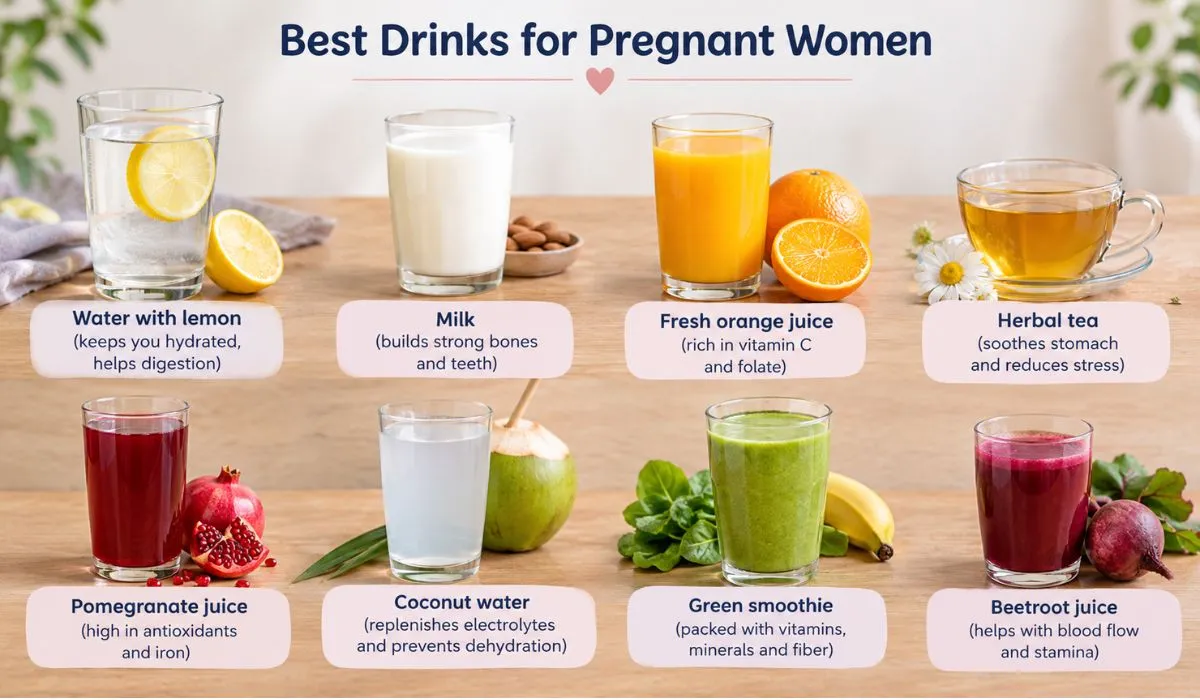
So you’re standing at the fridge, pregnancy brain in full swing, staring at a carton of juice like it just asked you a trick question. Been there. Here’s the short answer so you can stop overthinking and just pour something: water, milk, herbal teas like ginger or rooibos, fruit juice now and then, and smoothies made the right way are all solid picks. Your coffee doesn’t have to go anywhere — just ease off a little. The real no’s are alcohol and anything unpasteurized. That’s it, that’s the list.
Table of Contents
Now let’s get into the why, because once it clicks, you won’t have to think about this every single time you open the fridge.
Why This Even Matters Right Now
Here’s something that genuinely surprised me: your blood volume shoots up by almost 50% during pregnancy. Meanwhile your body’s quietly building amniotic fluid, all day, every day. So when I say hydration matters more right now, I really mean it — run low and you’re looking at headaches, dizziness, sometimes even contractions you’re absolutely not ready for. At the same time, a few everyday drinks are genuinely risky for your baby, so a couple of old habits are worth pausing for a bit.
But here’s the relief: this isn’t about being perfect. It’s a handful of small, boring, repeatable choices — and they add up faster than you’d think.
Water. Yes, Really, Water.
I promise I’m not just phoning it in with “drink more water.” It’s legitimately the backbone of everything else here. Most guidance, including what the CDC points to, lands around 8 to 12 cups a day, though that shifts depending on how active you are, the weather, and where you’re at in your pregnancy. If plain water puts you to sleep (same), throw in some cucumber, mint, or a few lemon slices. Tiny change, but it makes sipping all day feel way less like a punishment.
Milk, or a Good Fortified Plant Milk
A glass of milk is quietly overachieving — it hydrates you and hands over calcium, protein, and usually vitamin D, all stuff your baby’s bones need. Not a dairy person? Grab a fortified plant milk like soy, oat, or almond, just glance at the label for calcium and B12. One hard line though: nothing unpasteurized. Raw milk can carry bacteria that are genuinely risky right now, so this is not the season for farmer’s-market experimentation.
Herbal Tea — The Right Kind, Specifically
Not every herbal tea earns a spot in your mug these months, so it’s worth knowing which ones do. Ginger tea is a favorite for a reason — it can seriously take the edge off nausea, especially in those rough early weeks. Rooibos is another solid one, naturally caffeine-free and loaded with antioxidants. On the other hand, skip things like pennyroyal or high-dose licorice root, which have been linked to uterine contractions. Run across a new blend you’re unsure of? Just ask your OB before it becomes a habit. “Natural” isn’t automatically “safe,” and your doctor would honestly rather you ask than guess.
Fresh Juice and Smoothies — Just Keep an Eye on Sugar
Fresh fruit juice gives you a nice little dose of vitamin C and folate, both genuinely worth having right now. The catch? Sugar. It’s easy to overdo, so treat it more like a treat than a morning staple, and stick to pasteurized. Honestly, smoothies usually win here. Blending the whole fruit keeps the fiber intact, which slows down the sugar rush. Toss in some spinach or a scoop of Greek yogurt and suddenly it’s a drink that’s actually earning its keep.
Wait, Can I Keep My Coffee?
Yes. Breathe. You don’t have to give it up. Most guidelines, ACOG included, cap pregnancy-safe caffeine around 200mg a day — about one 12-ounce cup. Go well past that regularly and it’s been tied to lower birth weight, so it’s worth actually tracking rather than just eyeballing it, especially on days you’re also having tea or a soda on the side.
The Ones That Are Just a Hard No
- Alcohol, any amount, any form
- Unpasteurized juices, ciders, or milk
- Raw egg-based drinks, like homemade eggnog
- Energy drinks, which stack high caffeine with additives nobody’s really studied in pregnancy
Stuff That Actually Makes This Easier
Carry a reusable water bottle everywhere — once it’s just always on you, drinking enough stops being a chore and starts being automatic. If nausea makes plain water rough to get down, try it ice-cold or with a splash of citrus. And if coffee is non-negotiable (no judgment, truly), easing into half-caff usually sticks a lot better than quitting cold turkey.
Easy Traps to Avoid
The big one: assuming “herbal” automatically means “safe.” Some herbal teas genuinely aren’t recommended right now, so a quick check before you stock up saves you a headache later. Another common one — under-hydrating simply because plain water feels boring. The fruit-infusion trick fixes that in about ten seconds. And don’t let fruit juice quietly become your main source of fluids. It’s a nice bonus, not a water replacement.
Quick Questions, Answered
Can I drink coffee every day during pregnancy?
Yes, in moderation. Staying under about 200mg of caffeine a day — roughly one cup of coffee — is generally considered safe.
Is ginger tea safe in the first trimester?
Yes. It’s actually one of the go-to picks for easing morning sickness, and it’s considered safe in normal amounts throughout pregnancy.
Are smoothies better than juice during pregnancy?
Usually, yes. Smoothies hang onto the fiber from the whole fruit, which balances out the natural sugars, while juice can spike your blood sugar faster.
How much water should I actually be drinking?
Most guidance suggests 8 to 12 cups a day, though it shifts a bit depending on how active you are and the climate.
Is it fine to drink herbal tea every single day while pregnant?
Stick to pregnancy-safe options like ginger or rooibos, and it’s worth checking with your doctor before it turns into a daily habit.