

I’ll be honest — this is one of those pregnancy questions that never gets a satisfying yes-or-no answer, and that’s kind of annoying when all you want is to know if you can have the sandwich. So let’s just talk it through like actual humans.
Table of Contents
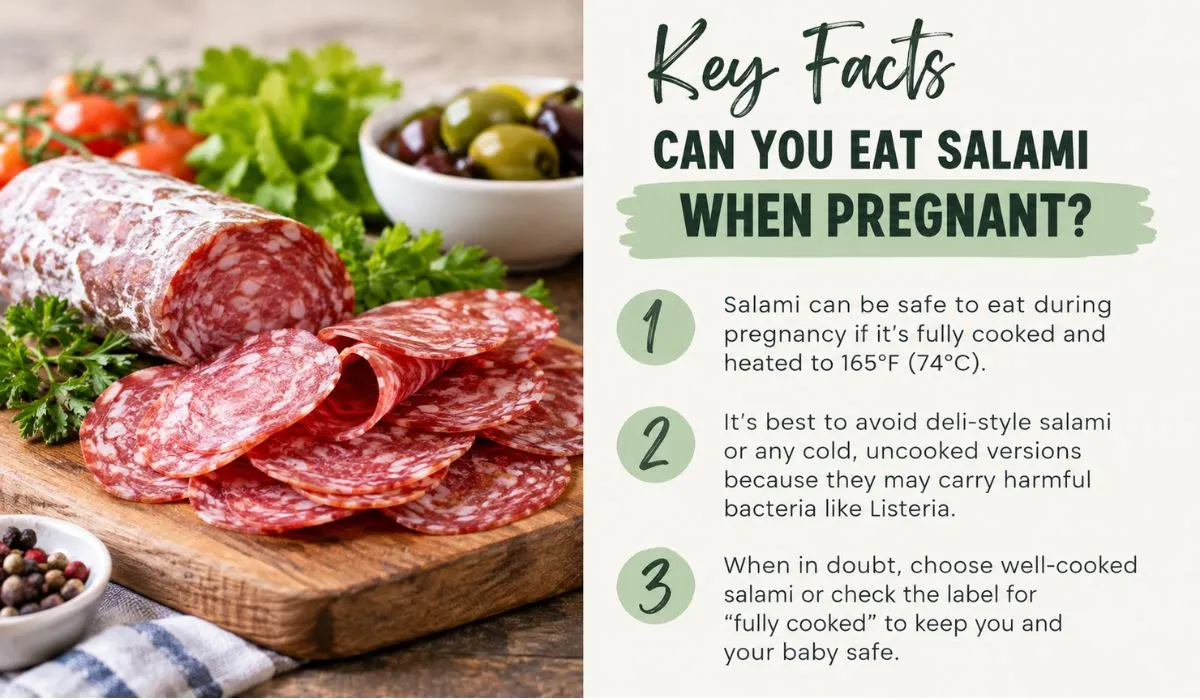
Here’s the gist: salami is cured, not cooked. That’s the detail that decides everything. Warm it up until it’s genuinely steaming hot, and you’re in fine shape. Eat it cold — off a party platter, out of the fridge, on a sub — and you’re taking on a risk most doctors would rather you avoid. That’s it, that’s the core of it. Everything else is just the “why.”
Why Doctors Get Twitchy About This One
Salami’s whole thing is that it’s never cooked. Raw meat, salt, spices, time — that’s the recipe. It ferments, it air-dries, and somewhere in there it turns into the salty, punchy stuff you’re craving. But because it skips the cooking step entirely, any bacteria that got in during processing or slicing just… stays there. Nothing kills it off along the way.
The bacteria in question is Listeria, and the annoying twist is that pregnancy makes you more susceptible to it than usual. Your immune system dials itself down a little on purpose while you’re pregnant — it’s normal, it’s supposed to happen — but it also means your body’s less equipped to fight off things it would normally shrug off without you even noticing. For you, it might just feel like a mild flu, easy to miss. The problem is it can cross the placenta, and in serious cases it’s been tied to miscarriage, early labor, or a dangerous infection in a newborn. That gap between “barely felt it” for mom and “actually serious” for baby is why cured meats get flagged so hard, even though catching it from any one bite is genuinely rare.
And Here’s the Part That Trips Everyone Up
The advice isn’t even the same everywhere, which honestly makes this whole topic more confusing than it needs to be. In the U.S., the CDC and USDA both say heat deli and cured meats — salami included — until steaming, full stop. But the NHS over in the UK is noticeably more relaxed, treating ready-to-eat cured meats as generally low-risk based on how they’re commercially made there. So if you’ve gotten conflicting answers from different corners of the internet, that’s not you misunderstanding anything — the guidance really does depend on where you live. When it comes down to it, let your own OB-GYN’s opinion beat out whatever you read, including this.
So How Do You Actually Still Enjoy It?
You don’t have to bench salami for nine straight months. Heat solves most of the problem — throw it in a hot pan, bake it onto a pizza, stir it into a bubbling pasta dish, whatever gets it properly hot all the way through. That’s genuinely the biggest lever you have. Beyond that, skip the pre-sliced stuff that’s been sitting at the deli counter for who-knows-how-long and go for something freshly cut instead. Don’t assume the fridge is protecting you either — listeria can survive, and even slowly grow, in cold temps, so keep opened packs sealed and use them up quickly. And if something smells even slightly off or looks slimy — just toss it. That’s not a fight worth having, pregnant or otherwise.
Quick myth to clear up while we’re here: cured is not the same as cooked. It’s such an easy thing to mix up, and it’s exactly why people assume salami is automatically fine when it isn’t. Same goes for pizza that comes out of the oven lukewarm — if the salami isn’t steaming, it hasn’t actually been made safer, no matter how good it smells.
Things You’re Probably Still Wondering
Is the fancy dry-cured stuff any safer than regular salami?
Not really, no. Drying just makes it shelf-stable — it doesn’t wipe out bacteria, so the same heating rule still applies.
Can I still have salami pizza?
Yes, as long as the oven actually gets it hot, not just lukewarm.
I already ate some cold salami before I knew all this — should I be worried?
Try not to spiral. The odds of listeriosis from a single serving are small. Just keep an eye out for flu-like symptoms over the next couple of weeks, and mention it to your doctor if anything feels off.