

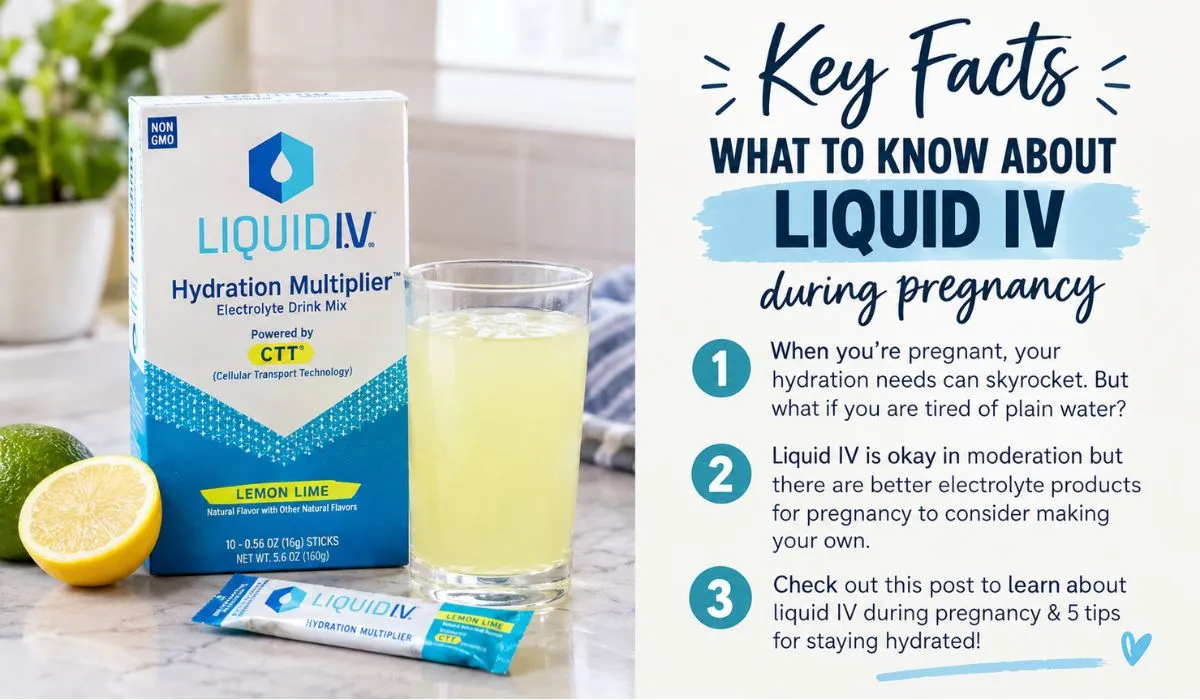
Yes, Liquid I.V. is generally fine to drink while you’re pregnant. Most doctors won’t blink at it. But — and you probably saw this coming — it really does depend on you specifically. Your blood pressure, your blood sugar, how often you’re actually reaching for it.
Table of Contents
Here’s the thing nobody tells you before pregnancy: you’ll suddenly care a LOT about hydration. Your blood volume is quietly expanding behind the scenes to support your baby, and if you’re one of the many women dealing with morning sickness (or afternoon sickness, or all-day sickness, because pregnancy loves to lie to you about the “morning” part), just keeping water down can feel like an Olympic event some days. That’s usually when Liquid I.V. shows up — a friend mentions it, you see it everywhere online, and you think, wait, is this actually okay for me right now?
Let’s just talk through it like normal humans.
What’s Actually In That Little Packet
So basically, Liquid I.V. mixes electrolytes with a bit of sugar. The sugar isn’t just there for taste — it’s actually what helps your body soak up the fluid faster than if you just drank water on its own. Kind of clever, honestly.
The electrolyte part — sodium and potassium mostly — is stuff your body genuinely needs more of while you’re pregnant. They’re doing behind-the-scenes work with your fluid balance, your muscles, your nerves. But (there’s always a but, isn’t there) if you’re already dealing with swelling or your blood pressure runs a little high, extra sodium isn’t exactly doing you any favors. Worth a quick mention to your doctor.
And the sugar — one packet has about 11 grams. That’s not wild on its own. But if you’re managing gestational diabetes, or your blood sugar’s been a topic at your appointments, this is one of those “small things add up” situations. It’s easy to forget a hydration drink even has sugar in it.
If that’s you, they do make a sugar-free version with stevia instead. A lot of pregnant women switch to that one. Just don’t assume sugar-free automatically means pregnancy-approved — still worth asking your OB.
When It’s Genuinely Helpful
Honestly? This is where it can be a bit of a lifesaver. Those days when water alone just isn’t happening — you’re nauseous, you can’t keep much down, you’ve caught a stomach bug, or it’s just really hot out and you’re more active than usual. In moments like that, a little electrolyte boost can actually help you feel human again.
When to Slow Down and Ask First
If you’re dealing with gestational diabetes, higher blood pressure, noticeable swelling, or anything going on with your kidneys — none of that means “never,” but it does mean this isn’t a grab-it-without-thinking situation. That’s a conversation for your OB or midwife, not a guessing game.
A Few Honest Tips
Talk to your doctor before you make it a habit, especially early on or if any of the above applies to you. Treat it as a supplement, not your main hydration source — water should still be doing most of the work, with one packet a day being plenty for most people. Keep half an eye on your total sugar for the day, since it’s easy to not count a drink as “food.” And if blood sugar’s a concern, just ask specifically about the sugar-free version instead of assuming.
One honest heads-up: just because something’s sold at the grocery store and says “electrolytes” on the front doesn’t mean it’s automatically fine in any amount while pregnant. That mindset trips people up more than you’d think.
Questions You’re Probably Actually Asking
Can I have it every day?
For most healthy pregnancies, sure, occasionally is no big deal. Daily is more of a “just check with your doctor” thing, mostly because of the sodium.
Is sugar-free actually better?
Often, yes — especially if you’re watching blood sugar. Just double-check the sweetener with your provider so you’re not guessing.
Will it help with morning sickness dehydration?
It can help a lot with mild dehydration from vomiting. But if you’re vomiting constantly and can’t keep anything down at all, that’s hyperemesis gravidarum territory, and you need to call your doctor, not reach for a packet.
What if I want to play it extra safe?
Coconut water, watered-down juice, or an oral rehydration solution your OB suggests are gentler places to start if you’d rather skip the sugar-and-sodium back-and-forth entirely.