

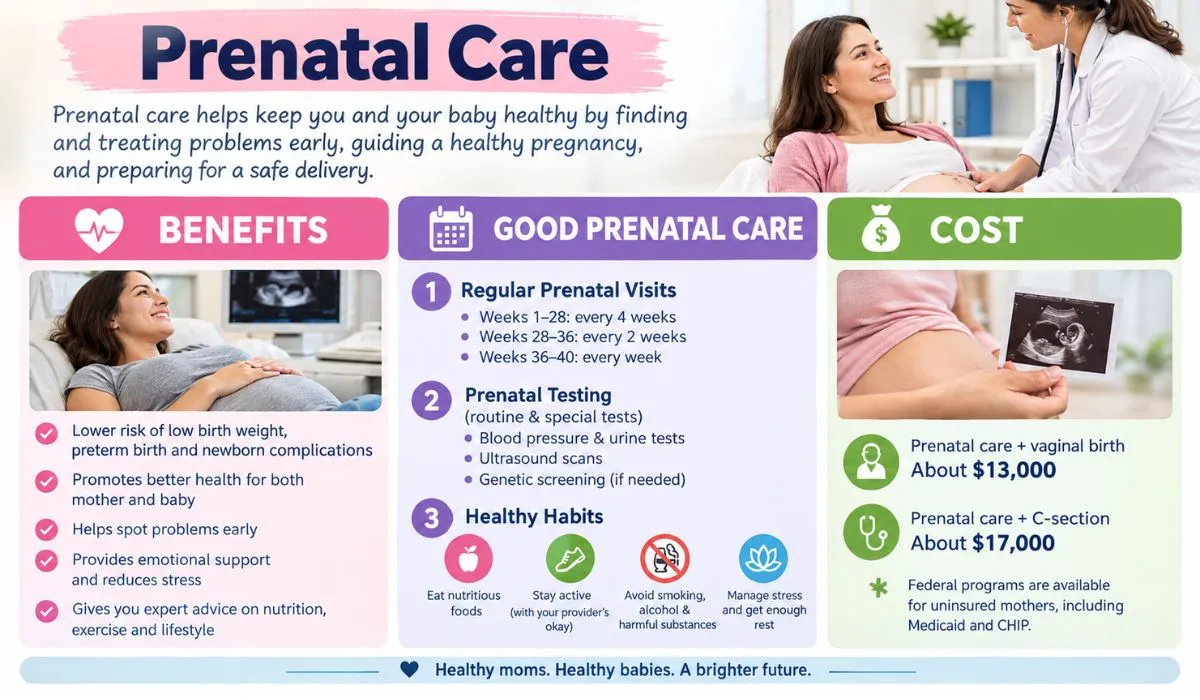
Prenatal care is the checkups, tests, and everyday habits that keep you and your baby healthy during pregnancy. In plain terms, it’s you and a doctor or midwife checking in regularly to make sure things are on track.
Table of Contents
The first week after a positive test can feel like a lot. One minute you’re over the moon, the next you’re googling whether sushi is off the table. Most of that worry settles once you have a plan, and a plan is really all prenatal care is.
Why It’s Worth Making the Time
The CDC says women who get regular prenatal care are more likely to have healthy pregnancies and healthy babies. The reason is simple. Small problems like high blood pressure, gestational diabetes, or low iron are much easier to deal with when they’re caught early. Appointments are also the one place where no question is too silly. Ask about the twinge, the cravings, the weird dream. They’ve heard it all.
How It Plays Out, Week by Week
Your first visit usually happens around week eight. It’s mostly a conversation about your health history, plus blood work and often an early ultrasound. Vitamins start right away. Folic acid matters most in these early weeks, and the CDC recommends 400 micrograms a day to help protect your baby’s developing brain and spine. If nausea makes pills awful, try taking yours with crackers or just before bed.
The middle months tend to be kinder. Your energy comes back, visits slow to about once a month, and somewhere between weeks 18 and 22 you’ll have the anatomy scan. A lot of parents say that’s when it finally feels real. Between weeks 24 and 28, you’ll probably take a glucose test to screen for gestational diabetes. It’s the one with the sugary drink, and it’s over quickly.
Then the home stretch. Visits move to every two weeks, then weekly. Your provider will check your baby’s position, test for group B strep, and talk through labor with you. Ask them exactly when you should call. Nobody minds that question.
Eating and Vitamins, Minus the Pressure
Good prenatal nutrition doesn’t mean a perfect plate every day. Eggs, beans, yogurt, leafy greens, and fruit on most days will carry you a long way, and your prenatal vitamin covers the gaps. Iron, calcium, vitamin D, and DHA for pregnancy come up most often, since they help build your baby’s brain, bones, and blood supply. Not sure which pregnancy supplements are right for you? Your provider can point you to one.
And about “eating for two.” ACOG says you need only about 300 extra calories a day in the second and third trimesters. That’s a yogurt and a handful of nuts. Honestly, that’s it.
Things People Wish They’d Known
Booking late is the most common slip, so call as soon as you know. Skipping vitamins on bad nausea days is next, and it’s easy to do. The one that matters most is brushing off symptoms because they seem small. Swelling, a headache that won’t quit, or less baby movement than usual all deserve a call. You won’t be bothering anyone.
Small habits help too. Keep your questions in a phone note, sip water through the day, and go for short walks. The WHO suggests about 150 minutes of moderate activity a week for healthy pregnant women, so a gentle stroll counts. Skip alcohol, smoking, raw fish, and unpasteurized dairy.
Quick Answers to Common Questions
When should I start prenatal care?
As soon as you find out, ideally before week eight.
How many visits will I have?
Usually 10 to 14 for a low-risk pregnancy, and more if your provider wants a closer look.
Do I need prenatal vitamins if I eat well?
Most experts say yes, because even a good diet can fall short on folic acid and iron.
What if I don’t have insurance?
Community health centers and local health departments often offer low-cost care, so it’s worth a phone call.