
Honestly, week 16 is where a lot of women finally exhale. The sickness has mostly let go, you’ve got a bit of energy back, and food sounds good again. You’ll probably still be dealing with some constipation, bloating and random aches, but a few easy changes to what’s on your plate can help a lot.
Table of Contents
So what does 16 weeks pregnant feel like?
Different for everyone, to be honest. Some women are glowing and full of beans. Others feel pretty much the same as last week. Both are fine.
Your baby is about the size of an avocado now. That’s small, but they’re busy. Muscles are getting stronger and little arms and legs are moving around in there, even if you can’t feel it yet. Most first-time mums don’t feel the first flutters until somewhere between 18 and 22 weeks, so don’t stress if it’s quiet.
Here’s what you might notice:
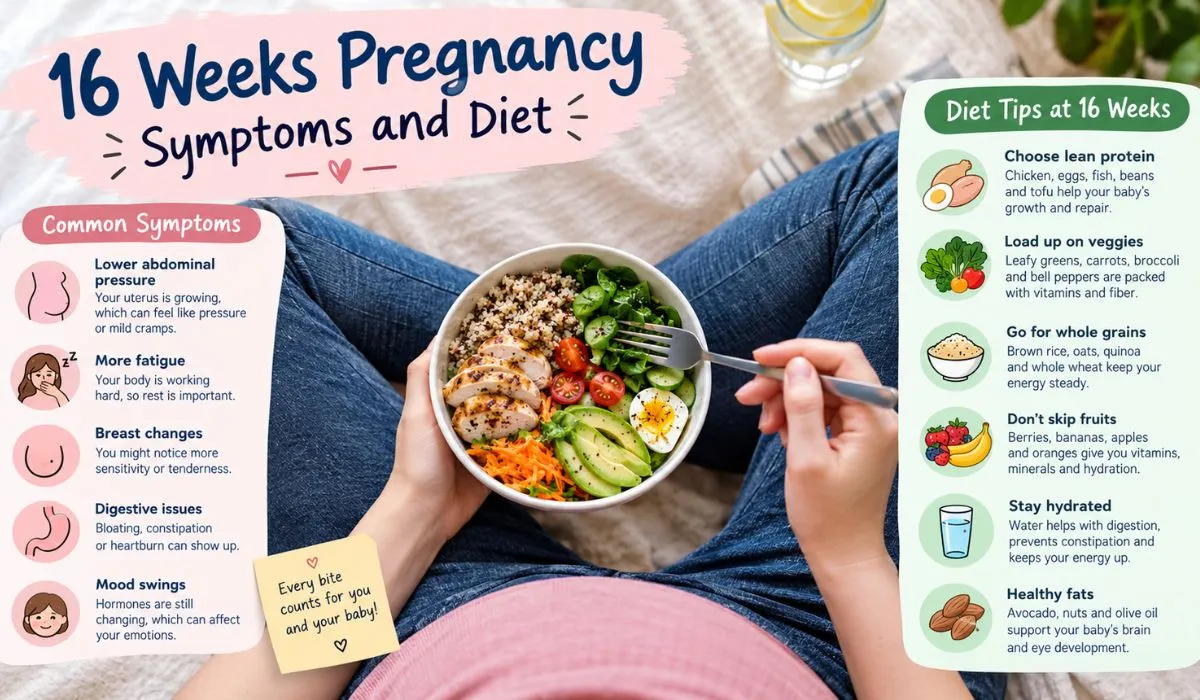
- A sharp little tug on the side of your belly when you stand up fast. It’s called round ligament pain, and it’s just your womb stretching
- Leg cramps, usually at night, usually when you’ve finally got comfy
- Heartburn, bloating and constipation
- Tender breasts, puffy hands and ankles, the odd nosebleed
- Bleeding gums when you brush
- Darker patches on your face, oilier skin, thicker hair
And yes, constipation. It’s the symptom nobody mentions at the baby shower. Pregnancy hormones slow your digestion down, so if you’re feeling backed up, it’s not you, it’s the hormones.
One thing to keep in mind: call your doctor straight away if you have any bleeding, strong pain, a bad headache with blurry vision, or sudden swelling. Don’t wait for your next appointment for those.
Your 16 weeks pregnant diet, minus the stress
First, the good news. You don’t have to eat for two. ACOG says most women need only about 300 to 350 extra calories a day in the second trimester. Think one proper snack, like yogurt with fruit or toast with peanut butter.
If you’re constipated, go for fibre. Oatmeal, pears, berries, beans and lentils are all great. The NIH suggests around 25 to 28 grams a day. Build up slowly, because piling on fibre overnight will just leave you gassy, and drink plenty of water with it. Fibre without water can make things worse. A short walk after dinner helps too. If you think your iron tablets are the culprit, talk to your doctor before changing anything.
For your baby’s growth, think iron, calcium and protein. Iron helps you make the extra blood your body needs, and the NIH recommends 27 mg a day. Lean meat, spinach and fortified cereal are good sources, and a squeeze of lemon helps you absorb it. Calcium goes into your baby’s bones, so aim for about 1,000 mg daily from yogurt, milk, cheese or fortified plant milk. Eggs, fish and beans take care of protein.
Don’t forget DHA. A bit of salmon now and then gives you DHA for pregnancy, which supports your baby’s brain and eyes. And keep taking your prenatal vitamin. The folic acid benefits don’t end with the first trimester.
Some days you’ll eat like a nutritionist. Other days it’ll be toast and tea. That’s okay. A steady routine beats a perfect day.
Small things that make a difference
Smaller meals can calm heartburn. A water bottle you actually carry around helps with headaches, swelling and constipation all at once. And please test your home carbon monoxide detector, because you can’t smell the gas and it’s extra risky in pregnancy.
The biggest mistake? Stopping your vitamin because you’re feeling better. The second biggest is expecting supplements to do the work of real meals.
Quick questions
Is it normal to feel hardly any symptoms?
Yes. Plenty of women feel great at this stage. If it’s worrying you, just mention it at your next check-up.
Can I feel my baby moving yet?
Maybe a flutter or two, but it’s more common between 18 and 22 weeks.
Should I stop my iron if it’s making me constipated?
Chat to your doctor first. Don’t stop on your own.
How much weight should I have gained by now?
It depends on where you started. Many women have put on about 2 to 4 kg, but your midwife can tell you what’s right for you.