

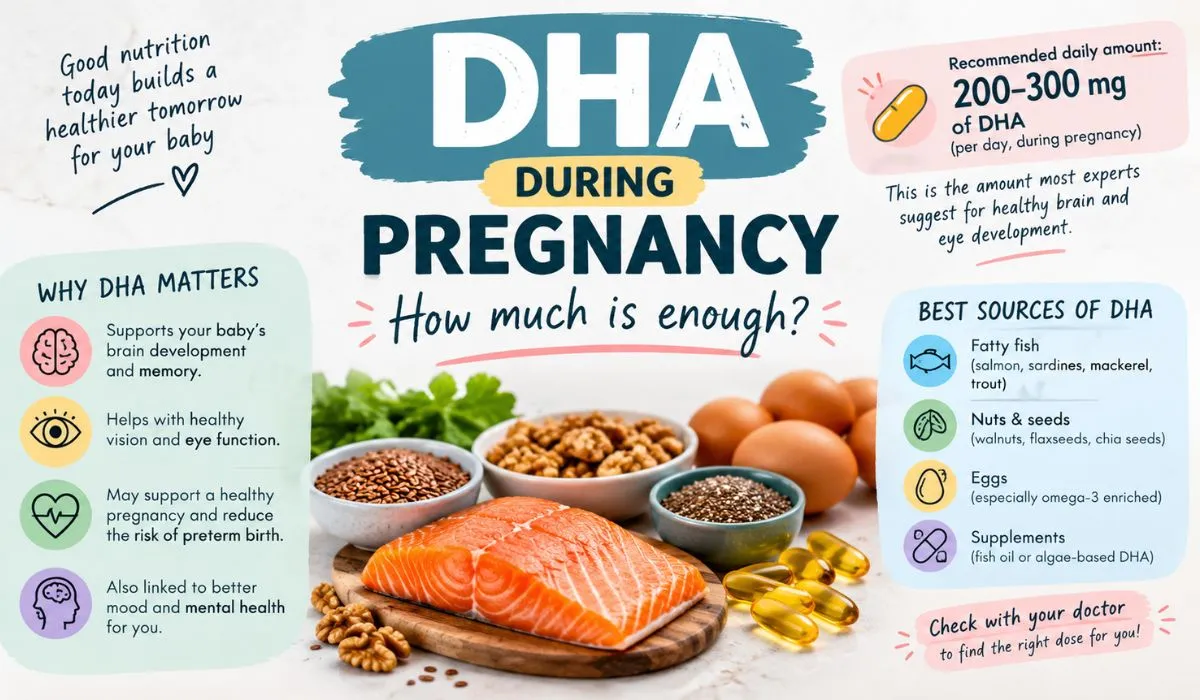
The number most doctors will give you is 200 to 300 mg of DHA a day. ACOG recommends that range, and it’s a lot more doable than it sounds.
Table of Contents
Picture Your Week
Say you have salmon on Tuesday and tuna salad on Friday. Maybe some sardines on toast if you’re feeling brave. That’s already a solid week of DHA for pregnancy, and you didn’t need a spreadsheet to get there. The FDA suggests two to three servings of low-mercury fish a week, and most moms find that’s the easiest way to stay in the zone.
Why It Matters
Your baby uses DHA to build their brain and eyes. Your body can’t make much of it, so it has to come from what you eat or take. The demand shoots up in the third trimester, but there’s no need to wait until then. Of all the pregnancy supplements out there, this is one of the few with real backing from groups like ACOG and the WHO.
When Fish Is Out of the Question
Some days even the smell of fish is too much, and that’s fine. Plenty of moms go through this, especially early on. You can take an algae-based DHA supplement instead. It’s the same DHA fish get from algae, so nothing is lost, and it works well if you’re vegetarian too. Flax and chia are nice to eat, but your body turns them into DHA very slowly, so don’t count on them to do the job.
Read the Label
This is where people slip up. The front of the bottle says “omega-3,” but the number you need is the DHA amount on the back. Lots of prenatal vitamins have only a little, and some have none. If yours falls short, you can add a separate one. Pick a brand that’s been third-party tested, and skip cod liver oil, because too much vitamin A isn’t safe during pregnancy. If fish oil makes you queasy, take it with a meal or at night.
One more thing. Don’t go much past 300 mg without asking your doctor. More isn’t better here.
Common Questions
Is DHA safe in the first trimester?
Yes. It’s considered safe all the way through pregnancy.
Can I take too much?
It’s rare from food. Very high supplement doses can upset your stomach, so follow your provider’s advice.
Does my prenatal vitamin have enough?
Check the label. If it lists 200 mg or more of DHA, you’re probably set.
Do I need it while breastfeeding?
Yes. DHA passes into breast milk and keeps supporting your baby’s growth.