

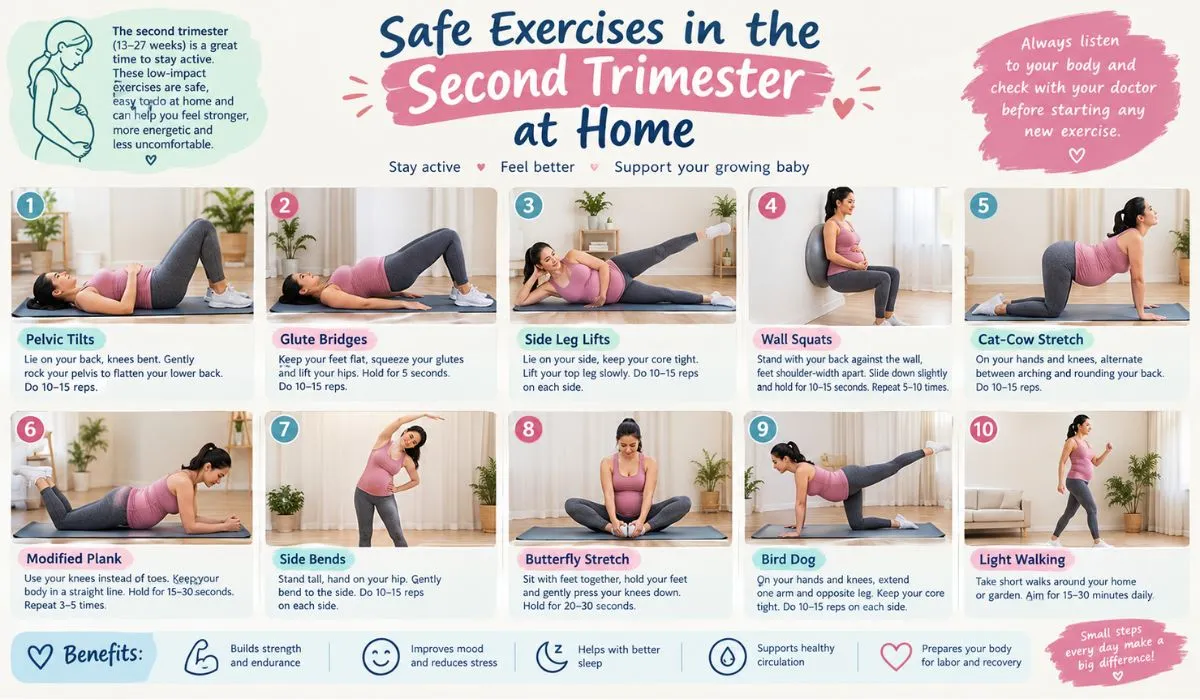
You might be wondering if exercise is even a good idea right now. For most healthy women, it is. In the second trimester, gentle workouts at home, like walking, prenatal yoga, pelvic tilts, wall push-ups and simple squats, are safe and really helpful. ACOG suggests about 150 minutes of activity a week. Talk to your doctor or midwife first, because every pregnancy is its own story.
Table of Contents
Why Now Is the Perfect Time to Move
Think back to the first few months. Tired all the time, queasy at the smell of coffee. Now your body is catching up. You’ve got a bit more energy, and your bump hasn’t taken over yet. It’s a good time to ease into a routine. Moving a little can soften back pain, brighten a dull mood and help you sleep better. It’s good for your maternal health, too.
Safe Exercises You Can Do at Home
No gym, no gear. Just a chair, a wall and a pillow.
Begin with a walk. Twenty minutes is plenty, and laps around the house count when it’s raining. Back sore? Try cat-cow on your hands and knees. Arch up, drop down, nice and slow, like you’re stretching after a long nap. Next, lean against a wall and tuck your tailbone under to flatten your lower back. That’s a pelvic tilt, and it feels better than it sounds. Ready for a little more? Do some wall push-ups, then squats while holding on to a chair. You’re building the strength you’ll use to carry your baby and to get through labor. Oh, and Kegels. You can do those anywhere. Squeeze the muscles you’d use to stop urine, hold for a few seconds, then release. Repeat.
How Hard Is Too Hard?
Wondering if you’re overdoing it? Here’s an easy check. Can you talk while you move? Then you’re fine. Out of breath? Slow down. Sip water along the way, and as your belly grows, don’t spend long stretches flat on your back. And don’t be a hero on day one. Ten minutes is a great start, and you can add a little each week.
What to Skip for Now
A few things can wait until after the baby’s here. Contact sports, hot yoga, heavy lifting, jumping, crunches, and anything where you could take a tumble.
When to Pause and Call Your Doctor
Your body usually tells you when something isn’t right. If you notice bleeding, fluid leaking, regular painful contractions, dizziness, chest pain, a bad headache, calf swelling, or your baby moving less than usual, stop and call your doctor or midwife. That’s the advice from the CDC and ACOG, too. And if you’re not sure? Call anyway. They’d rather hear from you.
Don’t Forget to Fuel Up
Being active can leave you hungry, which is totally normal. Keep a protein snack within reach, drink plenty of water and stay on top of your prenatal vitamins. If you’re wondering about pregnancy supplements like DHA, that’s a good one to ask your doctor about.
Quick Questions Moms Often Ask
Can I do ab exercises?
Gentle ones like pelvic tilts, yes. Crunches and sit-ups can wait.
How often should I exercise?
Most days, as long as you feel good. It adds up to about 150 minutes a week, and short sessions count.
What if I wasn’t active before?
Don’t worry about it. Get your doctor’s go-ahead, then start with 5 to 10 minutes of walking.