
If you’ve just found out you’re pregnant, everyone around you suddenly has an opinion about your plate. Eat this, avoid that, have more of the other. Let’s cut through the noise. A healthy maternity diet is a balanced mix of vegetables, fruits, whole grains, protein, dairy, and healthy fats, plus a daily prenatal vitamin. That’s really it. And that old “eating for two” idea? You can gently let it go.
Table of Contents
Start With What Your Baby Is Building
Here’s something nice about pregnancy nutrition: every bite is doing a little job. Your baby is growing a brain, a heart, and tiny bones, and the food you eat is where those building blocks come from. It looks after you too, because steady meals keep your energy up on the tired days.
As for calories, the CDC says you don’t need any extra in the first trimester. You need about 340 more a day in the second and around 450 in the third. That’s roughly a yogurt and a banana, not a second dinner.
The Nutrients Worth a Little Attention
You don’t need a chart on the fridge. Just keep a few names in mind.
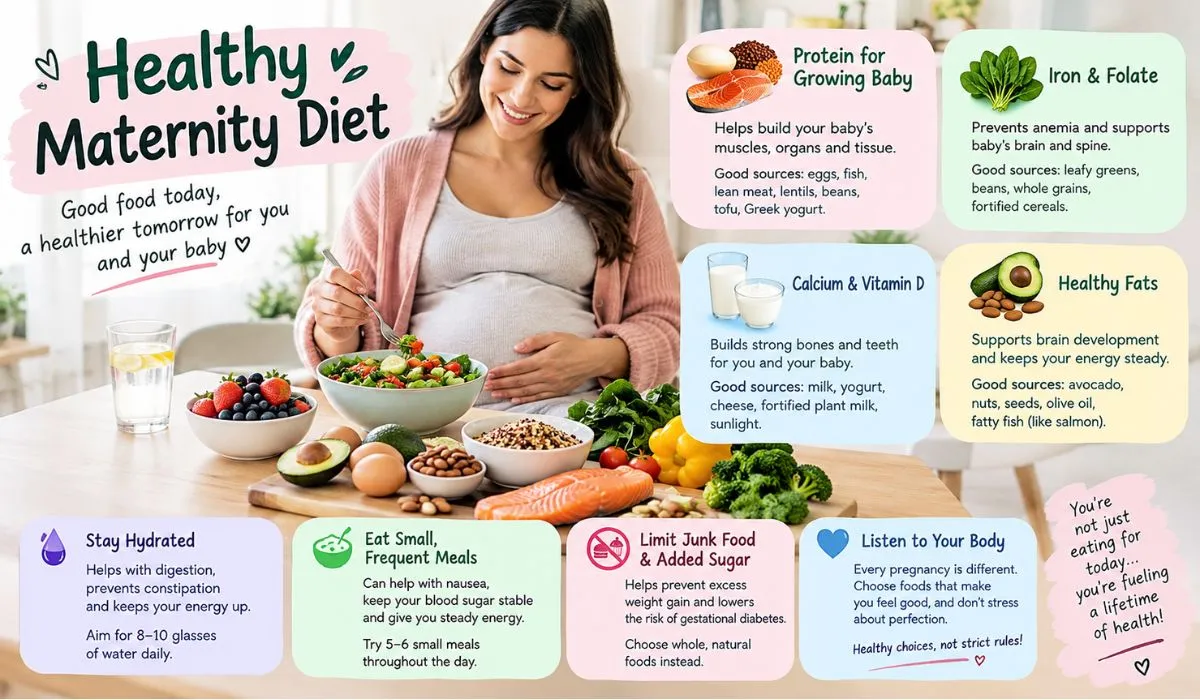
Folic acid is the one doctors mention most, and for good reason. Health experts recommend 400 micrograms a day, ideally starting before you conceive, because it helps protect your baby’s brain and spine as they form. Leafy greens, lentils, and fortified cereals are good sources, and your prenatal vitamin covers the rest.
Iron matters because your body is making extra blood. ACOG recommends 27 milligrams a day. Beans, lean meat, and spinach all help, and a squeeze of lemon helps your body absorb the iron better. Calcium, about 1,000 milligrams a day according to ACOG, goes into your baby’s bones, so yogurt, milk, or fortified plant milk are lovely picks.
Then there’s DHA for pregnancy, which supports your baby’s brain and eyes. Salmon is a favorite, and the FDA suggests two to three servings of low-mercury fish a week. One more thing to remember is that pregnancy supplements are wonderful helpers, but they can’t do the work of real food.
What a Normal, Doable Day Looks Like
Maybe you start with Greek yogurt, berries, and a few walnuts. Lunch is a warm bowl of lentil soup with a big salad. Around three, when the snack craving hits, you grab an apple with peanut butter. Dinner is baked salmon with roasted sweet potato and broccoli. Nothing fancy, just real food with a bit of protein each time you eat. Keep a water bottle nearby too, since ACOG suggests eight to twelve cups a day.
The “Maybe Not Right Now” List
A few foods are best saved for later because they can carry germs like listeria. That means raw or undercooked meat, fish, and eggs, unpasteurized milk and juices, and deli meats unless they’re heated until steaming. Skip high-mercury fish like shark and swordfish, and skip alcohol completely. Your morning coffee is fine in moderation, since ACOG says up to 200 milligrams of caffeine a day, about one 12-ounce cup, is okay.
When Food Feels Hard
Some days, nausea runs the show, and that’s okay. Small snacks like crackers, bananas, or ginger tea can help, and a toast-and-crackers day isn’t a failure. Try not to cut back on food to manage weight gain either. Your baby needs steady fuel, so talk with your doctor about what’s healthy for you.
Questions Moms Often Ask
Do I still need a prenatal vitamin if I eat well?
Yes, most providers recommend one, because folic acid and iron are tough to get from food alone.
What if I can’t stand vegetables right now?
You’re not alone! Try smoothies or soups, or tuck spinach into pasta sauce.
Can I still have coffee?
Yes, a small cup is fine, as long as you stay under 200 milligrams of caffeine a day.