
Okay, let’s talk about food. If you’re pregnant, you’ve probably noticed that everyone suddenly has an opinion about what’s on your plate. So here’s the short version, from one friend to another: a healthy diet for pregnant mothers is mostly the food you already know is good for you. Veggies, fruit, whole grains, protein, some dairy, and a daily prenatal vitamin. No perfection required.
Table of Contents
First, Let’s Retire “Eating for Two”
You’ve heard it a hundred times, but ACOG says you don’t need any extra calories in your first trimester. In the second, it’s only about 340 more a day, and in the third, around 450. That’s roughly a yogurt with berries and a handful of nuts. So if someone hands you a second slice of cake “because you’re eating for two,” you can enjoy it, but your body isn’t asking for it.
What a Good Day of Eating Looks Like
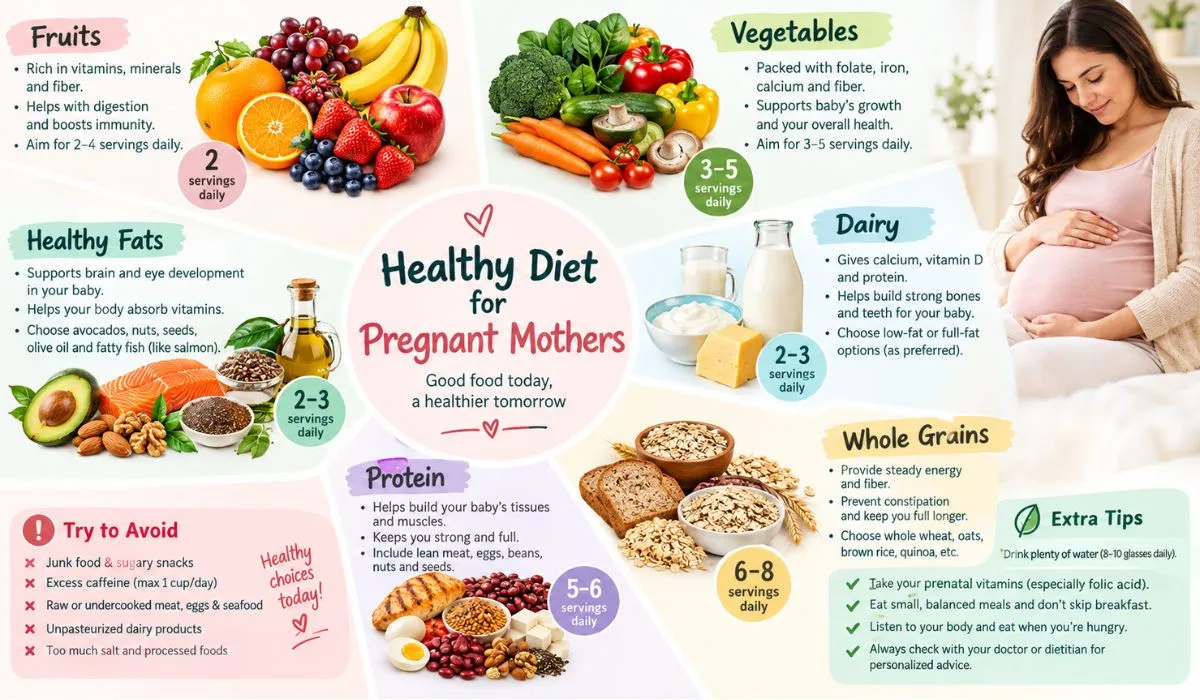
Forget strict meal plans for a second. On a normal day, think about your plate. Fill half with vegetables and fruit, a quarter with whole grains like oats or brown rice, and a quarter with protein like eggs, beans, chicken, or fish. Add a little dairy and a drizzle of olive oil, and you’ve covered most of your pregnancy nutrition without counting anything. Breakfast could be oatmeal with fruit, lunch a big salad with chickpeas, dinner some baked salmon with rice and greens. Simple, and it works.
The Nutrients Your Baby Is Really Counting On
There are a few that deserve extra love. The CDC recommends 400 micrograms of folic acid every day, because the folic acid benefits for your baby’s early development are so well proven. Iron is another big one, since your body is building extra blood. NIH suggests about 27 mg daily, and iron-rich foods like lentils, spinach, and lean meat help. A squeeze of lemon or a side of orange slices helps your body absorb it better. Calcium builds your baby’s bones, and DHA for pregnancy, found in salmon and sardines, supports their growing brain.
Now, here’s the honest part. Even moms who eat beautifully can fall a little short on these, so most doctors recommend pregnancy supplements. Ask yours which of the best vitamins for pregnancy suits you, and take it with food if it makes you queasy.
A Few Things to Go Easy On
Please don’t stress over a long list of “never” foods. Health experts mainly suggest skipping raw fish like sushi, unpasteurized milk and cheese, and high-mercury fish like shark and swordfish. Deli meats are okay once they’re heated until steaming hot, which the CDC suggests to avoid listeria. And yes, you can keep your morning coffee. Just stay under 200 mg of caffeine, about one regular cup.
For the Days Food Feels Impossible
Some days, nausea wins, and that’s completely normal. When it does, skip the big meals. Little snacks every couple of hours, crackers by your bed, cold foods, and steady sips of water can make a real difference. If a smoothie is all you can handle, that still counts. You’re building a person, so be gentle with yourself.
Questions Moms Often Ask
Do I still need a supplement if I eat well?
Most likely, yes. Folic acid and iron are hard to get fully from food, so a prenatal vitamin works like a safety net.
How much water should I drink?
Around 8 to 12 cups a day is a good goal, and a little more when it’s hot.
Is fish safe during pregnancy?
It is! Two to three servings of low-mercury fish a week are encouraged.