
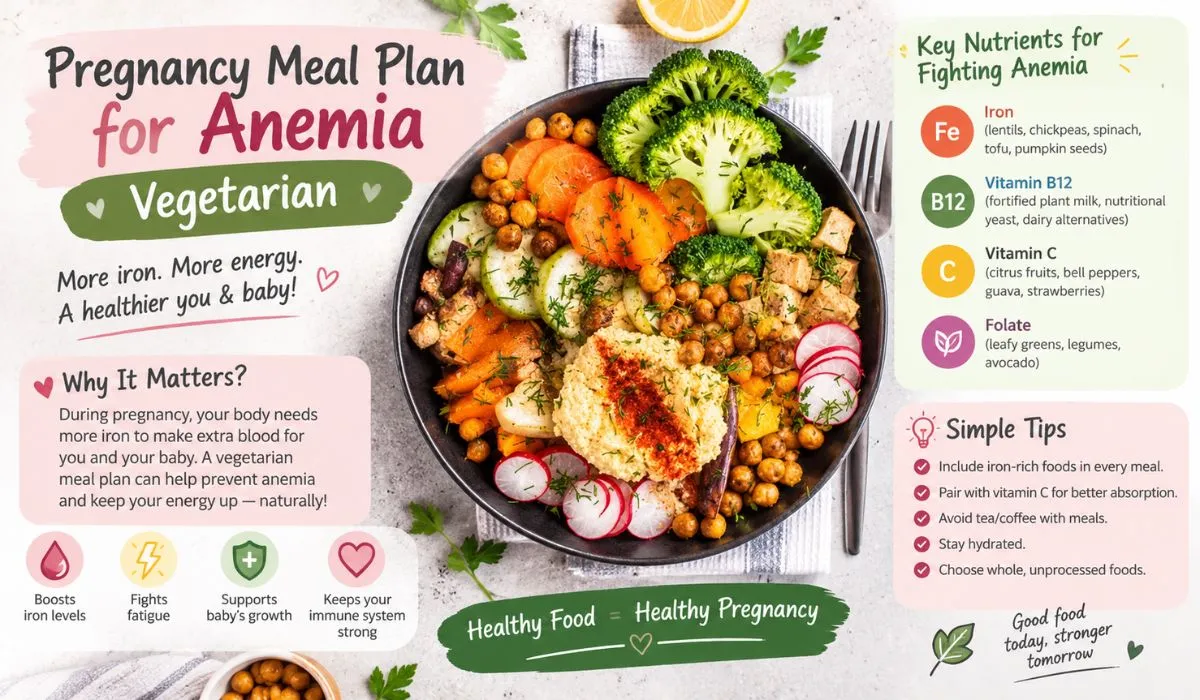
Honestly, low iron in pregnancy is exhausting. You get up, make tea, and already feel like you need to lie down again. And when you’re vegetarian there’s that extra worry in the back of your head: can I even sort this out with food? Mostly, yes, or at least you can help a lot. A decent pregnancy meal plan for anemia built around vegetarian food comes down to lentils, beans, seeds and greens, plus something sour or citrusy on the side.
Table of Contents
So Where Does All the Iron Go?
Think about what your body is doing right now. It’s making extra blood, a placenta, and a whole baby, which is a big job. The NIH says pregnant women need about 27 mg of iron a day. Vegetarians often get told to aim even higher, around double, because iron from plants doesn’t absorb as well as iron from meat. As for what counts as anemia, the CDC uses a hemoglobin level under 11 g/dL in the first and third trimesters, and slightly lower in the second.
If you’ve been dragging yourself through the day, that’s probably part of why.
What a Normal Day Could Look Like
I’d start simple. Porridge, a spoon of pumpkin seeds, a few chopped dried apricots, and an orange next to the bowl. The orange isn’t decoration, by the way. Vitamin C helps you take in the iron from the oats and seeds, and you can peel one while the kettle boils.
Lunch could be dal and rice with a bit of cooked saag and a good squeeze of lemon. If dal is getting old (it does, no shame), try chana masala with sliced peppers on the side. Different taste, same iron.
Then 4 o’clock comes and you’re hungry again. A few dates, a handful of roasted chickpeas, or a thick layer of tahini on toast should hold you.
Dinner might be tofu with broccoli and cashews, if you’ve got the energy. If you haven’t, warm up some beans and vegetables and have bread with it. Totally fine.
One more thing: don’t eat the same legume all week. Lentils Monday, kidney beans Wednesday, black beans after that. You’ll also pick up more folate and B12, which are maternal health vitamins that vegetarians have to keep an eye on.
Tea, Spinach, and a Few Things Nobody Mentions
Tea surprises people. If you drink it with your meal, it can block a lot of the iron you’re trying to absorb, so have it an hour before or after instead. Soaking beans overnight helps a bit too, and so does cooking in a cast-iron pan (some iron ends up in the food).
A lot of moms-to-be hear “iron” and go straight to spinach. It’s good for you, sure, but your body only takes in a small part of its iron, so it shouldn’t be your whole strategy.
Also, please don’t grab iron pills off the shelf and start taking them. ACOG recommends talking to your doctor first. Too much can cause constipation and nausea, and it’s not right for everybody. Your doctor can also tell you which pregnancy supplements make sense for you, maybe a prenatal vitamin with iron, folic acid and B12. This is general information, not medical advice.
Questions People Ask
Can food alone fix anemia?
Sometimes, when it’s mild. A lot of women still need a supplement, so get a blood test and ask your doctor what’s right.
What vegetarian foods have the most iron?
Lentils, chickpeas, tofu, pumpkin seeds, fortified cereal, dates. Nothing wins on its own.
Does vitamin C actually help?
It does. Lemon on your dal or tomato with your beans helps your body absorb more of the iron.