
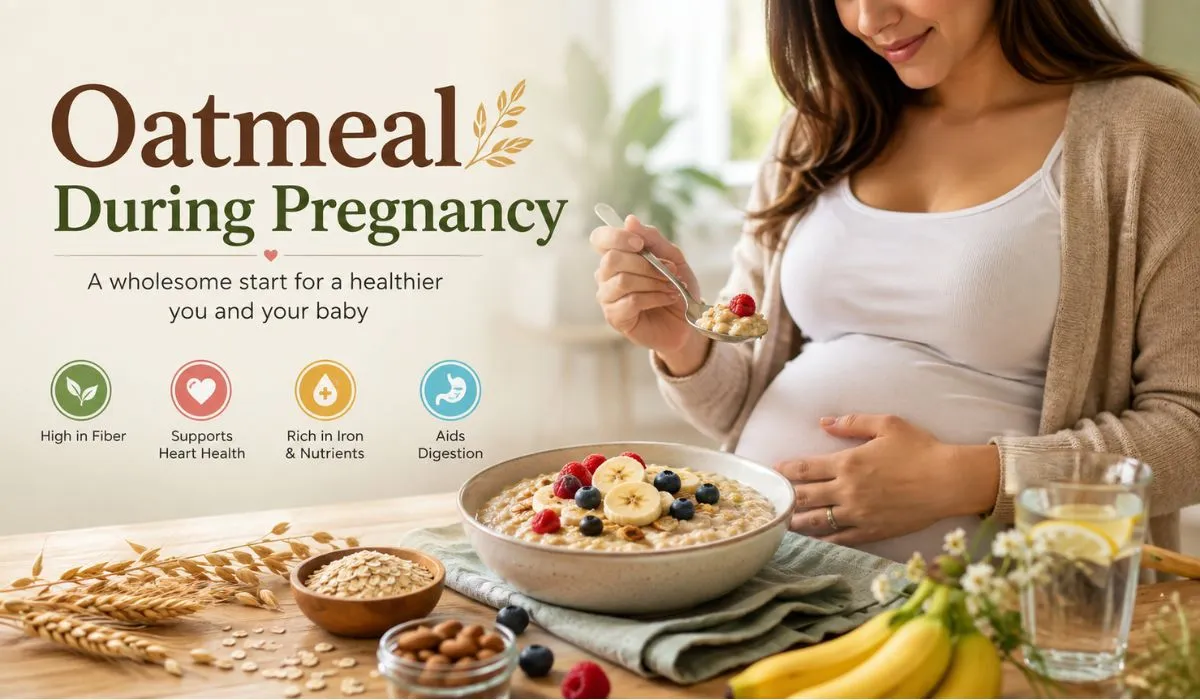
Yes — oatmeal is not just safe during pregnancy, it’s genuinely one of the best things you can start your day with. If you’ve been spooning up a warm bowl out of habit and quietly wondering whether you should feel good about it, here’s your answer: keep going. It’s full of fiber, iron, and slow-burning energy, and it happens to ease two of the most annoying parts of pregnancy — nausea and constipation — better than most breakfast foods out there.
Table of Contents
Why This Humble Bowl Is Doing More Than You Think
There’s a reason oatmeal keeps coming up in pregnancy nutrition advice, and it’s not just because it’s easy to make when you’re exhausted. A single bowl quietly covers a lot of ground for you and your baby.
Start with the fiber. Oats are rich in the soluble kind, which slows digestion down and keeps you feeling full for hours instead of leaving you hungry again by ten a.m. That’s especially welcome if nausea has you skipping meals, or if the later months have you snacking constantly just to feel steady. Oats also bring iron and folate to the table — two nutrients your OB has probably mentioned more than once, because both play a real role in your baby’s development and in keeping you from becoming anemic as your blood volume expands. And tucked in alongside those are magnesium and a handful of B vitamins, which a lot of pregnant women find genuinely helpful for those middle-of-the-night leg cramps and the general bone-tired feeling that comes with growing a person.
It’s worth saying, too, that this isn’t just kitchen folklore. Health experts, including those at the CDC and ACOG, regularly point to whole grains like oats as part of a solid, balanced pregnancy diet — largely because of exactly this combination of fiber and micronutrients.
The Two Complaints Oatmeal Actually Helps With
Almost every pregnant woman deals with one or both of these at some point, and oatmeal happens to be quietly good at both.
If mornings are rough, a small bowl of plain, warm oatmeal — even eaten slowly before you’re fully out of bed — tends to sit much easier than anything greasy or strongly flavored. It’s bland in the best way, and that blandness is exactly what an unsettled stomach wants.
And if things have slowed down in the digestion department (pregnancy hormones and a growing uterus don’t exactly help there), the fiber in oats adds the bulk and softness your body needs to keep things moving comfortably. Pair it with a big glass of water and the effect tends to be even better.
Making the Most of Your Bowl
Oatmeal itself is about as low-risk a food as pregnancy nutrition gets, but a few small choices make it work even harder for you. Reach for plain rolled or steel-cut oats rather than the flavored instant packets, which tend to be loaded with added sugar and stripped of much of the fiber that makes oats worth eating in the first place. Cook them fully in water or pasteurized milk — not because raw oats pose the same risk as, say, raw eggs, but because a fully cooked bowl is simply gentler on your stomach. From there, have fun with it: sliced banana, a spoonful of chia seeds, a few walnuts, or a dollop of nut butter all turn a plain bowl into something with real staying power, thanks to the extra protein and healthy fats. Just go easy on the syrup and sugar, particularly if you’re keeping an eye on blood sugar, and aim for something like half a cup of dry oats as a satisfying, sensible portion.
The Slip-Up Worth Watching For
Honestly, the oats themselves are rarely the problem — it’s what ends up on top of them. Those flavored instant packets can carry a surprising amount of hidden sugar, and a heavy hand with honey, brown sugar, or sweetened dried fruit can undo a lot of the good the oats were doing. It also helps to not let oatmeal be the whole meal. Pair it with something like Greek yogurt or an egg on the side, and you’ll stay fuller longer while giving your baby a bit more protein to work with.
Questions You Might Still Have
Is oatmeal safe in the first trimester?
Yes, completely — and it’s often especially welcome then, since it can take the edge off nausea when little else sounds appealing.
Can oatmeal help with gestational diabetes?
Plain oats tend to have a gentler effect on blood sugar than a lot of breakfast foods, but portion and toppings still matter here. It’s worth talking it through with your doctor or a dietitian to figure out what fits your situation.
How much oatmeal can I eat in a day?
Somewhere around one to two servings — about half a cup to a full cup of dry oats — fits comfortably into a balanced pregnancy diet for most women.
Is instant oatmeal just as good as regular oats?
The plain, unsweetened kind is fine. It’s the flavored packets you want to be a little wary of, since they often sneak in more sugar than you’d expect. Rolled or steel-cut oats are usually the better everyday choice.
Can a bowl of oatmeal take the place of my prenatal vitamin?
No — think of it as a helpful supporting player, not a substitute. Oatmeal brings real iron and fiber to your diet, but it won’t cover the folic acid, DHA, and other nutrients your prenatal vitamin is specifically formulated to provide.