
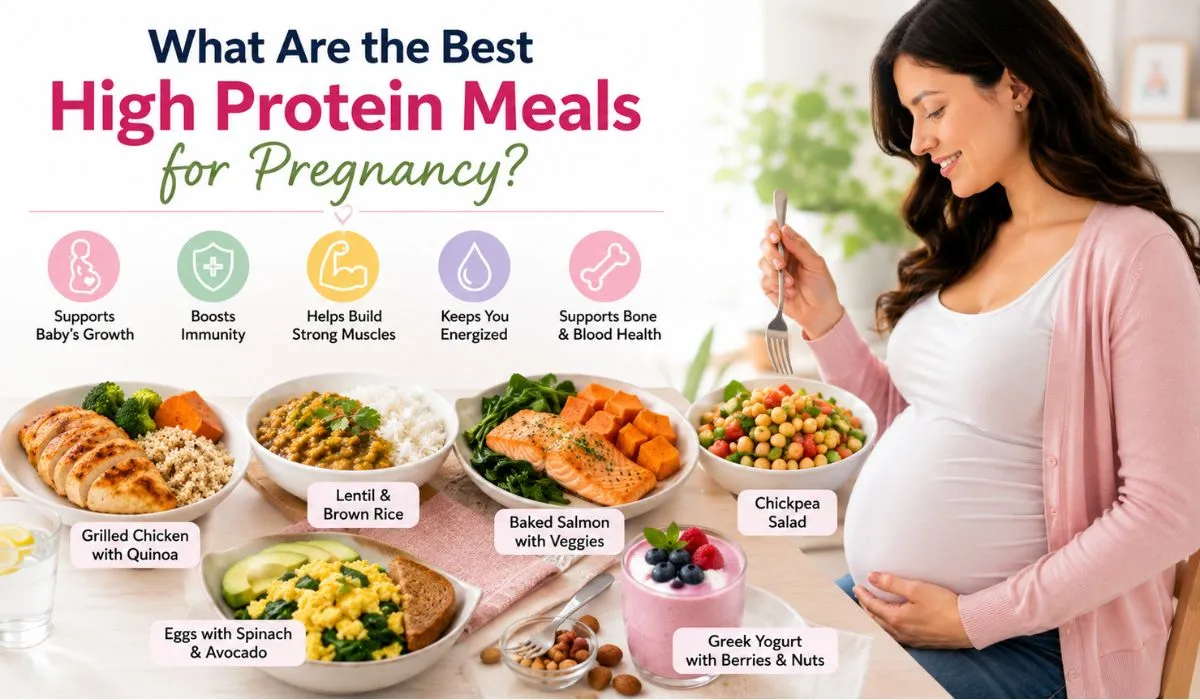
Here’s the short version: the best high protein pregnancy meals are simple ones — Greek yogurt with berries and nuts, eggs with avocado toast, grilled salmon with quinoa, that kind of thing. You’re aiming for roughly 71 grams of protein a day, and honestly, the easiest way to get there isn’t one perfect dinner — it’s spreading protein across everything you eat, snacks included.
And if you’re anything like most first-time moms, “just eat more protein” sounds easy in theory and a lot harder standing in front of the fridge at 7pm, tired, maybe a little nauseous, trying to figure out what actually counts. So let’s skip the textbook version and talk about real meals you could actually make this week.
Table of Contents
Why Your Body Needs So Much More Protein Right Now
Every bit of your baby — their muscles, organs, tissue — is being built from the protein you eat. It’s also doing quiet work for you: supporting your growing blood volume and helping your uterus and breast tissue develop as pregnancy goes on. Health experts generally recommend upping your protein intake starting in the second trimester, right around when your baby’s growth really starts to take off.
But don’t turn this into a math exercise. You don’t need to weigh your food or track grams obsessively. A much easier way to think about it: try to have some form of protein at breakfast, lunch, dinner, and at least one snack. If you’re doing that most days, you’re probably in good shape.
Breakfast: The Meal Most of Us Struggle With Most
Let’s be honest, mornings are rough. Between nausea and just not feeling like cooking, breakfast is often where good intentions go to die. A few things that actually work, even on low-energy days:
- Scrambled eggs with spinach and a slice of whole-grain toast
- A Greek yogurt bowl with granola, walnuts, and sliced banana
- Overnight oats made the night before with milk, chia seeds, and peanut butter
- A quick smoothie with milk (or fortified plant milk), a scoop of protein powder, and frozen fruit
If you only remember one thing from this section, let it be Greek yogurt. It lives in the fridge, needs zero prep, and quietly gives you both protein and calcium — which makes it one of the most forgiving high protein pregnancy foods out there.
Lunch and Dinner: Meals Worth Putting on Repeat
You really don’t need fancy recipes here. Some of the best pregnancy dinners are the boring, reliable ones you can make without thinking too hard:
- Grilled chicken or salmon with roasted vegetables and brown rice
- Lentil soup with a side of whole-grain bread
- Turkey chili loaded with beans
- A tofu stir-fry with broccoli, bell peppers, and quinoa
- A big salad topped with chickpeas, a hard-boiled egg, and pumpkin seeds
If you’re vegetarian or vegan, don’t worry — lentils, chickpeas, tofu, tempeh, and edamame all pull their weight. Just pair them with a grain like rice or quinoa so you’re rounding out the amino acids you need.
Snacks: Where the Extra Protein Sneaks In
This is honestly my favorite part to talk about, because snacks are where a lot of pregnant women add up extra protein without even trying. Cottage cheese with pineapple, a small handful of almonds, hummus with carrot sticks, a hard-boiled egg tucked in your bag — none of it requires effort, and it all adds up. Even just having a glass of milk alongside whatever you’re already snacking on nudges the number higher.
What About Fish? A Quick Word on Safety
Fish like salmon is genuinely one of the better choices here — it gives you protein and DHA, which plays a role in your baby’s brain development. According to the CDC, pregnant women can safely eat 2–3 servings of low-mercury fish a week, and salmon, shrimp, and tilapia are all considered safe bets. The ones to skip are the high-mercury fish, like swordfish and king mackerel.
Common Mistakes (And Why They’re Not a Big Deal)
A few patterns tend to trip people up: skipping breakfast and hoping to “make up for it” later, leaning too hard on protein bars or shakes instead of real food, or just not eating enough overall because nothing sounds appealing. If nausea or food aversions are making this hard some days, go easy on yourself — nobody hits a perfect number every single day, and a few solid days in a row matter far more than any one meal.
FAQS
How much protein do I need during pregnancy?
Most pregnant women need about 71 grams of protein daily, though your doctor may adjust this based on your individual needs.
Can I get enough protein as a vegetarian?
Yes. Lentils, beans, tofu, tempeh, eggs, dairy, and quinoa can easily cover your protein needs when eaten across the day.
Is it safe to eat eggs every day during pregnancy?
Yes, as long as they’re fully cooked. Eggs are a complete protein and a good source of choline, which supports your baby’s brain development.
What’s a quick high protein snack for pregnancy nausea?
Plain crackers with peanut butter or a small handful of almonds are gentle on the stomach while still adding protein.
Do protein shakes count toward my daily protein goal?
They can help in a pinch, but try not to lean on them too much — whole foods still give you fiber, vitamins, and minerals that a shake just can’t replace.