
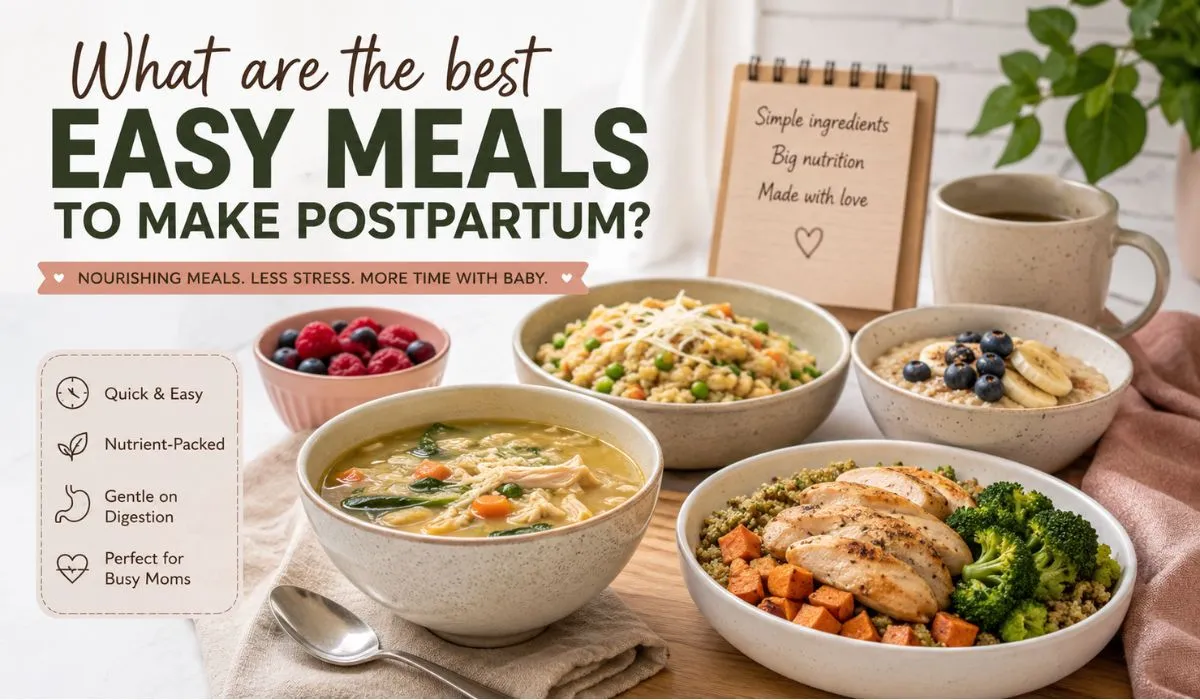
If you’re standing in your kitchen right now wondering how you’re supposed to cook anything with a newborn attached to you, here’s the short answer: the best postpartum meals are the simple ones. One-pan dinners, slow cooker soups, overnight oats, and freezer-friendly meals that lean on protein, iron, and healthy fats. Nothing fancy, nothing that demands two free hands or a functioning brain at 6am. Just food that shows up for you while you’re recovering and keeping a tiny human alive.
If you’re a few days or a few weeks postpartum, you already know how impossible cooking a “real” meal can feel. That’s not a personal failing — that’s just what the fourth trimester does to a person. So this guide skips the fussy recipes and focuses on what actually works when you’re running on broken sleep.
Table of Contents
Why Food Matters So Much Right Now
Your body just did something enormous, whether you delivered vaginally or had a C-section. You’re healing tissue, rebuilding blood volume, and — if you’re breastfeeding — making milk around the clock. All of that takes energy, and it takes specific nutrients your body is asking for whether you notice it or not. According to the CDC, postpartum recovery can stretch to six to eight weeks or longer, and what you eat during that window genuinely affects how you feel day to day.
A few things your body is especially hungry for right now:
- Protein, to repair tissue and support milk supply
- Iron, to replace what was lost during delivery and keep exhaustion from piling on
- DHA and healthy fats, which support both your mood and your baby’s brain development if you’re nursing
- Fiber, because digestion needs a little help getting back on track after birth
- Plenty of fluids, since breastfeeding raises your hydration needs quite a bit
None of this requires standing at a stove for an hour. It just requires a plan you can actually follow when you’re exhausted.
The Meals That Actually Get Made
Sheet-pan dinners are probably the closest thing to a miracle here. Chicken thighs, salmon, or chickpeas go on a tray with chopped vegetables, a drizzle of olive oil, and whatever seasoning you have on hand. Twenty-five minutes in the oven at 400°F and dinner is done — one pan, one cleanup, protein and fiber already built in.
Soups made in a slow cooker or Instant Pot work the same kind of magic, just on a bigger scale. Lentil soup, chicken and rice soup, a basic vegetable stew — start it while you’re resting or feeding the baby, and by the time you’re hungry, it’s ready. Make a big batch and you’ve got lunch and dinner covered for days without touching the stove again.
Mornings tend to be their own kind of chaos, which is where overnight oats earn their keep. Oats, milk, chia seeds, a spoonful of nut butter, and some berries go into a jar the night before, and breakfast is simply waiting for you when you wake up. Toss in some dried apricots for an easy iron boost.
Egg muffins are another one worth batching. Whisk eggs with spinach, cheese, and whatever vegetables need using up, pour into a muffin tin, and bake. They freeze well and reheat in under a minute, which makes them one of the easiest ways to get protein into your body while you’re holding a baby with your other arm.
Freezer burritos deserve a mention too. Fill tortillas with black beans, rice, cheese, and either scrambled eggs or shredded chicken, wrap them individually, and freeze the whole batch. Reheat straight from frozen and you’ve got a meal that travels well to the couch, the nursery, or wherever you end up parked for the next feeding.
For something that takes almost no thought, a yogurt parfait — Greek yogurt, granola, fruit — comes together in about two minutes and brings protein, calcium, and probiotics along with it, which is a nice bit of support for a digestive system that’s still finding its footing.
And on nights when even that feels like too much, a simple pasta with olive oil, garlic, and canned salmon or white beans stirred through is quick, filling, and easy to eat one-handed while you’re nursing.
Making It Sustainable, Not Just Survivable
A little bit of planning ahead goes a long way. If you’re still pregnant and reading this, batch cooking a few freezer meals now — or asking visitors to bring food instead of gifts — will save future-you a lot of stress. Keeping a “grab and go” shelf stocked with nuts, dried fruit, and protein bars means you’re never more than an arm’s reach from something that isn’t just coffee. Try not to skip meals altogether; low blood sugar has a way of making the exhaustion and mood dips worse than they need to be. And if someone offers to help with a meal train or a grocery run, let them — this isn’t the season to prove you can do it all yourself.
A few things worth watching out for: cutting calories too soon after birth, relying on caffeine in place of actual food, skipping iron-rich foods after the blood loss of delivery, and skimping on protein at breakfast, which tends to set the tone for your energy the rest of the day.
FAQ
How many calories do I need while breastfeeding?
It varies from person to person, but many breastfeeding mothers need several hundred extra calories a day compared to before pregnancy. Your doctor or a registered dietitian can help you figure out what’s right for you specifically.
What foods help postpartum recovery the most?
Iron-rich foods like lean meat, beans, and leafy greens, along with enough protein, DHA, and fiber, all play a real role in healing and energy.
Can I meal prep before giving birth?
Yes, and it’s one of the best things you can do for yourself. Freezer meals made in the third trimester tend to get used the most in those early weeks.
Is it okay to eat the same easy meals every day postpartum?
Completely okay, especially early on. Right now, consistency and ease matter a lot more than variety.
When should I talk to a doctor about postpartum nutrition?
If you’re dealing with extreme fatigue, dizziness, or other signs of anemia, it’s worth checking in with your healthcare provider — sometimes that points to a nutrient gap that needs addressing.