

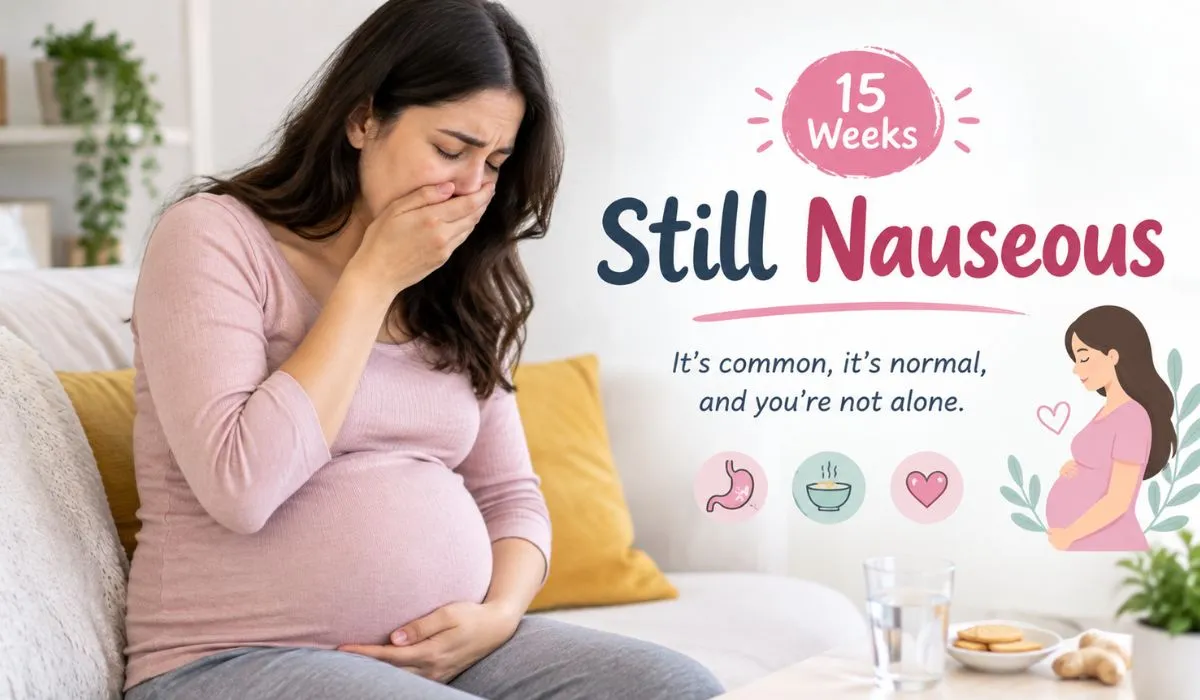
yes, and you’re not alone in it. Most first trimester nausea fades by week 12 or 13 as hormones settle, but plenty of women are still dealing with nausea well into the second trimester. If you were counting down to that “magic” week 13 finish line and it just… didn’t happen, that’s frustrating, not abnormal.
Table of Contents
Let’s talk about why this drags on for some women and what’s actually worth trying at this point.
Why It’s Sticking Around
The usual timeline is built around hCG, the hormone that spikes hard early on and typically peaks around week 10 before leveling off as the placenta takes over. For most women, nausea fades right along with that curve. But everyone’s hormone levels — and how sensitive their body is to them — are a little different. Some women just have a slower decline, which stretches nausea into the second trimester without anything being wrong underneath it.
A few other things can be feeding it too. Skipping meals lets blood sugar dip, which triggers nausea when you’re hungry regardless of trimester. Dehydration makes nausea worse, and it’s easy to fall behind on fluids when eating and drinking already feel like a chore. If you’re carrying twins, higher hCG levels often mean a longer nausea window. And for some women, it’s really just smell sensitivity and food aversions taking their time to fade.
None of this means anything is wrong with the pregnancy itself. How long or how badly nausea lasts isn’t a reliable signal of how things are progressing — it mostly just reflects your own hormone response.
What Might Actually Help Now
Chances are you’ve already tried the standard first-trimester tricks, so it’s worth adjusting rather than repeating them. Keep eating small amounts often — every 2 to 3 hours — since an empty stomach makes nausea after eating or nausea from hunger noticeably worse. Ginger still helps a lot of women, but if you’ve stopped responding to it, peppermint or lemon water is worth a try instead. Plain, cold foods like crackers, toast, or rice tend to sit better than anything with a strong smell.
Vitamin B6, sometimes paired with doxylamine, is a common first step many providers suggest before anything stronger — though that’s worth discussing with your provider rather than figuring out alone. If nausea is genuinely stopping you from eating or drinking enough, prescription anti-nausea medication is a real option at this stage. Reaching for it isn’t giving up; it’s just treating a real symptom.
Hydration deserves its own mention, honestly. Nausea and dehydration make each other worse in a loop, so sipping water or an electrolyte drink steadily through the day usually works better than trying to drink a lot all at once.
When to Actually Call Your Provider
Regular lingering nausea is one thing. A few signs mean it’s time to reach out: you can’t keep food or water down for more than a day, you’re losing weight instead of gaining it, you feel dizzy or your heart is racing, or nausea that had faded suddenly comes back hard. Severe, persistent vomiting can point to hyperemesis gravidarum, which is very manageable with the right support — but it’s not something to just push through alone.
Quick Answers
Is it normal to still have nausea at 15 weeks? Yes.
Many women feel better by week 12-14, but nausea continuing into the second trimester is common.
Does nausea lasting longer mean I’m having twins?
Not necessarily, though higher hCG from multiples can play a role for some women.
When should nausea at 15 weeks worry me?
If you can’t keep fluids down, you’re losing weight, or nausea suddenly returns after fading.
Can I take medication for it this far along?
Yes — B6, doxylamine, or prescription options are commonly used in the second trimester when nausea is genuinely interfering with eating or hydration.