
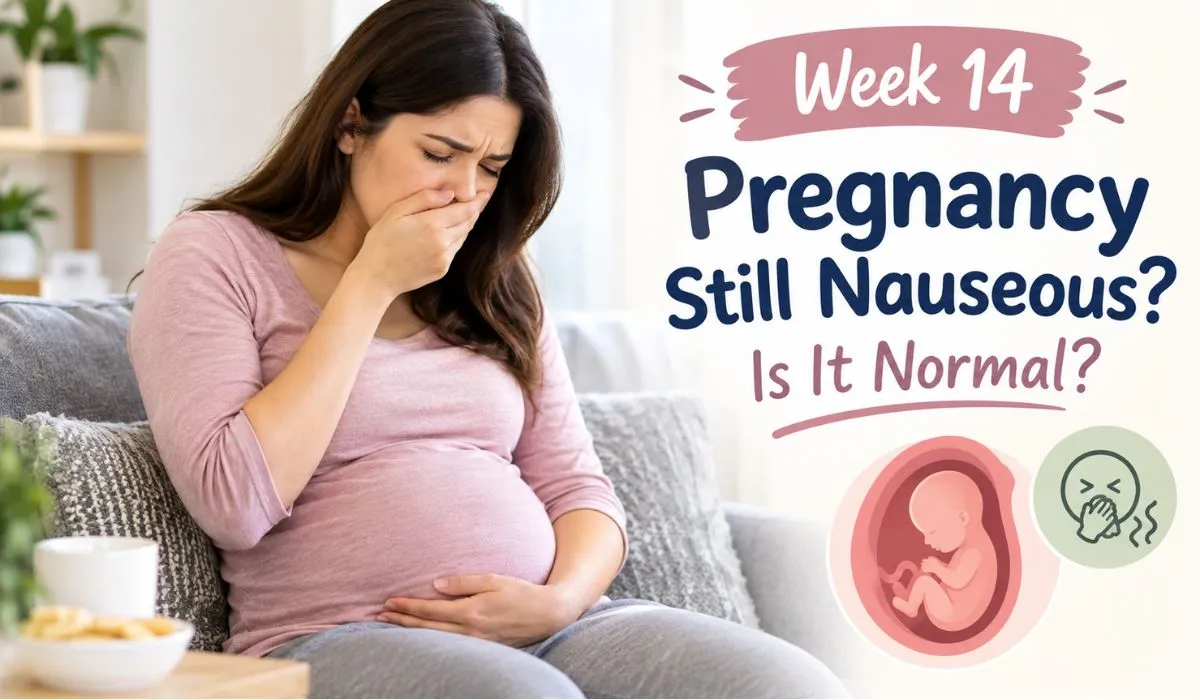
Yes, completely normal — you’re just not in the majority. Most women start feeling their first trimester nausea ease up right around week 14, which is exactly why it’s discouraging when you hit that week and nothing’s changed. Some pregnancies just run on a slightly slower hormonal clock, and that’s not a red flag on its own.
Table of Contents
If you walked into week 14 expecting relief and instead got the same queasy, food-averse version of yourself, let’s talk about what’s actually going on — both with the nausea and with everything else happening at this stage.
What’s Happening at 14 Weeks, Nausea Aside
You’re officially in the second trimester now, and your uterus has grown enough that it’s usually rising out of the pelvis, which is often when the first hint of a real belly starts showing. Your baby is roughly the size of a lemon, with features becoming more defined and early movements happening — though you likely won’t feel those flutters for another few weeks yet. This is also a common stretch for “wait, do I even feel pregnant?” moments, since some early symptoms fade even as others, like nausea, stubbornly hang on. Both experiences are normal; they just don’t always show up together.
Why the Nausea Hasn’t Let Up Yet
The typical nausea timeline is tied to hCG, the hormone that spikes hard early on and usually peaks around week 10 before leveling off as the placenta takes over hormone production. For most women, nausea fades along with that curve. But hormone decline doesn’t happen on the exact same schedule for everyone — some women are still working through a slower drop-off at week 14, which simply means a few extra weeks of queasiness rather than anything abnormal.
A few other things tend to keep nausea going this long. An empty stomach makes it worse, so if meals have gotten irregular, that alone can be dragging things out. Dehydration has the same effect — nausea and low fluid intake feed off each other. Carrying twins often means higher hCG overall, which can stretch the nausea window further. And smell sensitivity or specific food aversions sometimes just take longer to fade than the nausea itself.
None of this reflects how the pregnancy is progressing. Nausea duration is about your individual hormone response, not a signal about your baby’s health.
What Might Help Now
At this point, you’ve likely already tried the standard first-trimester tricks, so it’s worth switching things up. Small meals every couple of hours beat three big ones, since hunger itself can trigger nausea. If ginger has stopped working for you, peppermint or lemon water is worth trying instead. Bland, cold foods — crackers, toast, plain rice — tend to go down easier than anything with a strong smell.
Vitamin B6, sometimes combined with doxylamine, is a common option many providers suggest before anything stronger, and it’s worth bringing up at your next appointment rather than guessing on your own. If nausea is genuinely making it hard to eat or stay hydrated, prescription anti-nausea medication is a reasonable next step — not something to feel like you failed to avoid.
When to Call Your Provider
Ordinary lingering nausea at 14 weeks usually doesn’t need intervention. But reach out if you can’t keep food or water down for a full day, you’re losing weight instead of gaining, you feel dizzy or your heart is racing, or nausea that had calmed down suddenly comes back hard. Persistent, severe symptoms can point to hyperemesis gravidarum, which responds well to treatment but isn’t something to just push through solo.
Quick Answers
Is it normal to still be nauseous at 14 weeks?
Yes. Many women feel better by this point, but plenty still have nausea into the second trimester.
Why did my nausea come back after easing up?
Hormone fluctuations can cause temporary swings; if it’s sudden and severe, mention it to your provider.
Does still feeling nauseous mean anything is wrong?
No — nausea duration reflects your hormone response, not how the pregnancy is progressing.
When should nausea at 14 weeks worry me?
If you can’t keep fluids down, you’re losing weight, or symptoms are getting more severe rather than easing.