
Week 19 is a funny one. You’re not quite halfway, but close enough that it starts to feel real. Your baby is about the size of a mango, the worst of the nausea has probably faded, and if you’re lucky, you might feel a tiny flutter that makes you stop mid-sentence. Here’s what’s going on this week.
Table of Contents
What’s Happening With Your Baby
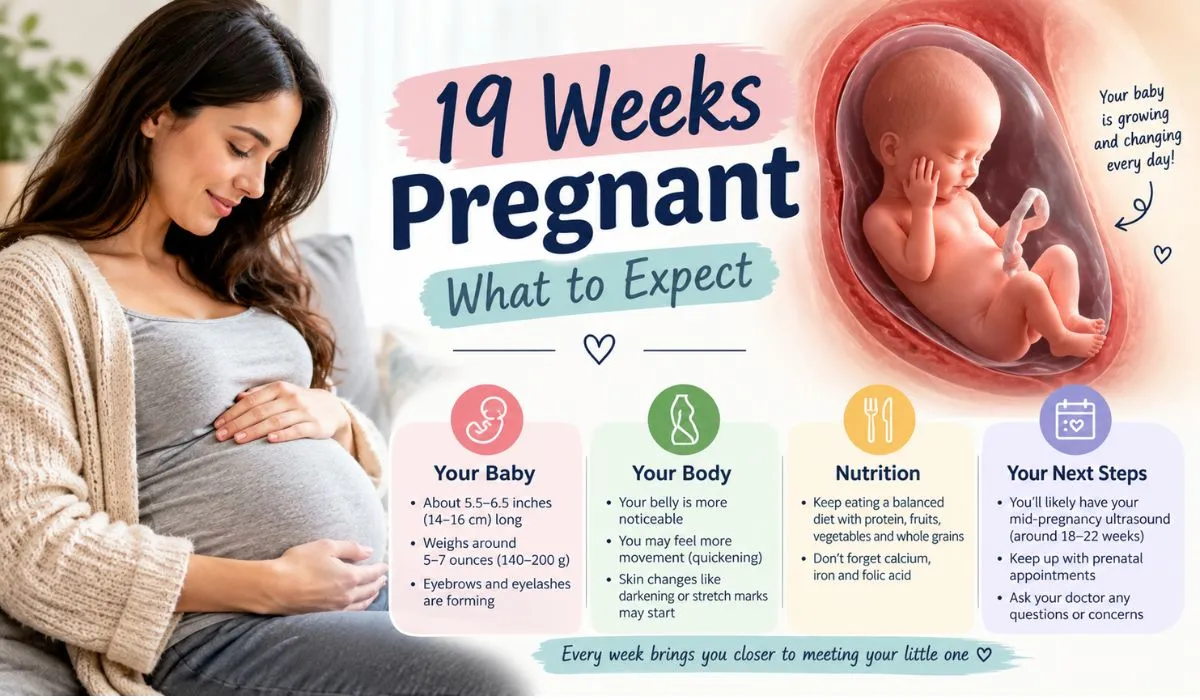
At around 6 inches and 8 ounces, your baby is small but busy. Their skin is getting a creamy coating called vernix, which protects it while they float in amniotic fluid. The brain is where things get interesting. The parts that handle hearing, taste, smell, sight, and touch are all starting to connect. So your voice? Probably getting familiar. Read to them, sing off-key, narrate your grocery run. It all counts.
19 Weeks Pregnant Symptoms
Energy tends to creep back around now, and so does your appetite. Don’t be surprised if you’re hungry an hour after lunch.
Your body is still stretching to make room, though, so a few things might catch you off guard. Stand up too fast and you may feel a quick, sharp pull low on one side of your belly. That’s round ligament pain. It feels alarming and isn’t, and moving more slowly usually fixes it. Night leg cramps, a sore back, a stuffy nose, and the occasional head rush are common too.
Then there’s quickening, the first time you feel your baby move. It’s almost never a kick. Most moms describe bubbles, a flutter, or a tiny tap. Haven’t felt it yet? Plenty of first-time moms don’t until 20 weeks or later.
Eating for Two? Not Exactly
ACOG says most women need only about 340 extra calories a day in the second trimester. That’s a snack, not a second dinner. What you eat matters more than how much.
Iron is a big deal right now because your blood volume is growing. Lentils, lean meat, and spinach all help, especially with a squeeze of lemon. Add yogurt or fortified milk for calcium. For DHA for pregnancy, the FDA suggests two to three servings of low-mercury fish a week, like salmon or sardines.
Then there’s your prenatal. Think of it as insurance for the days when dinner is toast. The CDC recommends folic acid daily, and the folic acid benefits for your baby’s brain and spine continue well past the first trimester. ACOG also recommends 27 mg of iron a day. As for the best vitamins for pregnancy, ask your provider, because pregnancy supplements aren’t one-size-fits-all. Maternal health vitamins back up a good diet. They don’t replace one. Good prenatal nutrition is really a bit of both.
Your Anatomy Scan
Sometime between 18 and 22 weeks, you’ll likely have a detailed ultrasound. They’ll check your baby’s organs, spine, and growth, plus your placenta, and you can often find out the sex if you want to. Type your questions into your phone beforehand. Everyone blanks once that little face appears on screen.
Small Habits That Help
Sleep on your side with a pillow between your knees. Keep water within reach. Take short walks. Don’t stop your prenatal just because you feel good, and try not to google every twinge at midnight.
Call your provider right away if you notice heavy bleeding, leaking fluid, severe belly pain, a bad headache, vision changes, or sudden swelling.
Questions We Hear a Lot
Is it normal not to feel movement at 19 weeks?
Yes. Many first-time moms feel it closer to 20 weeks or later. If it’s worrying you, mention it at your next visit.
How big is my baby?
About a mango, around 6 inches long.
What should I eat this week?
Protein, iron, calcium, fruits, veggies, and low-mercury fish, plus your prenatal.
Can I still exercise?
Usually, yes. Walking, swimming, and prenatal yoga are good picks. Check with your provider first.