

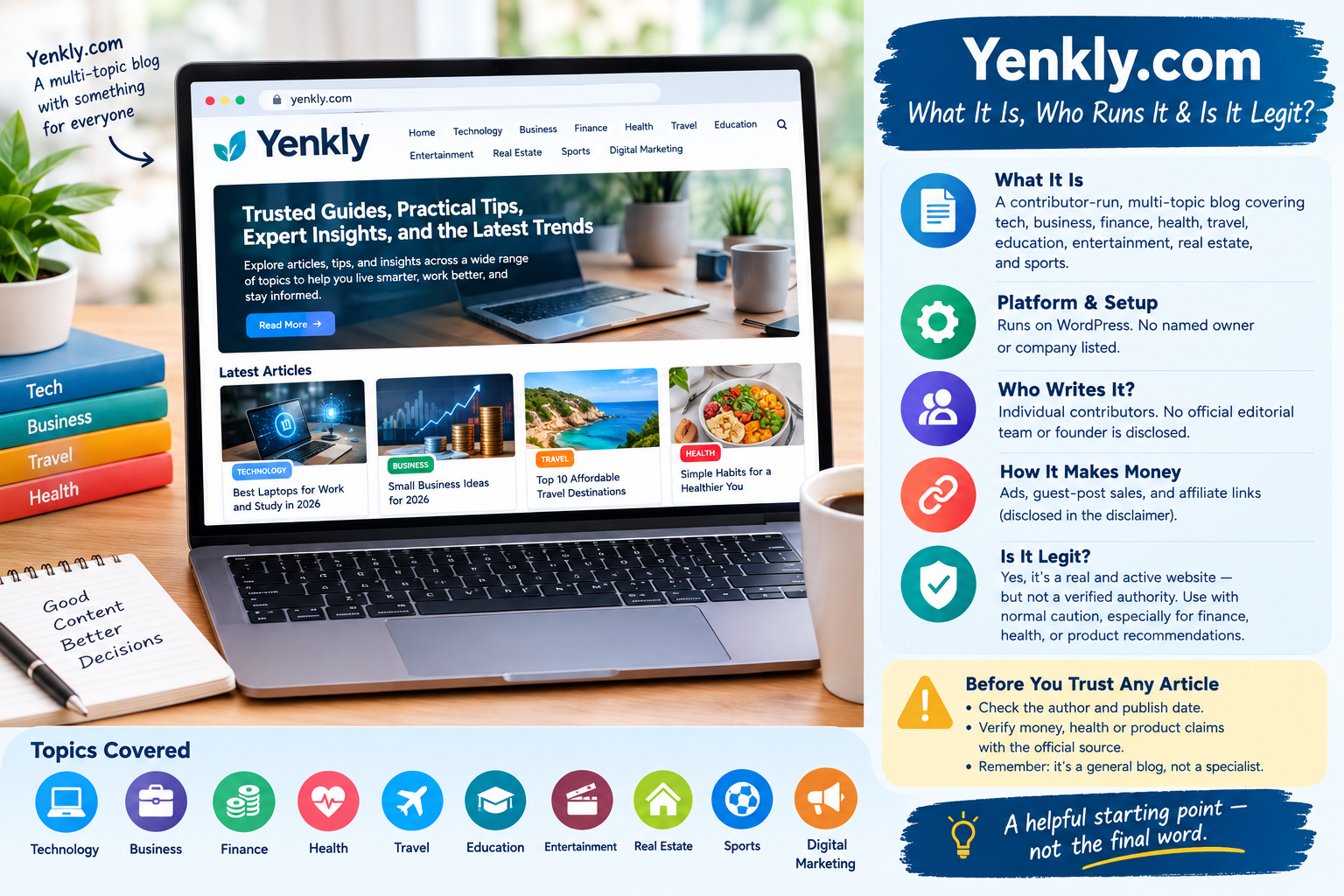
If you landed here after Googling “yenkly com,” you probably want one of three things: a quick answer to what the site is, proof it’s not a scam, or a sense of who’s actually behind it. Here it is in one line — Yenkly com is a contributor-run, multi-topic blog covering tech, business, finance, health, travel, education, entertainment, real estate, and sports, and it makes money through ads, guest-post sales, and affiliate links.
That’s the short version. The rest of this guide covers what most “what is yenkly com” articles leave out — including something worth knowing before you trust any of them.
What Yenkly com Actually Is
Yenkly com runs on WordPress and publishes general-interest articles the way a digital magazine does, not the way a niche authority site does. Its own about page describes the mission in plain marketing language, promising readers “trusted guides, practical tips, expert insights, and the latest trends” across its subject areas.
In practice, that means the site doesn’t specialize. It’s built to rank for a wide spread of search terms rather than to become the go-to source on any single topic. That’s a legitimate publishing model — plenty of successful blogs work this way — but it does change how much weight you should give any one article.
What Topics Does It Cover?
Based on the site’s own category pages and about section, Yenkly com publishes under these buckets:
- Technology — apps, software, gadgets, digital trends
- Business — startup advice, work trends, marketing basics
- Finance — general money explainers, occasionally lending-platform content
- Health & lifestyle — wellness habits, routines, self-care
- Travel — destination guides and trip ideas
- Education — study tips and learning resources
- Entertainment — pop culture and trending stories
- Real estate and sports — rounding out the category list
Its disclaimer page adds “digital marketing” to that list too, so the real spread is even wider than the homepage lets on.
Who Owns or Writes for Yenkly com?
This is the part every generic review dances around, so here’s the direct answer: there’s no named founder, no company page, no masthead. The about page talks about mission and values but never says who’s behind the keyboard.
Articles are attributed to individual bylines rather than a staff directory. That’s a common setup for contributor-driven content sites — writers submit or get assigned pieces, and there’s no single “editor-in-chief” vouching for accuracy across the board. It’s not automatically a red flag, but it does mean you’re reading freelance-quality content, not a specialist’s verified work.
Does Yenkly com Take Guest Posts or Paid Placements?
Yes. The site runs a visible guest-post marketplace, and its disclaimer openly states that pages “may contain affiliate links” that earn the site a commission when you click through and buy something. That’s a standard, disclosed monetization model — nothing hidden — but it’s worth knowing before you treat any product mention as a neutral recommendation.
Is Yenkly com Legit?
Here’s the honest, non-hedging answer: it’s a real, active, organized website — not a placeholder or an abandoned domain — but it’s also not a licensed authority on finance, health, or product reviews.
What counts in its favor:
- Consistent publishing with an organized category structure
- A disclaimer page that discloses affiliate relationships upfront
- HTTPS and a normal, functioning WordPress setup
What should make you slow down:
- No named ownership or verifiable editorial team
- Reviews of financial products (lending apps) and betting platforms, which carry real money risk if the info is outdated
- A guest-post-for-pay model, which can let in content written to sell rather than inform
None of that makes it a scam. It makes it a general content site you should verify before acting on, the same way you’d treat any blog you found through a search rather than a referral.
Why So Many “What Is Yenkly com” Articles Sound Identical
This is the part worth flagging directly. If you’ve opened a few different results for this exact search, you’ve probably noticed they all follow the same skeleton: intro about the “broad content model,” a section on tech, one on business, one on health, one on travel, a “how to judge quality” section, then a “benefits and limits” wrap-up — just with the sentences reworded.
That’s not a coincidence. It’s the signature of AI-assisted content built to farm search volume around a specific term rather than to actually investigate it. Several outlets have published near-duplicate explainers about this exact domain within weeks of each other, each one recycling the same five or six talking points with different bylines.
That doesn’t tell you anything bad about Yenkly com itself — but it does mean most of what’s ranking for “yenkly com” right now is spun content about the site, not real reporting on it. Worth keeping in mind before you take any single article’s “trust rating” at face value, including this one.
How to Actually Vet a Site Like This Yourself
Skip the generic “check the privacy policy” advice. Here’s what actually tells you something in five minutes:
- Check domain age. Run the domain through a free WHOIS lookup. A site launched in the last year or two publishing “expert insights” language deserves more skepticism than one with a longer track record.
- Pull up the Wayback Machine. Look at how the site’s homepage and content have changed over time. Sudden category expansions (adding finance and betting content, for instance) can signal a shift toward monetization over quality.
- Search the byline, not just the brand. If an author’s name appears on unrelated sites in totally different niches, that’s a sign of a contributor network writing for hire rather than a subject-matter expert.
- Read the disclaimer, not just the about page. The about page sells the mission. The disclaimer tells you how the site actually makes money and what it won’t be liable for — that’s the more honest document.
- Cross-check any money or health claim against the primary source. For a lending platform, that means the lender’s own terms page. For a health tip, that means a recognized medical source — not another blog citing the same blog.
Should You Trust Its Finance, Health, or Betting Content?
Treat it as a starting point, not a decision-maker. If an article on Yenkly com points you toward a lending app, a streaming deal, or a betting platform, verify the specific terms directly on that provider’s own site before you act — reviews like this can lag behind pricing or policy changes, and affiliate incentives can shape which products get covered more favorably. The same goes for health content: use it to learn the vocabulary, then confirm anything specific with a qualified source.
FAQs
Is Yenkly com a scam? No evidence points to that. It’s a legitimate, active content site — just one without disclosed ownership, so treat its recommendations with normal caution rather than full trust.
Who owns Yenkly com? Not publicly disclosed. The site doesn’t list a founder, company name, or editorial team on its public pages.
What does Yenkly com write about? Technology, business, finance, health, lifestyle, education, travel, entertainment, real estate, and sports — plus occasional digital marketing content.
Does Yenkly com accept guest posts? Yes, through a visible guest-post marketplace, which is one of its stated revenue sources alongside advertising and affiliate links.
Can I trust its product or lending reviews? Use them as a first pass, then confirm specifics — pricing, terms, availability — directly with the provider before committing to anything.
Bottom Line
Yenkly com is a real, working multi-topic blog, not a well-known brand and not a hidden scam — it sits in the wide middle ground occupied by thousands of contributor-driven content sites. Read it for a quick overview, verify anything with financial or health stakes elsewhere, and don’t mistake the volume of near-identical “what is yenkly com” explainers online for actual proof of anything. That volume tells you more about SEO content trends than it does about the site itself.