
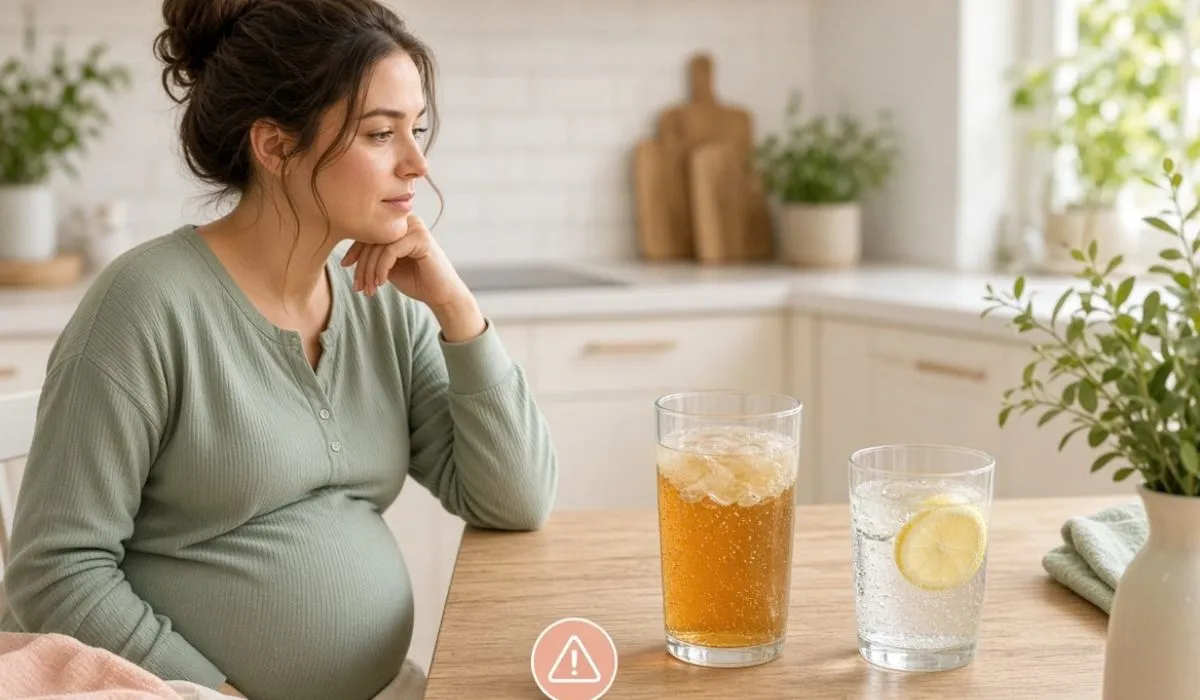
You’re pregnant, you love kombucha, and now you’re standing in the grocery store aisle staring at that bottle like it might bite you. Been there. Here’s the real answer: most doctors would say skip it for now. Not because kombucha is evil, but because there’s just too much you can’t control about what’s actually in that bottle.
Table of Contents
Let me break down why, because “just don’t drink it” without a reason is annoying advice.
The Alcohol Part Nobody Warns You About
Kombucha is fermented tea, which means it’s basically always brewing a tiny bit of alcohol, on purpose or not. It gets to call itself “non-alcoholic” as long as it stays under 0.5% ABV. But here’s the catch — that number isn’t locked in. Leave a bottle out of the fridge for a bit too long, and fermentation just keeps chugging along quietly. Before you know it, that bottle’s a little boozier than the label suggests.
Home-brewed kombucha is worse. Some people brewing it in their kitchen have ended up with batches testing at 3% ABV. That’s not a rounding error — that’s a real drink.
And since doctors will tell you there’s no truly “safe” amount of alcohol during pregnancy, even that small, unpredictable amount is enough to make most OB-GYNs say just wait it out.
It’s Also Usually Raw — And That’s the Point
A lot of kombucha brands don’t pasteurize it, because pasteurizing would kill off the live cultures that make kombucha, well, kombucha. That’s the whole selling point. But pregnancy shifts how your immune system works, and that makes you more susceptible to things like listeria — normally a mild nuisance, but genuinely risky during pregnancy.
And Don’t Forget the Caffeine
Kombucha starts as tea, so caffeine comes along for the ride. Doctors generally say to keep caffeine under 200mg a day while pregnant, but kombucha brands aren’t always upfront about exact caffeine content. Add that to your morning coffee and you might be over the line without realizing it.
So you’ve got alcohol you can’t fully measure, bacteria you can’t see, and caffeine you can’t easily track. Three unknowns stacked on top of each other — that’s really the whole reason doctors get cautious here.
Is There Any Exception?
Sort of, but don’t get too excited. A small, occasional sip of a properly pasteurized, well-refrigerated commercial brand is probably lower risk. But “probably lower risk” still isn’t a green light, and there’s no real way to know from the outside how any specific bottle was actually handled before it got to you. If your pregnancy is considered higher-risk in any way, it’s just easier to sit this one out entirely.
What to Drink Instead
You don’t have to abandon your gut health goals completely. Pasteurized yogurt or kefir with live active cultures gets you a lot of the same benefits. Sauerkraut works too. Same probiotic payoff, way less guesswork.
And a heads-up — don’t assume a home-brewed batch from a friend is the “safer, more natural” choice. It’s actually the riskier one. Home fermentation is much harder to control than commercial production, so contamination is more likely, not less.
Real Quick — Your Questions, Answered
I drank some before I even knew I was pregnant. Do I need to worry?
No, genuinely. A one-off before you knew isn’t something to lose sleep over. It’s regular, ongoing drinking that’s the actual concern here.
Does heating it up kill off the risky stuff?
Not reliably enough to count as pasteurization, so don’t rely on that trick.
What about once I’m breastfeeding?
Similar concerns still apply, though many consider the risk somewhat lower at that stage. Ask your pediatrician if you’re unsure.
Are “non-alcoholic” labeled brands actually safe?
Not automatically — pasteurization matters just as much as the alcohol number, sometimes more.
Should the sugar content worry me too?
Kind of, yeah. Plenty of kombucha brands sneak in more added sugar than you’d expect.