

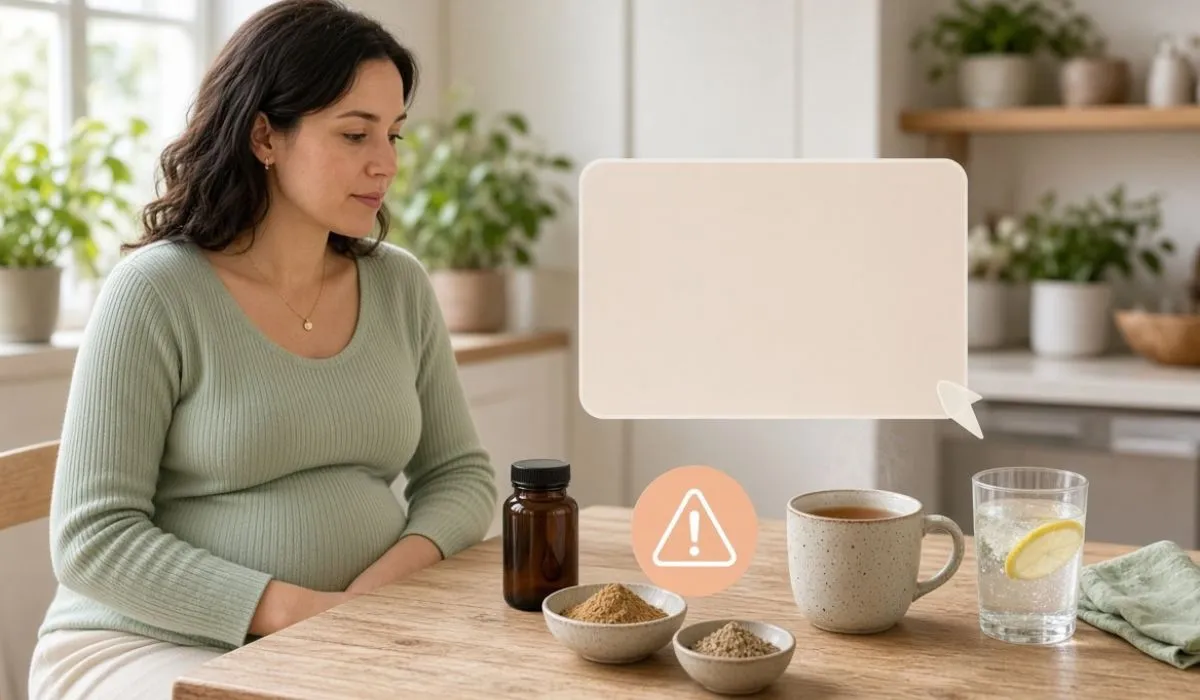
If you’ve been leaning on ashwagandha for stress or sleep and just found out you’re expecting (or you’re thinking about trying), your first instinct is probably to ask: can I keep taking this? The honest, short answer is no — most doctors currently recommend steering clear of ashwagandha during pregnancy. It hasn’t been proven safe, and there’s enough conflicting research and regulatory concern around it that “better safe than sorry” is really the guiding principle here.
Table of Contents
Why This Herb Suddenly Feels Complicated
Ashwagandha has had a bit of a moment. It shows up in wellness routines everywhere, promising calmer nerves, better sleep, and steadier hormones — all things that sound genuinely tempting when pregnancy has you exhausted and wired at the same time. But popularity and pregnancy-safety are two very different things, and this is one of those supplements where the science hasn’t quite caught up with the trend.
The worry actually goes back to 2009, when the WHO flagged ashwagandha as a possible risk for birth defects or miscarriage. That warning has followed the herb around ever since. Interestingly, though, some researchers have started pushing back on it. A 2025 review in Phytotherapy Research argued that a lot of the pregnancy-risk concern traces back to old, loosely sourced traditional medicine claims that got repeated and cited without anyone really double-checking the original evidence. So where does that leave us? Genuinely undecided — which, when it comes to your pregnancy, is reason enough to hold off.
What We Actually Know So Far
Here’s the thing about ashwagandha and pregnancy: there just isn’t much solid human research to go on. Most of what exists comes from animal studies, and some of those have shown the herb might interfere with normal fetal development at certain doses — not exactly reassuring. On the regulatory side, Denmark has restricted ashwagandha products specifically over miscarriage concerns, and the UK’s food safety agency has taken a hard look at it too. At the same time, other scientists argue those decisions leaned on shaky interpretations of decades-old data, and that the real risk may be overstated.
There’s also the hormone question. Ashwagandha can influence thyroid function and may interact with sedatives, which matters a lot during pregnancy when your hormones are already doing enough on their own. Layer on the fact that supplements aren’t FDA-regulated the way medications are, so you can never be fully sure how much of the active compound you’re actually getting from bottle to bottle, and it’s easy to see why most providers land on “let’s not risk it.”
So What Can You Do Instead?
If stress or sleepless nights are what pulled you toward ashwagandha in the first place, you’re not without options. A short walk or some gentle prenatal yoga can do more for your nervous system than you’d expect. Magnesium-rich foods like leafy greens and nuts tend to have a naturally calming effect. Building a simple wind-down routine before bed — dimming the lights, putting the phone away, maybe some slow breathing — can also make a real difference. And if anxiety or insomnia is genuinely hard to manage, it’s worth bringing up with your provider directly. They may have safer, pregnancy-appropriate suggestions tailored to you.
One thing worth watching out for: don’t assume “natural” automatically means “safe.” Plenty of herbal supplements, ashwagandha included, simply haven’t been studied enough in pregnancy to earn that label. And if you were already taking it before you found out you were pregnant, try not to panic — mention it at your next prenatal visit so your doctor has the full picture.
Quick Questions People Ask
Can ashwagandha actually cause a miscarriage?
It’s still genuinely debated. Some regulators point to older data suggesting a risk, while newer research questions how strong that evidence really is. Given the uncertainty, most experts still say it’s better to avoid it while pregnant.
Is it safe while breastfeeding?
Research here is just as thin, so many providers suggest caution during breastfeeding too.
I took it before I knew I was pregnant — should I worry?
A short course early on, before you knew, is unlikely to cause harm in most cases. Just flag it to your doctor so they can keep an eye on things.
Are there any adaptogens considered safe in pregnancy
Not really — most herbs in this category simply don’t have the safety data behind them yet. Leaning on lifestyle changes for stress relief is the more reliable route for now.