
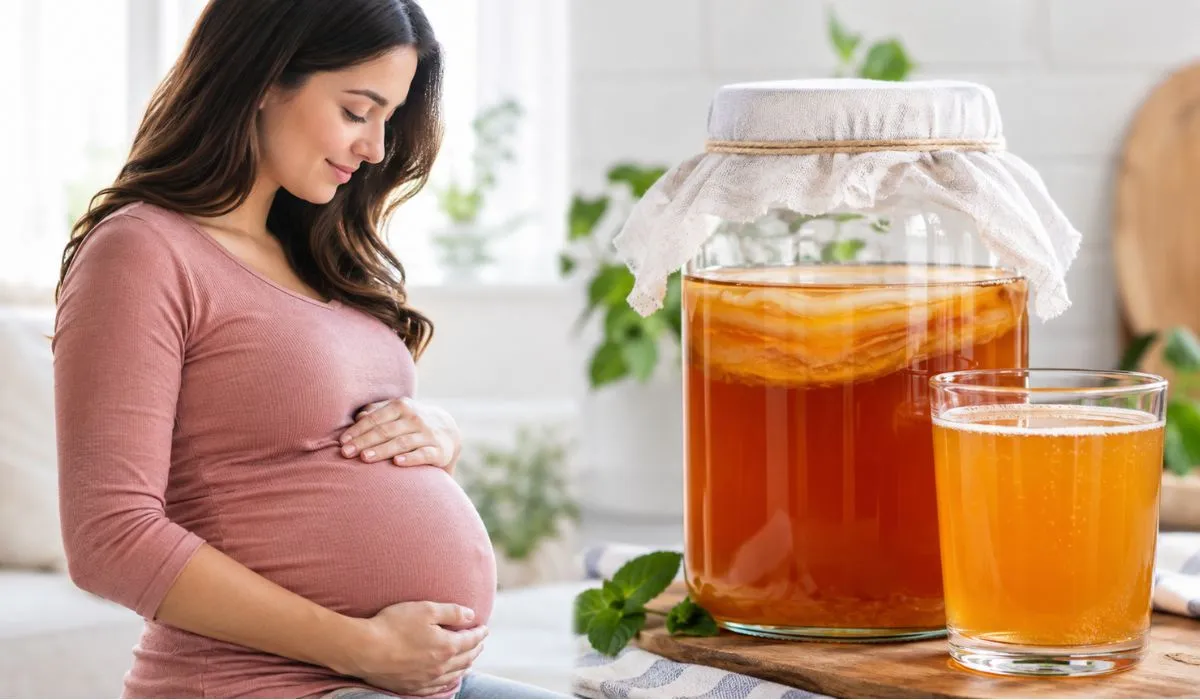
You’ve had that bottle of kombucha sitting in your fridge, and now that there’s a baby on board, you’re standing there staring at it like it might bite you. So let’s just cut to it: probably best to leave it alone for now. Not because kombucha is some scary villain, but because it quietly carries two things your body’s not really equipped to gamble with right now, a little trace alcohol from fermentation, and sometimes bacteria that never got pasteurized out. That’s the kind of thing worth knowing before your next sip.
Table of Contents
Let’s break it down together, because once you actually get why, this stops feeling like some random rule and starts making a lot more sense.
What’s Really Happening In That Bottle
You probably already half-know this, but here’s the quick version. Kombucha begins as plain old sweetened black or green tea. Then in goes the SCOBY (yes, that slightly weird, rubbery-looking blob of bacteria and yeast) and the whole thing just sits and ferments for a week, sometimes longer. That’s where the fizz comes from, the tang, and honestly, the whole reason kombucha built its reputation as a gut-health hero loaded with probiotics, B-vitamins, and antioxidants.
But fermentation’s a bit of a double-edged sword. While it’s doing all that good stuff, it’s also naturally brewing up a small amount of alcohol on the side. And depending on how the batch was handled, it might still have live, unpasteurized bacteria hanging around too.
Why Doctors Kind of Wince at This One
Here’s the part that catches people off guard: kombucha gets labeled “non-alcoholic,” but that doesn’t mean alcohol-free. It just means it stays under a certain legal line, usually somewhere between 0.5% and 1.5% alcohol by volume can still sneak through. Sounds small, right? Almost not worth mentioning. Except health experts have been saying for years that there’s really no amount of alcohol that’s been proven totally safe in pregnancy. So even that little trace is enough for a lot of doctors to just say, gently, “let’s hold off for now.”
Then there’s the bacteria side of things, and this one’s genuinely worth pausing on. A lot of kombucha, especially homemade batches, skips pasteurization completely. And here’s the thing about pregnancy: your immune system naturally softens up a bit, which is actually your body protecting your baby, but it also means you’re a little less armed to fight off something nasty like listeria if it’s hiding in there. Same reason you’ve probably already been told to skip unpasteurized cheese or juice.
Caffeine’s honestly the smallest concern on this list. Yes, kombucha’s made from tea, so there’s some caffeine in it, but usually not a ton. ACOG says staying under 200 mg a day during pregnancy is the general rule of thumb, so kombucha by itself probably won’t push you over. Just keep it in the back of your mind if you’re also sipping coffee or tea throughout your day.
And then, honestly, sometimes it’s just simpler than all the science. Fizzy, fermented drinks can be rough on a stomach that’s already dealing with pregnancy nausea. If you’re already feeling queasy, kombucha might just add fuel to that fire instead of helping.
Okay, But Is There Ever a Version That’s Fine?
Some providers are genuinely okay with the occasional small glass of a commercially made, pasteurized kombucha, since pasteurization deals with the bacteria worry. The trade-off? You lose a good chunk of that probiotic magic you were drinking it for in the first place. So really, at that point, you’re there for the taste, and that’s fine too, no judgment. If you’re craving it, just shoot your OB or midwife a quick message first. They know your history, your pregnancy, your specifics, way better than any article can.
If You’re Really Just Missing the Gut-Health Thing
If kombucha was your whole probiotic routine, don’t worry, you’ve got options. Pasteurized yogurt with live cultures, kefir made from pasteurized milk, or a prenatal probiotic your provider’s on board with can all step in nicely. And if you’re mostly just craving the bubbles and the fizz, honestly, sparkling water with a splash of juice hits that spot more than you’d expect.
A Few Friendly Reminders
Don’t take “non-alcoholic” at face value, it’s more of a technicality than a promise. Steer clear of homemade kombucha entirely right now, since brewing it yourself just adds more unknowns than the commercial stuff. And try not to lean on kombucha as your main gut-health strategy while you’re pregnant, the whole-food options are just the safer bet for these months. And when you’re not sure? Ask. Your provider would genuinely rather answer a “silly” question than have you guessing.
Things You’re Probably Still Wondering
Is one sip going to hurt my baby?
Nah, probably not. One little taste isn’t going to do damage. It’s really about not turning it into a habit, that’s the actual concern, not the occasional accidental sip at a friend’s dinner party.
Does pasteurized mean totally safe, then?
Not quite, sorry. Pasteurization handles the bacteria risk, but the trace alcohol’s still in there. So it’s safer, not risk-free.
Could it actually help with my nausea?
Some women say it does. But most doctors will steer you toward the tried-and-true stuff first, ginger tea, smaller more frequent meals, that kind of thing.
And what about breastfeeding?
Same kind of caution applies, mostly because of that alcohol content again. Worth a quick chat with your pediatrician based on your feeding routine.