

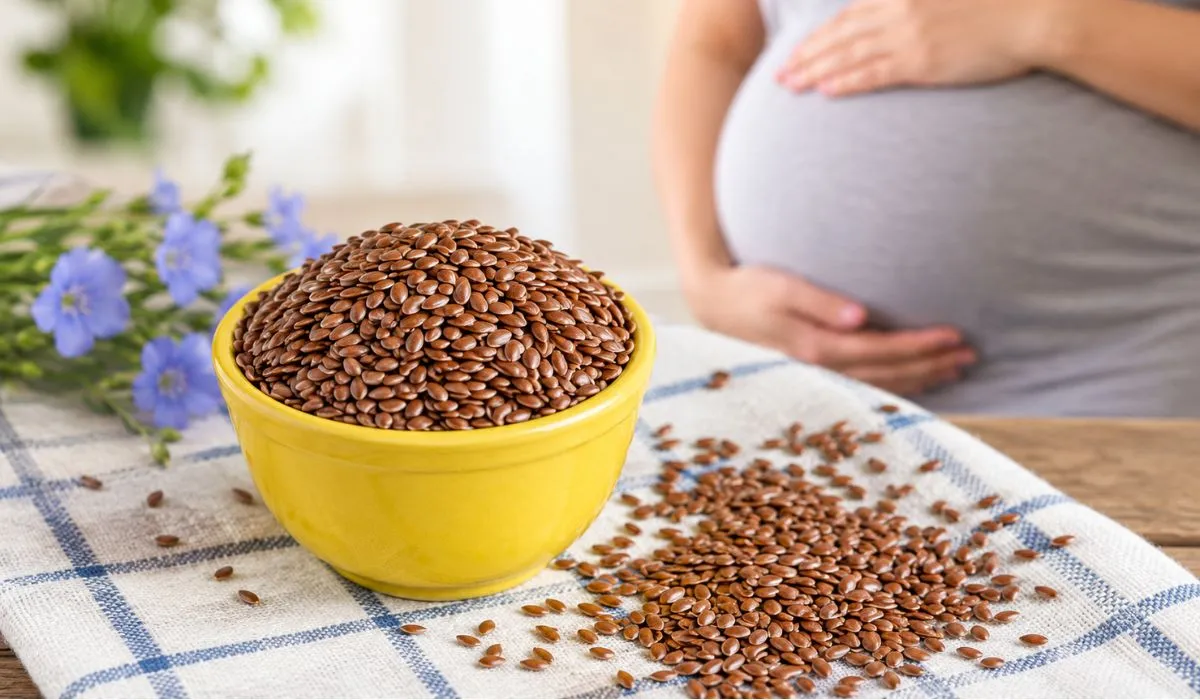
Let’s just talk like normal people for a second. You’re probably here because you’ve got a bag of flaxseed in your pantry, a Google search that’s given you five contradicting answers, and about ten minutes before the baby (or the toddler, or your own hunger) demands your attention again. So I’ll cut to it.
Table of Contents
Small amounts of ground flaxseed, mixed into your food? Probably fine. Flaxseed oil or supplements in bigger doses? That’s the part where you actually want to check with your doctor first, not just trust a blog post — including, kind of ironically, this one.
Why Can’t Anyone Just Give a Straight Answer?
Here’s the deal. Flaxseed has these compounds in it called lignans, and they act a bit like estrogen once they’re in your system. That’s the thing that makes people nervous. A few animal studies — and I mean rats fed genuinely huge amounts, nothing like what a human would eat with a spoon — raised some questions about how that might play out during pregnancy. There’s also some research connecting flaxseed oil specifically to a higher chance of preterm birth, mostly with regular use later in pregnancy.
But — and this matters — that’s not the whole picture. Flaxseed’s also got a ton of fiber in it, plus ALA, which is an omega-3 your baby’s brain and eyes actually use to develop. There’s even some newer research suggesting it could help with things like heart health long-term. So which is it? Honestly, even the experts don’t fully agree. ACOG doesn’t say to avoid it. The NIH is more nervous about it and calls it possibly unsafe. Two credible sources, two different vibes. If you feel like you’re getting mixed signals, that’s because you genuinely are — the science just isn’t settled yet.
What I’d Personally Do
I’m not going to pretend there’s a magic answer here, but if I were pregnant and wondering whether to keep sprinkling flaxseed on my yogurt, I wouldn’t panic about it. A teaspoon here and there is unlikely to cause any harm, and it might actually help — pregnancy constipation is no joke, and flaxseed’s fiber is one of those old-school remedies that actually works. What I’d be more careful with is the concentrated stuff: oil capsules, high-dose supplements, eating handfuls of raw seeds like they’re trail mix. That’s where the more concerning studies live, so unless your doctor’s specifically said it’s fine, I’d hold off on those for now.
Also, quick heads-up: skip raw or unripe flaxseed straight off the plant — it can have compounds in it that aren’t great for anyone, pregnant or not. Ground or roasted, from a brand you actually trust, is the way to go.
A couple small things that help if you’re adding it in: start with less than you think you need, drink extra water because the fiber can leave you a little backed up in the wrong way if you don’t, and go with ground flaxseed over whole seeds since your body actually absorbs more from it that way.
And honestly? Just mention it to your OB at your next appointment. Not because it’s scary, but because “it’s just food” isn’t always the full story, and it costs you nothing to ask.
Quick Answers to What You’re Probably Still Wondering
Is ground flaxseed safer than the oil?
Yeah, generally. Eating it as an actual food is a lot less worrying than the oil or supplement route.
Does it really help with constipation?
It does, genuinely. That’s the fiber working its magic, and it’s a go-to for a lot of moms for exactly that reason.
How much is a normal amount?
No official rule, but a tablespoon or under a day tends to be what most providers are comfortable with.
I was taking flaxseed oil before I got pregnant — do I need to stop now?
Ask your doctor. It’s been linked to a higher preterm birth risk in some studies, so a lot of providers suggest putting it on pause for now.
What about breastfeeding — same rules?
Pretty much. The research is still thin there too, so it’s worth a quick check-in rather than just assuming.
 Emma Gill