

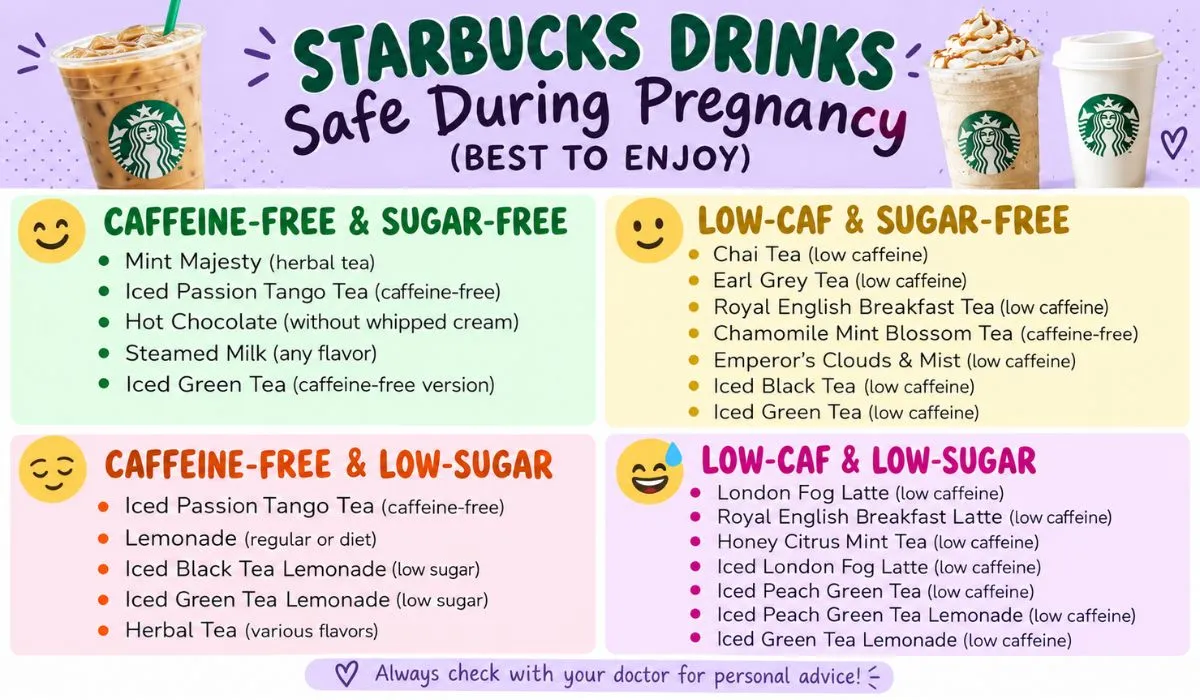
Yes, you can still get your Starbucks. The one number to know is 200 mg, the daily caffeine limit the American College of Obstetricians and Gynecologists (ACOG) says is safe during pregnancy. That’s about one grande latte. Anything decaf or caffeine-free is a bonus.
Table of Contents
So there you are, standing at the counter, and your brain suddenly goes, wait, can I still have this? It happens to almost everyone. You’re already giving up so much, and your coffee run shouldn’t feel like a test you might fail. Let’s go through it together.
Why the Fuss About Caffeine?
Caffeine passes through the placenta, and your baby’s body can’t break it down the way yours can. That’s the whole reason behind the 200 mg guideline. Some research links higher intake to pregnancy risks, but one cup won’t hurt you, so try not to spiral.
Starbucks just makes it easy to overshoot. A grande Pike Place has around 310 mg, which is more than a full day’s worth in one cup. A grande latte sits closer to 150 mg. These are rough numbers, since they vary a little by store.
What to Order When You’re Expecting
If you love your latte, keep it. A tall with one shot comes to about 75 mg, and the milk gives you calcium and protein, which your body is using a lot of right now. Half-caf works nicely too if you want a bigger drink without the extra buzz.
Decaf is worth another look. A decaf latte or Americano has under 25 mg, and honestly, most people can’t taste the difference. On mornings when coffee smells awful (first trimester, we see you), steamed milk with a pump of vanilla feels like a warm hug.
Cold drinks can be a lifesaver when you’re queasy, but read the fine print. Refreshers aren’t caffeine-free, and a grande Strawberry Açaí has about 45 mg from green coffee extract. Chai lattes (about 95 mg) and matcha lattes (about 80 mg) are fine too, as long as you count them.
What to Leave for Later
Cold brew and blonde roast are the sneaky ones. A grande cold brew is around 205 mg, and a grande blonde can top 350 mg. They’ll still be there after the baby comes, I promise.
Frappuccinos won’t harm you, but many are basically milkshakes with a coffee label. If you’re watching your blood sugar, go small or ask for fewer pumps of syrup. And “herbal” doesn’t automatically mean safe. Peppermint and ginger are usually fine in moderation, but if a tea blend has herbs you don’t recognize, ask your doctor or midwife first.
Little Habits That Help
Treat caffeine like a daily budget. If you spend it on a morning latte, switch to decaf or herbal tea after lunch. Chocolate and soda draw from that same budget, and people forget it all the time.
The two most common slip-ups are forgetting that chai, matcha, and Refreshers contain caffeine, and assuming decaf means zero. It doesn’t, though the amount is tiny.
One more thing for your prenatal routine: coffee and tea can slightly reduce iron absorption. Take your prenatal vitamin with water, and give it a little breathing room from your latte, so your folic acid and iron can do their jobs.
Quick Answers
How much Starbucks coffee can I have while pregnant?
Up to 200 mg of caffeine a day, according to ACOG. That’s one grande latte, or two talls with a single shot each.
Is decaf okay?
Yes, it’s generally considered safe. It contains a small amount of caffeine, nothing like a regular cup.
Can I have a Refresher or Frappuccino?
Now and then, yes. Count the caffeine in Refreshers, and keep an eye on the sugar in Frappuccinos.
Is the milk pasteurized?
Yes, so lattes and steamed milk are a safe pick.