

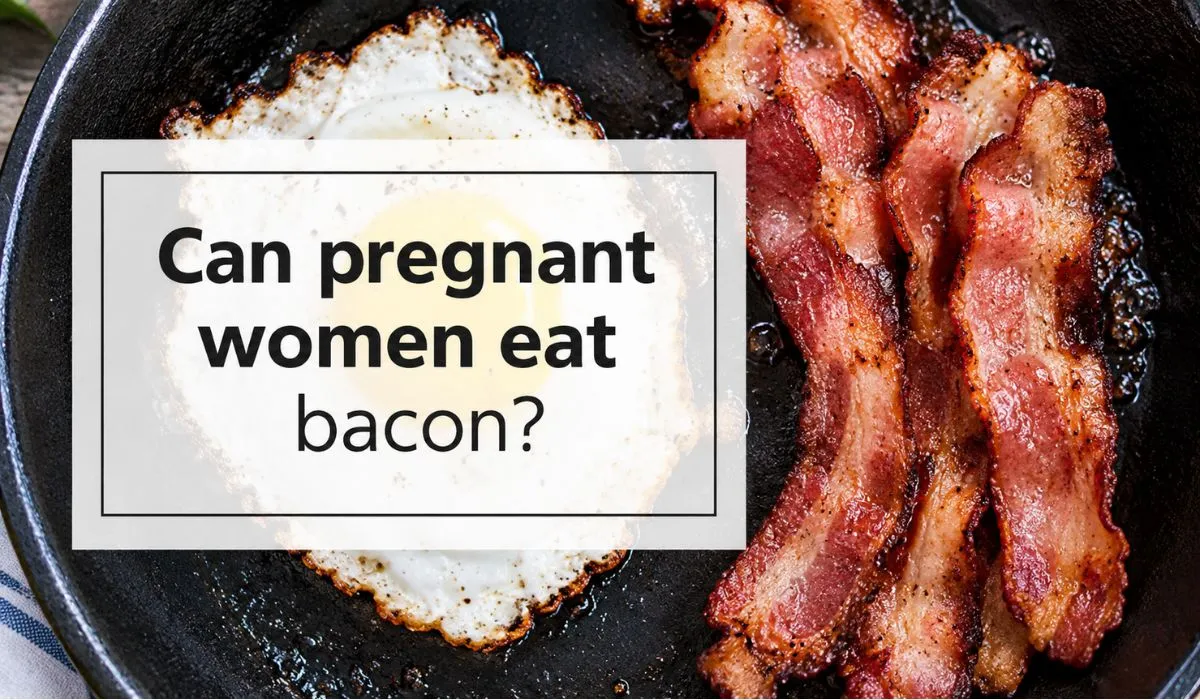
yes. Go ahead and breathe out. Bacon is not joining the long list of pregnancy no’s — it just needs a little TLC in how it’s cooked, and it works best as a “sometimes” thing rather than an everyday thing. So that BLT craving, or the Saturday morning bacon-and-eggs plate? Still yours to enjoy.
Table of Contents
Why does bacon get a warning label in the first place?
Honestly, it comes down to one word: Listeria. Pregnancy changes how your body fights off certain bacteria, and Listeria is the one that pops up most in pregnancy food guides — for good reason, since in rare but serious cases it can lead to miscarriage or stillbirth. Scary to read, I get it. But here’s the relief: heat kills it, plain and simple. So if your bacon comes off the pan properly crispy, not soft or slightly see-through, you’ve already dealt with the main risk.
There’s a second, quieter issue too, and it’s less about bacteria and more about how bacon is made. Most bacon is cured with nitrates and nitrites, which is what gives it that pinkish color. Some studies have linked a steady, heavy intake of nitrates in pregnancy to a higher chance of preterm birth, and cooking cured meat at very high heat can create compounds called nitrosamines — not something you want piling up either. Again, none of this makes bacon dangerous in small doses. It just means it earns “treat” status for the next few months instead of “staple.”
How much bacon is actually fine?
A couple of servings a week is the number most experts land on. That’s genuinely enough room to satisfy a craving without your sodium or nitrate intake sneaking upward over nine months. A few small swaps help too — bacon labeled “no nitrates added” or cured with celery powder, cooking it low and slow instead of charring it, and blotting off the extra grease. And turkey bacon? It feels like the virtuous choice, but it follows the exact same rulebook — cook it through, watch the sodium. The cooking method is what actually matters, not the animal it came from.
Quick myth check
“Pregnant women can’t eat bacon at all.” Not true — well-cooked bacon in moderate amounts is generally considered safe. It’s the raw or undercooked stuff, or eating it daily, that’s the real concern.
“Turkey bacon is the safe swap.” Kind of, kind of not — it’s often a bit leaner, but it still needs to hit the same cooking bar as regular bacon.
Groups like the CDC and ACOG both circle back to the same point: cooking temperature matters more than the specific cut of processed meat on your plate.
A few friendly reminders
Crispy over chewy, always. A little extra caution if you’re ordering bacon out and it looks underdone. And pairing it with something like eggs, spinach, or whole grain toast turns it into part of a real meal instead of the main event. If sodium’s already on your radar, it’s worth a quick mention to your provider.
Fast answers to the follow-up questions
Is turkey bacon safer than regular bacon?
Not meaningfully — both need to be cooked until crispy, both deserve moderation.
Can I eat bacon in my first trimester?
Yes, fully cooked bacon is fine throughout all three trimesters.
Does freezing kill listeria?
No — it just pauses the bacteria. Cooking is the only thing that actually eliminates it.
I think I ate undercooked bacon — should I worry?
Watch for flu-like symptoms over the next couple of weeks and flag it to your doctor so they can advise based on your situation.