

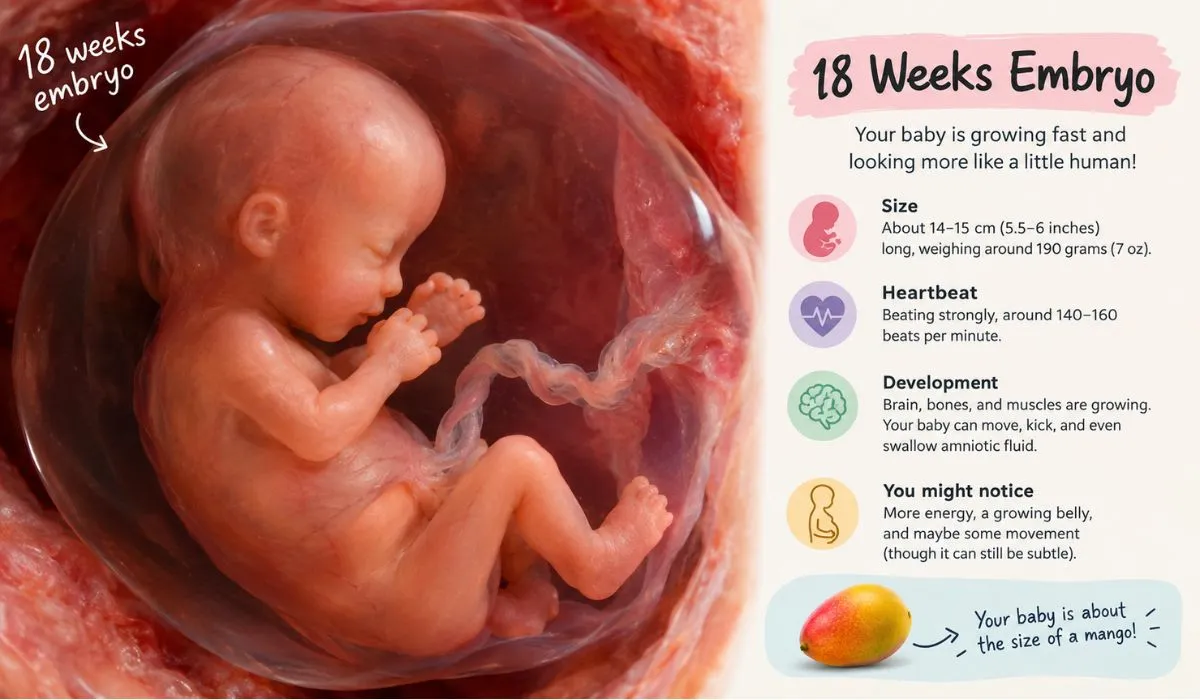
Let’s clear this up first, because you probably searched “18 weeks embryo” and deserve a straight answer. At 18 weeks, your baby is technically a fetus, not an embryo. The embryo stage only lasts through the first eight weeks after fertilization. But honestly, nobody checks the dictionary while growing a person, so don’t give it another thought. What matters is that your baby is about 5.5 inches long, roughly the size of a bell pepper, and weighs around 7 ounces.
Table of Contents
Why the Name Changed
Think of the embryo stage as your baby’s blueprint phase. All the major organs got sketched in during those early weeks. By 18 weeks, the blueprint is done, and your baby is busy building the house, getting bigger and a little more clever every day.
A Peek Inside at 18 Weeks
Here’s the part I love. Your baby’s ears have settled into place, so they may already hear your heartbeat, your voice, and yes, even your tummy rumbling after lunch. A soft coating called myelin is wrapping around their nerves, and tiny fingerprints are forming on those teeny fingers. They’re hiccupping, yawning, and stretching all day long, like they own the place.
You might even feel a little hello back. Those faint flutters, a bit like bubbles, are called quickening. Plenty of first-time moms notice them between 16 and 25 weeks, so if you haven’t felt anything yet, take a deep breath. You’re not behind. Around now you may also have your anatomy scan, usually between 18 and 22 weeks, when the sonographer checks your baby’s organs, spine, and growth.
And How Are You Feeling?
For many moms, the second trimester feels like a long exhale. The nausea eases and your energy trickles back. You might still get an achy back, a dizzy moment when you stand up too fast, or leg cramps at night. Hunger can also show up with a vengeance. All of that is common, but if something feels off, call your doctor or midwife. Trust your gut.
Feeding Your Growing Baby: Prenatal Nutrition at 18 Weeks
Your body is working overtime right now, and good prenatal nutrition makes a real difference. Iron is a big one because you’re making extra blood. The NIH says pregnant women need about 27 mg a day, and you’ll find it in lentils, lean meat, and spinach. Squeeze a little orange over it, since vitamin C helps your body absorb iron.
Calcium is busy building tiny bones, and health experts generally suggest about 1,000 mg daily for adult women. Yogurt and fortified plant milks work well. Then there’s DHA for pregnancy, which supports your baby’s brain and eyes. ACOG suggests 200 to 300 mg a day from low-mercury fish like salmon, or from a supplement.
And please keep taking your prenatal vitamin. The folic acid benefits don’t stop after the early weeks, and the CDC recommends at least 400 mcg every day. Many pregnancy supplements contain more, so check with your doctor about what’s right for you. This is general information, not medical advice.
Little Slip-Ups Almost Every Mom Makes
I’ll be honest, nearly everyone falls for the “eating for two” idea. In the second trimester you only need about 340 extra calories a day, which is just a small snack. Another easy slip is skipping your vitamin once you’re feeling better. And water! It’s so easy to forget, but staying hydrated can ease cramps and dizziness more than you’d think.
Quick Questions Moms Ask
Is an 18-week embryo the same as a fetus?
Not quite. Medically, your baby is called a fetus after about week 10 of pregnancy.
Should I feel my baby move at 18 weeks?
Maybe! Many first-time moms feel it between 18 and 25 weeks. Earlier or later is normal too.
Which vitamins matter most right now?
Iron, calcium, DHA, and folic acid are the stars, and a good prenatal vitamin fills the gaps.