
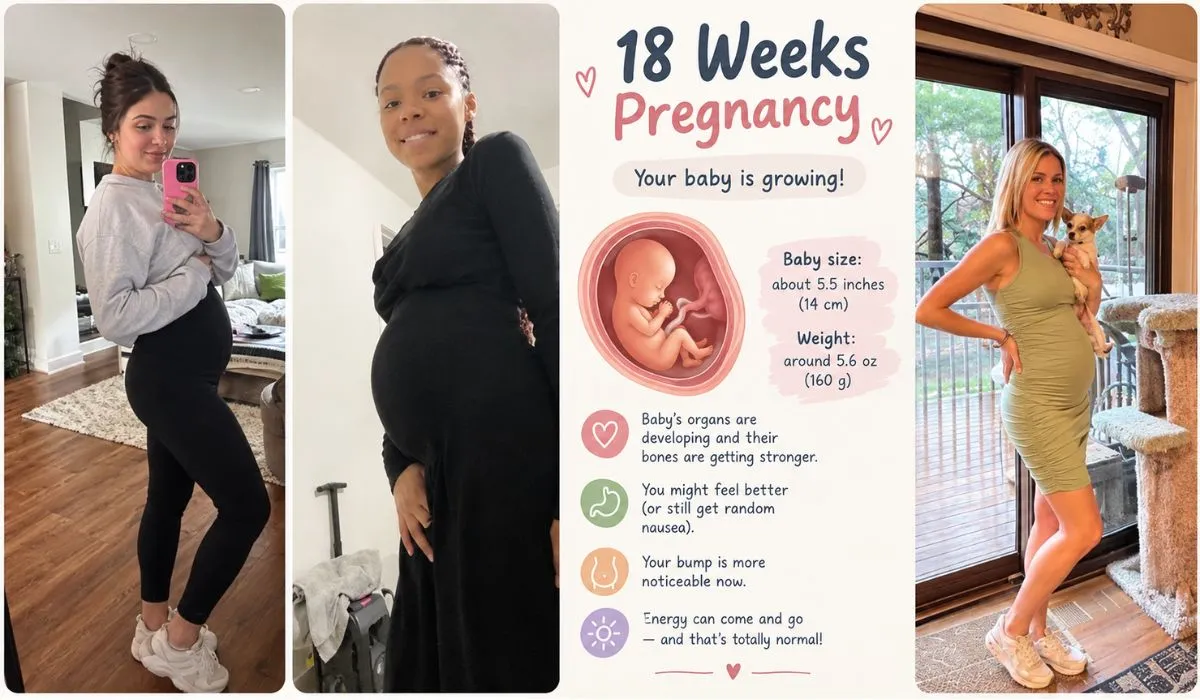
At eighteen weeks pregnant, your baby is about the size of a sweet potato, around 5.6 inches long and 7 ounces. You might even feel the first little flutters of movement.
Table of Contents
Eighteen weeks pregnancy is a lovely stretch, honestly. The nausea has usually settled, your energy is creeping back, and your bump is finally showing. So let’s chat about what’s happening.
Your Baby This Week
Your little one is busy in there. Their nerves are getting a protective coating that helps messages travel faster, and their ears are developed enough that they may be hearing your heartbeat and your voice. They’re also yawning, stretching, and hiccupping. Pretty sweet, right?
How You Might Feel
Many moms describe the first movement as bubbles or a soft tap. If it’s your first baby, it can take until around 25 weeks to feel it, so no worries if you’re still waiting. You may also notice a stuffy nose, a sore lower back, or a quick tug on the sides of your belly. If you get dizzy when you stand up, go slowly, since blood pressure often dips in the second trimester.
Eating Well at Eighteen Weeks
You don’t need to eat for two. A few hundred extra calories a day is plenty. What counts is good prenatal nutrition. According to the CDC and ACOG, you need about 27 mg of iron daily, so lentils, beans, lean meat, and spinach are great picks. Calcium, around 1,000 mg a day, supports your baby’s bones, and health experts recommend 200 to 300 mg of DHA for pregnancy for brain and eye development.
Keep taking your prenatal vitamin, too. The folic acid benefits don’t stop after the first trimester, and good pregnancy supplements fill the gaps on busy days.
One Gentle Reminder
Sleep on your side if you can, and ask your provider when your anatomy scan is, usually between 18 and 22 weeks. If you have heavy bleeding, severe belly pain, leaking fluid, or a bad headache with vision changes, call your doctor right away, as the NIH advises.
Quick Questions
How big is the baby at 18 weeks? About 5.6 inches and 7 ounces.
Should I feel movement yet? Maybe! Anywhere from 18 to 25 weeks is normal.
What should I eat at 18 weeks pregnant? Protein, iron, calcium, fruits, veggies, and your daily prenatal vitamin.
At eighteen weeks pregnant, you’re right in the middle of your second trimester. Your baby is about the size of a sweet potato, around 5.6 inches long and 7 ounces, and you might feel those first tiny flutters any day now.
Let’s be honest, eighteen weeks pregnancy is one of the nicest stretches of this whole journey. The nausea has usually calmed down, the exhaustion eases up a little, and you finally have a bump that looks like a bump. So grab a cup of tea, and let’s chat about what’s happening.
Your Baby at 18 Weeks
Right now, your little one is surprisingly busy. Their nerves are getting wrapped in a protective coating called myelin, which helps messages travel faster. Their ears have developed enough that they may be hearing your heartbeat and even your voice. Isn’t that something? They’re already getting to know you. They’re also yawning, stretching, and hiccupping, while a soft, waxy layer called vernix forms to protect their skin.
What You Might Be Feeling
Your uterus is climbing toward your belly button, and you may feel it. Then there’s quickening, the first real movement. Moms describe it as bubbles, a gentle tap, or a tiny fish swimming around. If this is your first baby, it can take until about 25 weeks to notice it, so please don’t worry if you’re still waiting.
You may also have a stuffy nose, a sore lower back, or a quick tug on the sides of your belly called round ligament pain. And if you get dizzy when you stand up too fast, that’s common too, since blood pressure often dips in the second trimester. Just take your time getting up.
Eating Well at Eighteen Weeks of Pregnancy
Here’s some good news: you don’t need to eat for two. Most women only need a few hundred extra calories a day right now. What matters more is what’s on your plate, so prenatal nutrition is the real star here.
According to the CDC and ACOG, you need about 27 mg of iron a day to support your growing blood supply. Lentils, beans, lean meat, and spinach all help, and a squeeze of orange on the side helps your body absorb it. Calcium, about 1,000 mg a day, is building your baby’s bones, and yogurt or fortified plant milk makes that easy. Health experts also recommend 200 to 300 mg of DHA for pregnancy to support brain and eye development, whether from low-mercury fish like salmon or a supplement.
And please, keep taking your prenatal vitamin even if the morning sickness is gone. The folic acid benefits don’t stop after the first trimester, and good pregnancy supplements quietly cover the gaps on busy days. Water helps too, especially with cramps and dizziness.
Small Habits and Common Slip-Ups
A few easy things make this week smoother. Take a gentle walk, try some prenatal yoga, and sleep on your side with a pillow between your knees. It’s also a great time to ask your provider when your anatomy scan is, usually between 18 and 22 weeks.
The most common slip-ups are forgetting the vitamin, sleeping flat on your back, and brushing off symptoms that feel wrong. If you notice heavy bleeding, severe belly pain, leaking fluid, or a bad headache with vision changes, call your doctor right away, as the NIH and ACOG advise.
Questions Moms Often Ask
How big is my baby at 18 weeks?
About 5.6 inches and 7 ounces, close to a sweet potato.
Should I feel movement yet?
Maybe! Many women feel it between 18 and 25 weeks, but it’s fine if you don’t yet.
What’s the best sleeping position?
Most moms find side sleeping, especially on the left, the most comfortable.
Can I find out the baby’s sex now?
Often, yes, if your scan falls around now and baby cooperates.
What should I eat at 18 weeks pregnant?
Lean on protein, iron, calcium, fruits, and veggies, plus your daily prenatal vitamin.