

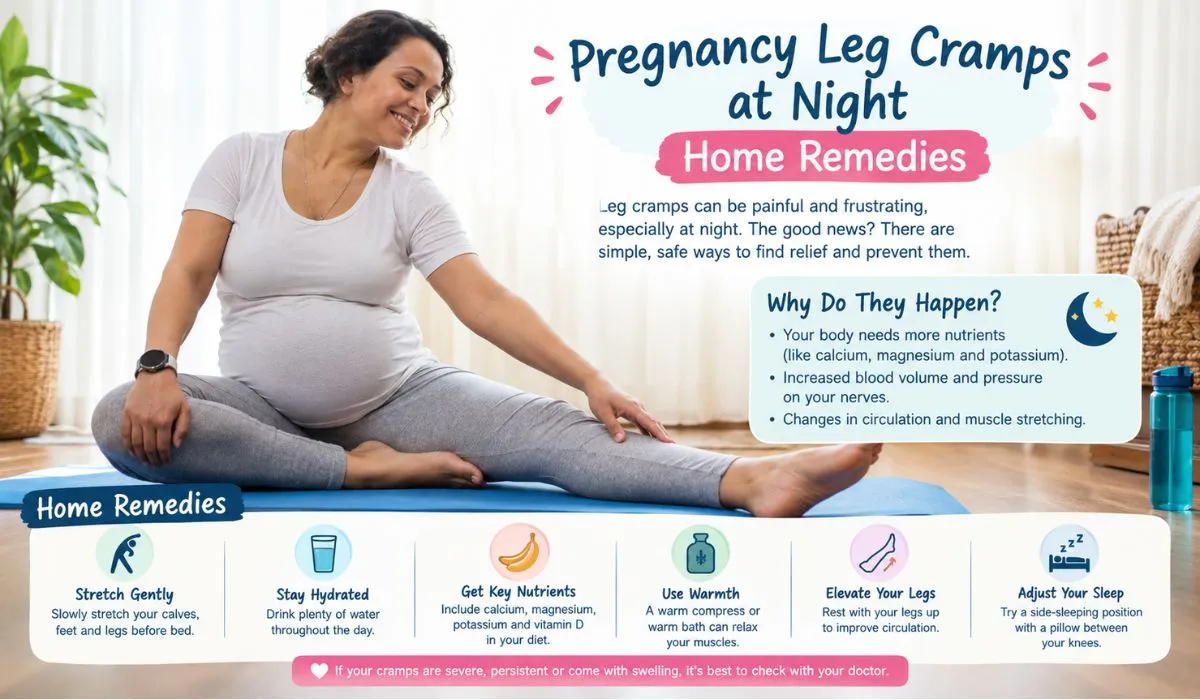
A cramp at 3 a.m. is a rotten way to wake up, and pregnancy makes it far more likely. The good news is that it’s usually harmless and a few cheap habits can cut it down: stretch your calves at bedtime, drink more water earlier in the day, warm your legs, and eat foods with magnesium, calcium and potassium.
Table of Contents
So why your calves, and why now?
Nobody has the full answer, and I’d be wary of any article that claims to. What we know is the setup. Your legs are carrying more weight, your growing uterus is pressing on nerves and blood vessels, and by evening your muscles are spent. Then you lie still for hours.
The American College of Obstetricians and Gynecologists (ACOG) says leg cramps are common in pregnancy, mostly in the second and third trimesters. They hurt, but your baby isn’t affected.
In the moment
Your foot will want to point its toes. Don’t let it, because that keeps the muscle tight. Pull your toes up toward your shin, stand on the floor if you can, and rub the calf. It usually lets go within a minute or two. Expect some soreness afterward, like a mild bruise.
What’s worth doing every day
The wall stretch is the one I’d start with, because it’s free and takes two minutes. Put one foot behind you with the heel down, lean forward until the calf pulls, and hold for about thirty seconds. Swap legs. Do it every night, even when your legs feel fine. That’s the step most people drop, and the cramps come right back.
Warmth is worth a try too. A warm bath before bed is lovely anyway, and a warm towel on each calf does the job when you’re short on time. Keep it warm rather than hot.
Water is the dull answer, but it works better when you time it. Muscles that are low on fluid cramp more easily, so get most of your drinking done by dinner. You’ll still be hydrated and you won’t be up four times to pee.
On food, bananas, yogurt, spinach, beans, avocado and almonds are all good sources of the minerals muscles use. They won’t promise you a cramp-free night, but they support your prenatal nutrition, so keep taking your prenatal vitamin. You’ll also see magnesium supplements everywhere online. Studies in pregnancy don’t agree on whether they help, so ask your doctor or midwife before you buy any.
A ten-minute walk after dinner keeps blood moving. And at bedtime, lie on your left side with a pillow between your knees.
Where people slip up
Quitting the stretch once the cramps ease is the big one. Close behind is skipping water after dinner out of fear of the bathroom. Taking a supplement because a friend swore by it is a third, since the right amount matters in pregnancy.
When it’s not a cramp
A normal cramp comes on fast and eases with stretching. If one leg is swollen, red, warm or tender and it doesn’t settle, call your provider soon. The CDC says pregnancy raises the risk of blood clots, so it’s better to get it checked. Chest pain or trouble breathing means urgent care.
FAQs
When do leg cramps start in pregnancy?
Usually in the second trimester, and they often get more frequent in the third.Usually in the second trimester, and they often get more frequent in the third.
Can they hurt my baby?
No. They hurt you, not your baby.
Is massage okay?
Yes, gently. Skip deep pressure, and don’t massage a leg that’s swollen or red.
Do cramps mean I’m low on magnesium?
Not necessarily. Plenty of women eat well and still get them.
 Emma Gill