
Picture it. It’s late, you can’t sleep, and you’re scrolling with one hand on your belly. Somewhere in a search box you spot the word “Poieno” next to “pregnancy,” and suddenly you’re wondering if you’ve eaten something you shouldn’t have.
Table of Contents
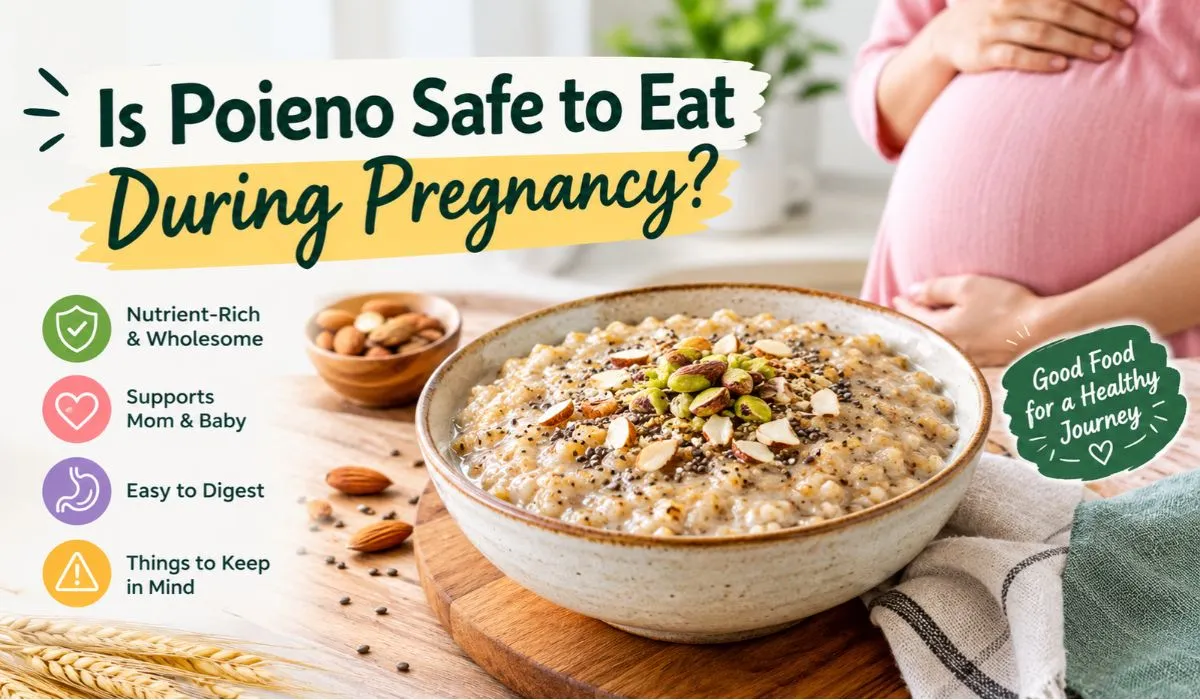
Take a breath. Poieno isn’t a food. Nobody sells it as an ingredient, and it isn’t a herb or a supplement either. It’s a word people online use for creativity, basically turning an idea into something real. The CDC and ACOG don’t mention it, and honestly why would they? There’s nothing to eat. So the answer to “is Poieno safe to eat during pregnancy” is that there’s nothing here to worry about.
Why does it keep turning up beside food questions, then? My guess is clicks. Moms-to-be search for everything (I would too), so some sites just stick trendy words onto pregnancy topics and hope you tap. Annoying. And a little scary when you’re already checking every label twice.
But what if you saw it on a package?
That changes things a bit. If “Poieno” is printed on a jar, tea, or bottle, it’s almost certainly a brand name. Ignore the front. Flip it over and read the ingredients, because that list is the only thing that tells you if it’s okay.
See “proprietary blend”? Herbs you can’t say out loud? No list at all? Put it down for now. ACOG says to talk to your provider before using herbal products, since lots of them were never tested on pregnant women. Your doctor or midwife can say yes in a day or two. Waiting costs you nothing.
How I check any food I don’t know
I ask myself three things, in this order. Was it cooked or pasteurized? That’s the big one. The CDC points out that listeria can hide in raw sprouts, unpasteurized milk, soft cheeses, and deli meat that wasn’t heated until steaming. It’s rare, sure, but it’s more serious when you’re pregnant. Next, do I know what’s actually in it? And last, does a source I trust, like the CDC, NIH, or my own provider, back it up? If I’m unsure on any of those, I wait and ask.
Easy mistakes (we’ve all made them)
“Natural” doesn’t mean safe. That’s the one I see most. Plenty of natural stuff is on the avoid list in pregnancy. Second, trusting the first confident blog that names no sources. Third, dropping prenatal vitamins to eat “cleaner,” which leaves gaps in prenatal nutrition when your baby needs it most.
So where should the worry go? Into the boring basics of maternal health, which really do matter. The CDC suggests 400 micrograms of folic acid a day, and the folic acid benefits for the baby’s brain and spine are well proven. DHA for pregnancy supports brain and eye growth. Iron keeps anemia away, and protein with plenty of water helps on those wiped-out afternoons. Unsure which pregnancy supplements fit you? Ask your provider about the best vitamins for pregnancy for your case.
Quick answers
Is Poieno a food, herb, or supplement?
No. It’s a modern word about creativity.
Can I eat something labeled Poieno?
Only once you’ve read the full ingredient list and your doctor or midwife agrees. A brand name says nothing about safety.
Where can I check if a food is safe?
Start at CDC, ACOG, and NIH, then ask your provider.
Is it silly to ask about odd foods?
Nope. Your care team would much rather answer a “silly” question than have you guess.