
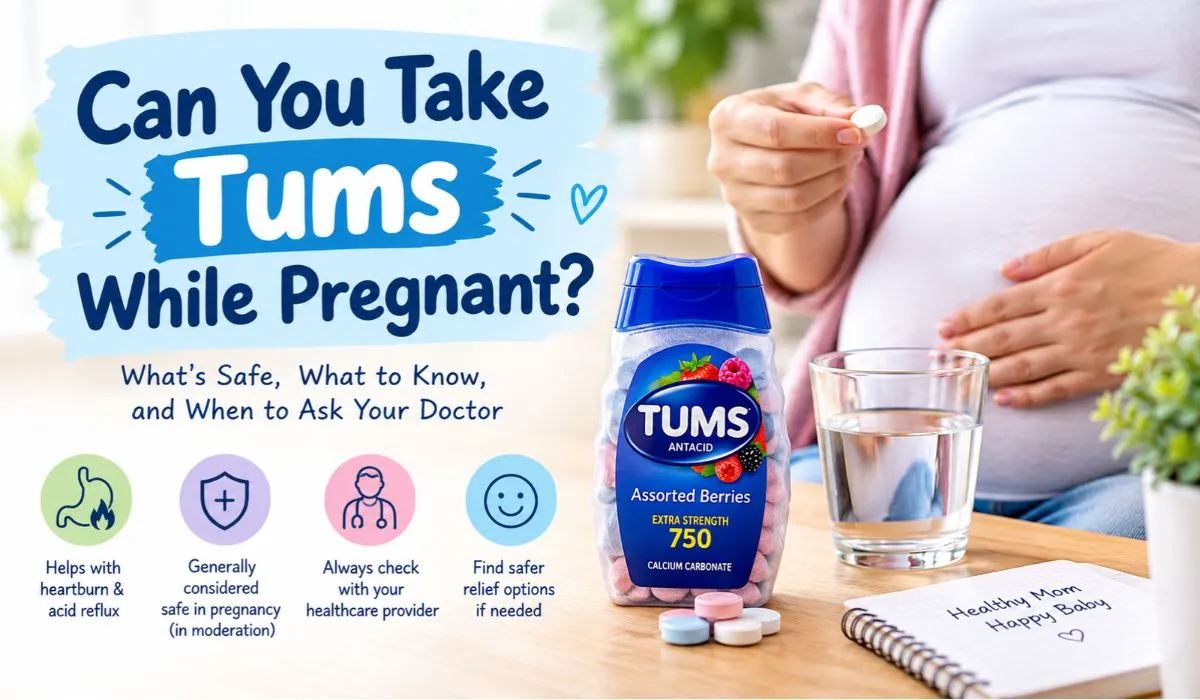
Yes, you usually can. Tums is calcium carbonate, and doctors tend to recommend it first for pregnancy heartburn, as long as you stick to the label and don’t lean on it all day long. If you’re reaching for it every day, mention it at your next checkup.
Table of Contents
Why does heartburn show up in pregnancy anyway?
Blame progesterone. It relaxes the little muscle at the top of your stomach that’s supposed to keep acid down there. Then the baby grows and shoves everything upward, and by the third trimester a lot of women are sleeping half-sitting up. Some get it in the first trimester, though, so don’t think you’re doing something wrong if it starts early.
So is calcium carbonate really okay?
Pretty much, yes. Mayo Clinic doctors call calcium carbonate and Tums a good place to start, and a review in a medical journal lists calcium, aluminum and magnesium antacids as first-line treatment for acid reflux in pregnancy. Tums works inside the stomach, neutralizing acid on the spot, so it isn’t going on some big trip through your body.
You do get a bit of calcium out of it, but please don’t count it as your calcium plan. The NIH says most pregnant adults need around 1,000 mg a day (1,300 mg for teens), and that should come from food and your prenatal vitamins.
Using Tums without going overboard
Read the box. Tums Regular, Extra Strength and Ultra aren’t the same strength, so the “elemental calcium” number matters more than the tablet count. Then think about your whole day. A glass of milk, some yogurt, a prenatal vitamin and a few Tums all add up.
Why does this matter? Case reports describe a rare condition called milk-alkali syndrome in pregnant women taking more than about 1.4 g of elemental calcium a day from calcium carbonate. It’s uncommon. Still, it’s a good reason to skip the “one more won’t hurt” habit.
One more tip: calcium can block iron absorption. If your prenatal has iron, take your Tums a couple of hours apart from it.
Stuff to skip or ask about
Not everything in the antacid aisle is a good idea right now. Doctors steer pregnant women away from sodium bicarbonate products like some fizzy tablets, because of fluid and acid-balance concerns. Anything with aspirin or salicylates (Pepto-Bismol is one) should be a “check with your doctor first.” And gastroenterologists suggest avoiding magnesium-based antacids in the last trimester. If you’re standing in the pharmacy aisle unsure, just ask the pharmacist to look at the ingredient list with you. They get this question all the time.
What helps besides pills
Honestly, little habits do a lot. Eat smaller meals and eat them slowly. Don’t lie down right after dinner. Prop yourself up with an extra pillow at night. Pay attention to what sets you off, since spicy, fried and citrus-heavy foods are the usual suspects, and back off those for a while.
When to call your doctor
Call if the burning is severe or Tums barely touches it, or if you have trouble swallowing, you throw up blood, or you’re losing weight. And if you get sudden pain high in your belly along with a bad headache or blurry vision, don’t wait it out. That can be a sign of something other than heartburn.
Quick FAQs
Can I take Tums in the first trimester?
Yes, calcium carbonate is generally considered fine in all three trimesters when used as directed.
How many Tums are safe per day?
It depends on which strength you buy, so follow the maximum printed on your package and check with your provider.
Can Tums replace a calcium supplement?
No, it’s for heartburn, not for meeting your daily calcium needs.
Why do Tums make me constipated?
Calcium can slow digestion. Water, fiber and a short walk usually help.