

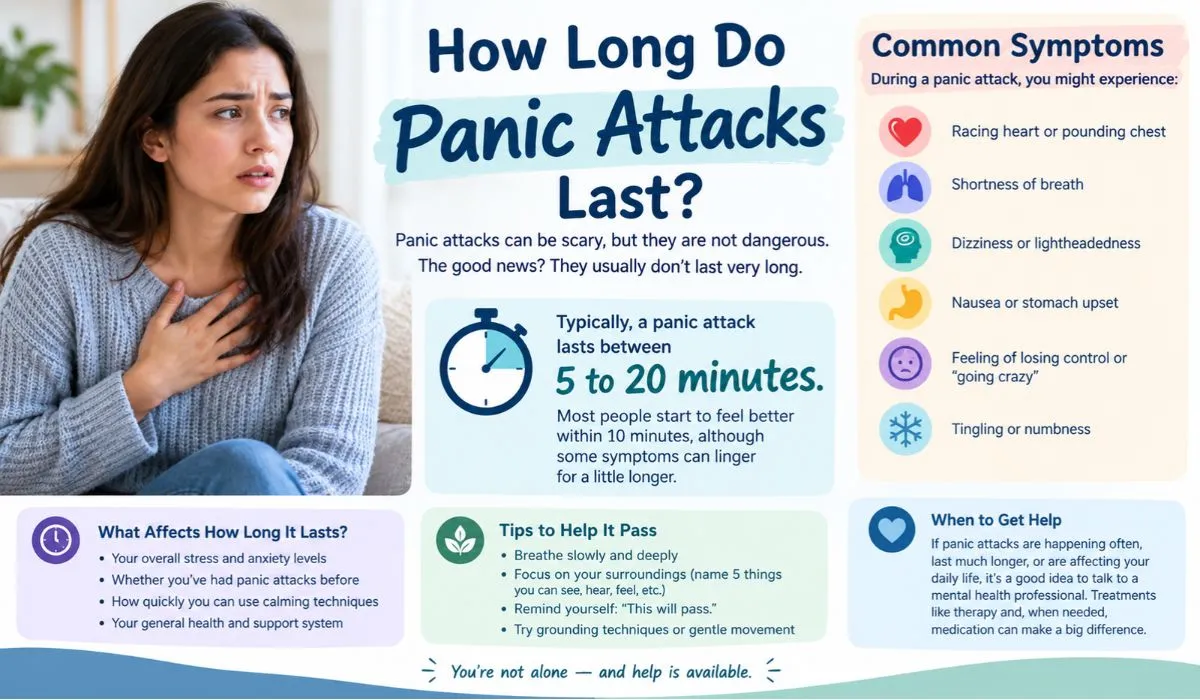
A panic attack usually lasts somewhere between 5 and 20 minutes. The worst part tends to hit around the 10 minute mark, then it fades. You might still feel shaky and tired for a while after, maybe an hour, but the attack itself is almost always shorter than it feels.
Table of Contents
I know that doesn’t help much when you’re in the middle of one. Time gets weird. Your heart is banging, your hands go tingly, you can’t catch your breath, and part of you is sure something awful is happening. Two minutes feels like a whole afternoon.
Why a panic attack seems to go on forever
Your body basically pulls a fire alarm. Adrenaline floods in as if there’s a real emergency, even when there isn’t one. The thing is, your body can’t keep that up. The NIH describes panic symptoms as building fast, peaking within minutes and then settling down on their own. There’s only so much adrenaline to go around.
Some people have two or three waves one after another, and that’s probably why you’ll hear someone say theirs lasted an hour. It was likely a few attacks stacked together, plus the wiped-out feeling afterward.
Panic attacks while pregnant
Pregnancy can make them show up more. Hormones are all over the place, sleep is rough, and you’re worrying about the baby on top of everything else. ACOG says anxiety is common in pregnancy and that it’s worth telling your provider, because it can be treated.
The attack doesn’t run longer just because you’re pregnant. It just feels scarier, since your mind goes straight to the baby. One short panic attack isn’t considered dangerous for your little one. Anxiety that keeps coming back and never gets looked at is something else, and it matters for your maternal health, so don’t sit on it.
One thing I’d say gently: a pounding heart, chest pain or trouble breathing can be panic, but in pregnancy they can also be something else. If it’s your first time, or it just doesn’t feel like your usual anxiety, call your doctor and get checked first.
What to do while it’s happening
Sit down if you can. Breathe in through your nose for about four counts and let it out slowly, longer than the inhale. That long breath out is what tells your body to calm down. Then look around the room and name a few things you can see. It sounds silly, but it pulls you back into the room.
Mostly, tell yourself it’s going to pass, because it will. Fighting it makes it worse. People who try to force it away often end up more panicked, and that stretches the whole thing out.
Little things that make attacks more likely
Too much coffee, skipped meals, bad sleep. Low iron can also make your heart race, which your brain may read as danger. Eating regular meals with iron rich foods and taking your prenatal vitamins won’t cure panic, but good prenatal nutrition helps your body feel steadier. Check with your doctor before adding pregnancy supplements like DHA for pregnancy.
When it’s time to talk to someone
If attacks keep coming, if you’re dreading the next one, or if you’ve started avoiding places because of them, that’s worth a conversation. It might be panic disorder, and that responds well to therapy and, when needed, medication that’s safe in pregnancy. You don’t have to just tough it out.
Related reading
- Pregnancy anxiety: signs and what helps
- Iron rich foods for pregnant women
- Best prenatal vitamins for the first trimester
- DHA for pregnancy: how much is enough
Quick questions
Can a panic attack last an hour?
One attack rarely does. It’s usually several waves back to back, or the tired, shaky feeling afterward.
How long do panic attacks last at night?
About the same, 5 to 20 minutes. They wake you up from sleep, so you might stay awake for a while after.
Can a panic attack hurt my baby?
A short one isn’t known to cause harm. If they’re frequent, tell your provider.
How do I make it stop faster?
You can’t flip a switch, but slow breathing and not fighting it usually helps it pass sooner.