

A flutter in the heart can feel like a skipped beat, a flip, or a quick pounding. Learn what causes it, which triggers are harmless, and when to see a doctor.
Table of Contents
You’re sitting on the couch, maybe reading or scrolling your phone, when it happens. A quick flip in your chest. A skipped beat, a little pounding, a fluttering that lasts a few seconds and then disappears. You stop what you’re doing and wait to see if it comes back.
If that sounds familiar, you’re not alone. A flutter in the heart is one of the most common reasons people start paying attention to their heartbeat. Most of the time it’s harmless and tied to everyday things like stress, caffeine, or a bad night’s sleep. Sometimes, though, it’s your heart’s way of telling you something deserves a closer look.
This guide walks through what a flutter in the heart actually is, what tends to set it off, and how to tell the difference between “I should cut back on coffee” and “I should call my doctor.”
What a Flutter in the Heart Feels Like
People describe it in different ways. Some feel a skipped or extra beat. Others feel a rapid pounding, or a light, fluttery sensation in the chest, throat, or neck. It might last just a few seconds, or it might come in short bursts.
Doctors call these sensations palpitations. The word describes what you feel: an awareness of your heartbeat that seems fast, strong, or irregular. A palpitation isn’t a diagnosis on its own. It’s a symptom, and the cause behind it can range from completely ordinary to something that needs treatment.
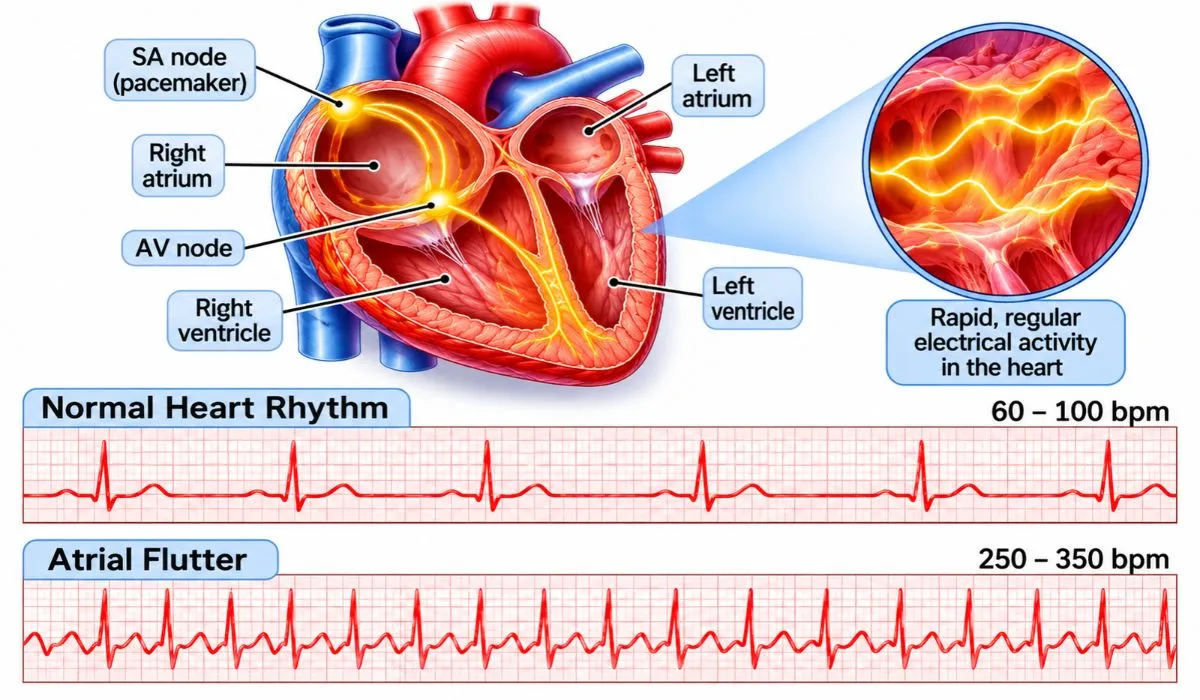
It helps to know the difference between a palpitation and an arrhythmia. An arrhythmia is an actual problem with the heart’s electrical rhythm. The heart may beat too fast, too slow, or unevenly. Some arrhythmias, such as atrial fibrillation or atrial flutter, cause noticeable fluttering. Others produce no symptoms at all. So a flutter in the heart can be a harmless blip, or it can be the sign of a rhythm issue that’s worth testing.
For context, a normal resting heart rate sits somewhere between 60 and 100 beats per minute. During a flutter, your rate may briefly climb above that range.
How Your Heart Keeps Its Rhythm
It’s easier to understand why flutters happen once you picture how the heartbeat works. Your heart runs on its own electrical system. A small cluster of cells called the sinoatrial (SA) node, tucked into the right upper chamber, acts as your natural pacemaker. It fires off an electrical signal that spreads through the upper chambers and makes them contract, pushing blood downward.
That signal then reaches the atrioventricular (AV) node, which pauses it for a split second. This tiny delay gives the upper chambers time to empty completely before the lower chambers squeeze. When everything runs smoothly, you get a steady rhythm without ever thinking about it.
When something interferes with that pathway, whether it’s a medication, an electrolyte imbalance, a stimulant, or heart disease, the rhythm can wobble. That wobble is often what you feel as a flutter in the heart.
Everyday Triggers Behind a Flutter in the Heart
Here’s the reassuring part. In many people, the heart itself is perfectly healthy and the flutter comes from something in daily life.
Caffeine and alcohol. Caffeine is a stimulant, and coffee, tea, energy drinks, and some sodas all contain enough to set off palpitations in sensitive people. It tends to hit harder on an empty stomach or when you’re already stressed. Alcohol can do something similar. Heavy or binge drinking is known to trigger irregular beats, sometimes called “holiday heart syndrome,” and even moderate amounts can bother people who have an underlying heart or thyroid issue. Recreational drugs like cocaine and amphetamines are in a different league entirely, since they can cause dangerous rhythm problems.
Nicotine. Cigarettes and vaping products stimulate the nervous system and tighten blood vessels, which raises your heart rate and blood pressure. Even small amounts can make a sensitive heart feel like it’s racing. The good news is that circulation and oxygen levels begin to improve within weeks of quitting.
Dehydration and exercise. Exercise is great for your heart, but a sudden burst of intense activity, skipping your warm-up, or stopping abruptly after a hard workout can cause temporary irregular beats. Dehydration makes this more likely. When fluid levels drop, your blood volume shrinks and electrolytes like potassium and magnesium fall out of balance, which can make the heart beat faster or unevenly. Drinking enough water, especially in hot weather or during long workouts, is one of the simplest things you can do.
Poor sleep, weight, and sleep apnea. Carrying extra weight raises the odds of high blood pressure, diabetes, and changes in the heart’s structure, all of which make palpitations more likely. Sleep apnea, which is closely linked to excess weight, causes repeated drops in oxygen overnight and raises the risk of atrial fibrillation. If you snore loudly or wake up exhausted after a full night in bed, it’s worth asking your doctor about a sleep test.
Stress, Anxiety, and Hormones
Your emotions and your heart are more connected than most people realize. When you’re stressed or anxious, your body releases adrenaline and cortisol, and both of those stimulate the heart. The result can be pounding, fluttering, or skipped beats, especially during a stressful week or after an extra cup of coffee.
Panic attacks take this a step further. Your body reacts as though you’re in danger, your heart rate spikes, your breathing speeds up, and you may feel tightness in your chest or lightheadedness. It’s easy to mistake this for a heart problem, and that fear can feed the cycle of anxiety and palpitations. Slow breathing, grounding exercises, regular exercise, and enough sleep can all help calm things down. Keeping a simple symptom journal is another smart move, because it helps you spot patterns tied to caffeine, poor sleep, or emotional strain.
Hormones play a role too. Your thyroid controls how quickly your body uses energy. When it produces too much hormone (hyperthyroidism), your heart can speed up or beat irregularly. When it produces too little (hypothyroidism), your heart rate may slow, sometimes with fatigue and mild palpitations. If your flutters come with unexplained weight changes, sensitivity to heat or cold, or constant tiredness, a thyroid blood test can clear things up. Once thyroid levels are balanced, heart rhythm usually settles as well. Shifts in reproductive hormones and certain medications can also influence your heartbeat.
When a Flutter in the Heart Comes From the Heart Itself
Sometimes the cause really is cardiac. A few of the more common ones:
Arrhythmias. Atrial fibrillation (AFib), supraventricular tachycardia (SVT), and ventricular tachycardia (VT) are the best-known examples. AFib is especially common and can make the heart flutter or race unpredictably. VT starts in the lower chambers and can be dangerous if it lasts more than a few seconds. Left untreated, some arrhythmias raise the risk of complications like stroke.
Valve and structural problems. Valves that are too narrow (stenosis) or that leak (regurgitation) make the heart work harder and can trigger irregular beats. Congenital defects or enlarged heart chambers can also stretch or damage the heart’s electrical pathways over time, leading to chest pressure, fatigue, or that familiar fluttering.
Heart failure and cardiomyopathy. When the heart muscle weakens or changes shape, as in dilated or hypertrophic cardiomyopathy, it has trouble pumping efficiently and its electrical activity can be disrupted. You might notice palpitations during mild activity or even while resting, sometimes along with shortness of breath or swelling.
Symptoms to Watch For, and When to Get Help
Most flutters last seconds and fade on their own. You might also notice a warm flush, some sweating, awareness of your heartbeat when lying down, or mild tiredness afterward. If this happens now and then, tracking when it occurs and mentioning it at your next checkup is usually enough.
Certain signs call for faster action. Seek medical care right away if a flutter in the heart comes with:
- Severe chest pain or pressure
- Fainting or feeling like you’re about to faint
- Shortness of breath
- Dizziness or confusion
These can point to a serious rhythm problem or even a heart attack, and prompt evaluation can prevent lasting harm.
Family history matters too. If close relatives have had sudden cardiac death, early heart attacks, or inherited rhythm disorders, your own risk may be higher. Tell your doctor about any relatives with heart disease, blood clots, or unexplained fainting, as it can guide which tests make sense for you.
How Doctors Find the Cause
Figuring out what’s behind a flutter in the heart usually happens step by step. It starts with a conversation and a physical exam. Your clinician will listen to your heart and lungs, check your pulse and blood pressure, and ask how often the flutters happen, how long they last, and what seems to set them off. Questions about caffeine, alcohol, stress, and medications are part of this, since lifestyle clues often point toward the answer.
From there, testing depends on your situation:
- Electrocardiogram (ECG/EKG): a quick test that records your heart’s electrical activity and can spot abnormal rhythms.
- Holter monitor: a portable recorder worn for 24 to 48 hours that tracks your rhythm during normal daily life.
- Event monitor: worn for up to 30 days, and you press a button when you feel a flutter, so your doctor can match the recording to your symptoms.
- Echocardiogram: an ultrasound that shows how your heart chambers and valves move, helping reveal structural problems.
- Stress test: checks how your heart behaves under exertion, which can uncover rhythm changes that only appear with activity.
If those results point to something more complex, a cardiologist may recommend additional imaging or electrophysiology studies to pinpoint where abnormal signals are coming from.
Treatment and Everyday Habits That Help
Treatment depends entirely on the cause. For many people, simply cutting back on caffeine and alcohol, managing stress, staying hydrated, and sleeping regularly makes flutters much less frequent.
When lifestyle changes aren’t enough, doctors may prescribe medications such as beta blockers or calcium channel blockers to slow the heart rate and steady the rhythm. If arrhythmias are frequent or medication doesn’t work, a procedure called catheter ablation can target and treat the tiny areas of heart tissue sending out faulty signals. In some rhythm disorders, cardioversion uses a controlled electrical shock to restore a normal beat. Structural problems may call for valve repair or replacement, and some people benefit from devices like pacemakers or implantable defibrillators.
The Bottom Line
A flutter in the heart is usually a brief, harmless reaction to stress, caffeine, dehydration, poor sleep, or hormonal shifts. But it can also be an early signal of a rhythm or structural problem, and that’s why it’s worth paying attention rather than brushing it off. Notice your triggers, look for patterns, and make small changes where you can: cut back on stimulants, drink more water, manage stress, and protect your sleep.
And if the flutters are frequent, last longer than a few seconds, or come with chest discomfort, dizziness, fainting, or shortness of breath, don’t wait. A cardiologist can find the cause, and with the right care, you can get back to a steady, quiet heartbeat you barely notice.