

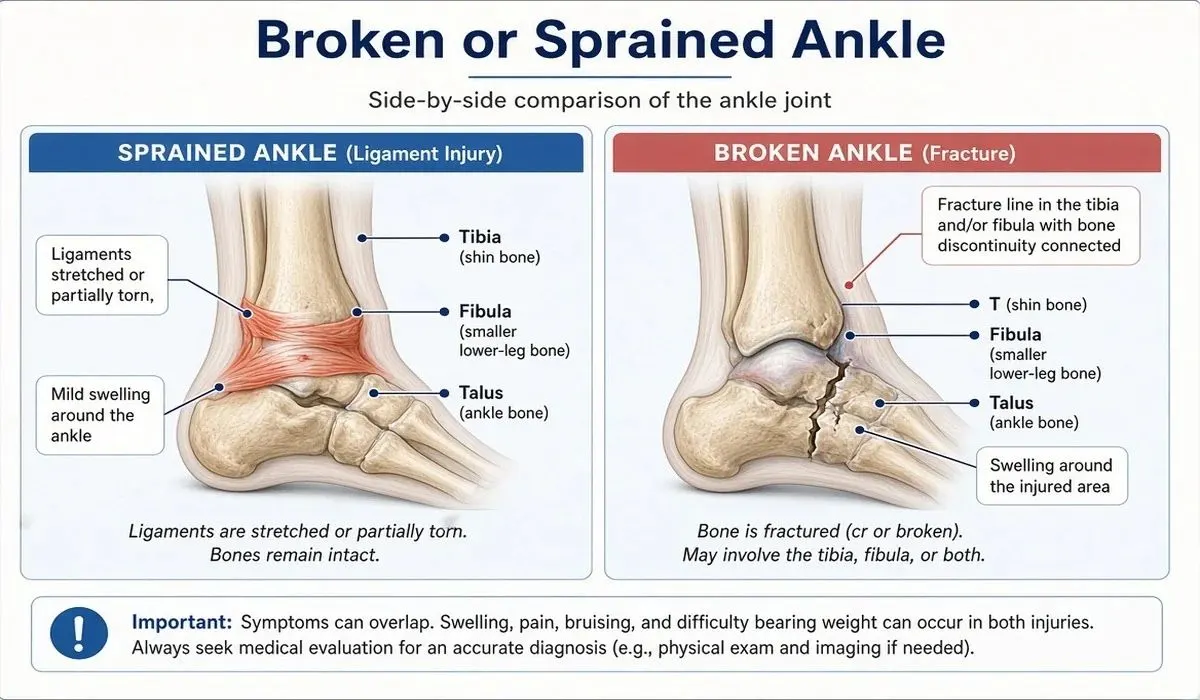
A sprained ankle is a stretched or torn ligament. A broken ankle is a cracked bone. If you can’t take four steps, or the bony part of your ankle hurts when you press on it, get an X-ray. Swelling and bruising show up in both, so they won’t settle it for you.
Table of Contents
Picture it. You step off a curb wrong, your foot rolls, and there’s that sick little pop. You sit down on the pavement, grab your ankle and think, please be a sprain.
I think almost everyone has been there. The honest answer is that you can’t always tell by looking, and even doctors lean on an X-ray when they’re unsure.
What a sprained ankle usually feels like
A sprain happens when the ligaments holding your ankle together get overstretched. The ankle swells, turns tender and often bruises over a day or two. Most people can still limp along on it, painfully but they can do it.
Mild sprains tend to feel better within a couple of weeks. A worse one with a partial tear can take longer, sometimes a month or two before it feels trustworthy again.
What points toward a broken ankle
A break is more likely if any of these sound familiar:
- You couldn’t put weight on it right after it happened
- The bone itself is tender, especially the bumps on either side of the ankle
- The ankle looks bent or out of line
- You heard a crack, not just a pop
- Your foot feels numb or tingly
Doctors use something called the Ottawa ankle rules to decide who needs an X-ray. They look at exactly this: pain over the bone and whether you can walk four steps. If you tick either box, it’s worth getting checked.
What to do in the first 48 hours
Until you know what you’re dealing with, treat it gently. The old RICE routine still holds up fine for sprains:
- Rest. Stay off it as much as you can.
- Ice. Twenty minutes at a time, with a cloth between the ice and your skin.
- Compression. A soft elastic bandage, snug but not tight.
- Elevation. Prop your foot above heart level when you’re sitting.
If it’s a break, a doctor may put you in a walking boot or a cast, and a bad one can need surgery. A sprain usually gets a brace or tape and then some simple strengthening and balance work. According to the NIH, getting moving again early, once the pain allows, helps a sprain recover better than staying completely still for weeks.
If you’re pregnant
This part matters for a lot of our readers. Pregnancy hormones loosen your ligaments, and your center of balance shifts as the bump grows. That makes rolled ankles more common. Swelling can also muddy the picture, because pregnancy swelling in the feet is normal and an injured ankle swells too.
Be careful with pain relief. ACOG generally steers pregnant women toward acetaminophen and away from ibuprofen-type medicines, particularly later in pregnancy. Check with your doctor or midwife before taking anything. And if one ankle or calf swells suddenly, turns red or feels hot, call someone right away, since that can be something other than a sprain.
Mistakes people make
Walking it off is the big one. Plenty of fractures get missed because someone decided it was “just a sprain” and carried on for weeks. The other one is rushing back to sport or heels before the ankle feels steady, which is how people end up with the same sprain twice.
FAQ
How long does a sprained ankle take to heal?
Mild ones often feel better in one to three weeks. Moderate or severe ones can take several weeks to a couple of months.
Can you walk on a broken ankle?
Sometimes, yes, and that fools people. Being able to walk doesn’t rule out a fracture.
Does a sprain need an X-ray?
Not always. You need one if you can’t bear weight or the bone is tender.
When should I see a doctor?
Go if the pain is severe, the ankle looks out of shape, you have numbness, or it hasn’t improved after a few days.
Is swelling in my ankle during pregnancy a sign of injury?
Usually it’s normal pregnancy swelling. Swelling after a fall or twist, or on just one side, deserves a check.