
Somewhere around the time you start trying to conceive, grocery shopping stops being routine. You start reading labels you never used to look at. You wonder if that second cup of coffee is a problem. You Google things at 11pm you’d never admit to Googling. If that sounds familiar, take a breath — you don’t need a rigid meal plan or a cabinet full of supplements to support your fertility. A handful of ordinary foods, eaten regularly, do a surprising amount of heavy lifting.
Why Food Actually Makes a Difference
Fertility can feel like something happening entirely out of your control — a matter of luck, timing, biology. And to some extent, that’s true. But underneath all of that, there’s a lot going on that food genuinely influences: hormone balance, blood flow, and the health of the cells that eventually become eggs and sperm. Research cited by the NIH links diets built around whole foods, and lighter on processed sugar, to better ovulation and stronger sperm quality. Food isn’t a guarantee. But it’s one of the few things you actually get to control on this journey, and that alone makes it worth paying attention to.
So, here’s where to start.
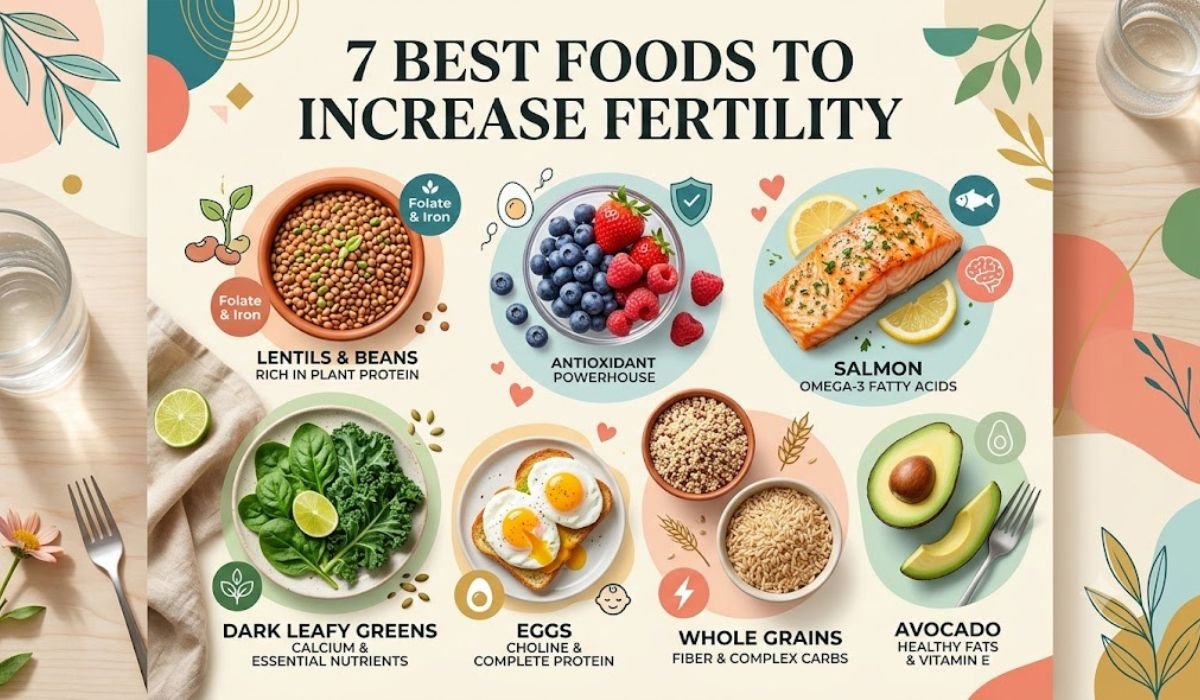
1. Leafy Greens (Spinach, Kale, Romaine)
If you take away just one thing from this article, let it be this: eat more greens. Spinach, kale, romaine — they’re all loaded with folate, and folate is quietly doing important work long before any pregnancy test comes into the picture. It supports healthy ovulation now, and later helps prevent neural tube defects. Not a salad person? No problem. A handful of spinach disappears into a smoothie without you ever tasting it.
2. Salmon and Other Fatty Fish
Salmon, sardines, mackerel — these are your best sources of omega-3s, especially DHA. Most people associate DHA with a baby’s brain development later in pregnancy, but it’s doing useful work well before that too, helping regulate hormones and improve blood flow to your reproductive organs. Two servings a week is a reasonable goal. Stick with the lower-mercury choices and you’re in good shape.
3. Eggs
Eggs really don’t get the credit they deserve. They’re one of the few natural sources of choline, which works alongside folic acid to support healthy cell development. Add in solid protein and vitamin D, both tied to better ovulation, and you’ve got a genuinely underrated fertility food sitting in your fridge right now. Scrambled, boiled, folded into a quick omelet before work — however you eat them, they’re doing their job.
4. Berries
It’s rare that a fertility food also tastes like dessert, so enjoy this one. Blueberries, strawberries, raspberries — they’re full of antioxidants that help protect your eggs from oxidative stress, the kind of everyday wear that can chip away at egg quality over time. Next time a sugar craving hits, reach for a handful of these instead. You get real nutrition instead of empty calories, and honestly, they’re just as satisfying.
5. Greek Yogurt and Dairy
More than one study has linked full-fat dairy, and Greek yogurt in particular, to better fertility outcomes. It brings calcium, vitamin D, and probiotics along with it, all of which play into hormone balance. If dairy sits well with you, this is one of the easiest swaps to make — full-fat instead of low-fat — and it seems to genuinely matter.
6. Walnuts and Other Nuts
Walnuts are a little unusual as nuts go — they carry both omega-3 and omega-6 fats in a healthy ratio, which most foods can’t claim. Nuts more broadly also bring vitamin E and zinc to the table, both connected to healthy egg and sperm development. A small handful a day is an easy habit to build, and it’s the kind of snack that survives being tossed in a bag and forgotten for a few hours.
7. Lentils and Beans
If you’ve been leaning toward more plant-based meals, or just want to, lentils, chickpeas, and black beans deserve a regular spot on your plate. They bring fiber, iron, and folate all at once. Iron matters more than people realize here — low iron levels have been linked to ovulatory infertility, so this isn’t just a nice-to-have. Swap in legumes for meat a couple of nights a week, and you’ll cover a lot of nutritional ground without spending much.
A Few Things That Help These Foods Work Harder
Pair iron-rich foods with something high in vitamin C — citrus, bell peppers — and your body actually absorbs more of it. Reach for the whole, less-processed version of a food when you have the choice. And if you’re thinking about adding a supplement on top of all this, mention it to your doctor first, just to be safe. More than anything, don’t chase perfection here. A handful of small changes, repeated over a few months, will do more for you than any single “perfect” day of eating ever could.
Mistakes That Are Easy to Make (and Easy to Fix)
It’s tempting to let a supplement bottle do all the work and let real food slide — but whole foods do a lot of this better than any pill can. Cutting fat entirely in the name of eating “clean” tends to backfire, since your body actually needs fat to produce hormones. Caffeine and alcohol are worth watching too, since both have been linked to lower fertility when overdone. And be patient with yourself — eggs and sperm take roughly three months to mature, so give these changes a little time before expecting to see what they’re doing.
Frequently Asked Questions
How long before diet changes affect fertility?
Give it at least three months. That’s roughly how long it takes for eggs and sperm to mature, so it’s also roughly how long your new habits need before you’ll see what they’re doing.
Can men benefit from these foods too?
Definitely. Zinc, omega-3s, and antioxidants — the kind found in walnuts, salmon, and berries — support healthy sperm count and motility just as much as they support egg quality.
Do I need supplements if I’m already eating well?
Probably, yes. Even with a fertility-friendly diet, ACOG and other health experts still recommend a daily prenatal vitamin with folic acid, since it’s genuinely hard to get everything you need from food alone.
Is caffeine really that big a deal?
Some studies suggest high caffeine intake is associated with a longer time to conception, which is why most doctors suggest staying under 200mg a day — roughly one 12-ounce cup of coffee.
What should I try to cut back on while trying to conceive?
Highly processed foods, trans fats, excess sugar, and high-mercury fish are the main things worth minimizing. You don’t need to eliminate them entirely — just keep them the exception, not the rule.
 Emma Gill