
Let’s say you’ve started thinking seriously about trying for a baby. Maybe you’ve deleted the birth control app, maybe you’re just quietly Googling at 11pm — either way, you’re in the right place. A lot of people don’t realize that the real prep work for pregnancy starts months before you ever see a positive test. Not because you have to be perfect, but because your body benefits from a head start.
Here’s the thing nobody tells you clearly enough: your baby’s neural tube — the very beginning of the brain and spinal cord — starts forming in the first few weeks after conception. Often before you even know you’re pregnant. So by the time that test turns positive, some of the most important developmental work has already begun. That’s the whole reason preconception care exists as its own stage, rather than something you figure out on the fly.
The CDC backs this up plainly: taking folic acid before conception meaningfully lowers the risk of neural tube defects. It’s one of those rare cases where a small daily habit has an outsized effect.
Folic Acid First, Everything Else Second
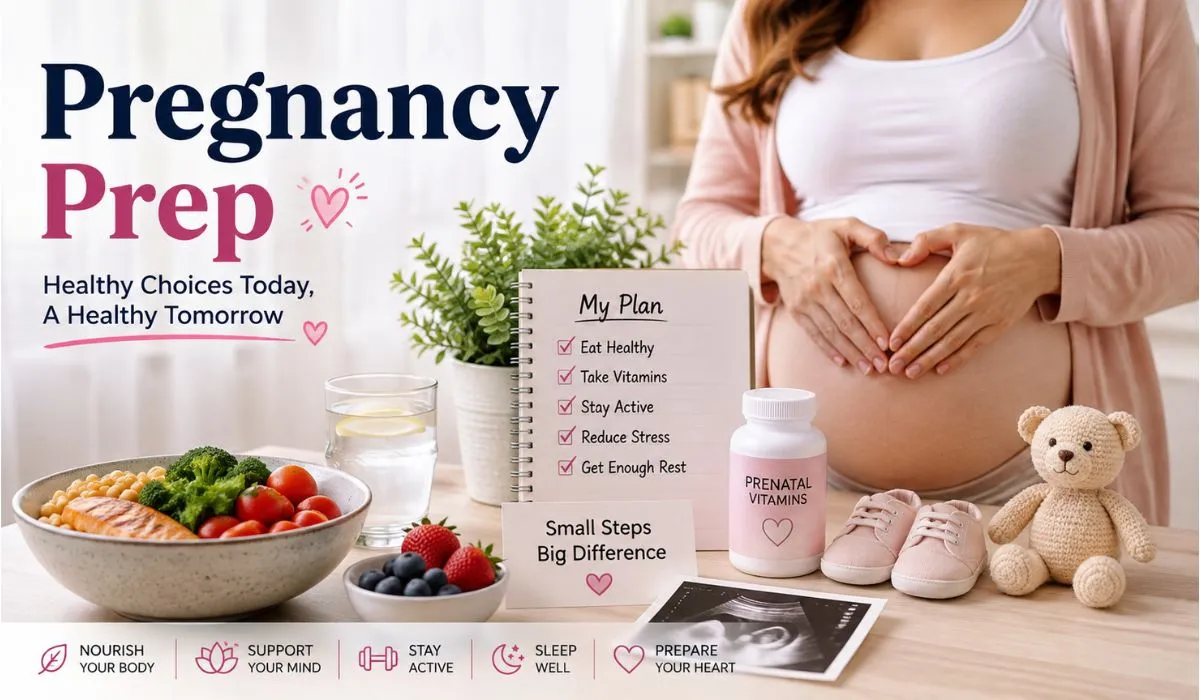
If you take away one thing from this article, let it be this: start folic acid now, not later. Most experts recommend around 400 mcg a day, and starting three months ahead of trying is better than starting one. It’s not glamorous advice, but it’s genuinely one of the highest-impact things you can do in early pregnancy nutrition.
Once that’s sorted, it’s worth swapping your regular multivitamin for an actual prenatal one — they’re not the same thing, even though they sit next to each other on the shelf. A good prenatal usually covers folic acid, iron (your blood volume climbs a lot during pregnancy, so you’ll need it), DHA to support your baby’s developing brain, vitamin D, and iodine, which quietly does a lot of heavy lifting for thyroid and brain development. If a bottle skips folic acid or DHA entirely, keep browsing.
Your Plate Doesn’t Need a Total Overhaul
This is where a lot of people psych themselves out — picturing some strict, joyless meal plan. You really don’t need that. Think of it more as nudging your plate in a slightly better direction. A little more spinach or lentils for natural folate. Some extra lean protein, whether that’s eggs, chicken, or low-mercury fish. Whole grains when it’s easy, a bit more calcium, a bit more iron than usual. It doesn’t have to be flawless — consistent beats perfect here, every time. And honestly, the earlier you build these habits, the less jarring the shift feels once you’re actually pregnant.
The Habits That Rarely Get Talked About
Nobody loves this part of the conversation, but it matters. Preparing for pregnancy isn’t only about adding things in — it’s also about quietly dialing a few things back. Alcohol, for one. Smoking, ideally cut out completely. Caffeine trimmed to under roughly 200 mg a day. And it’s worth checking with your doctor about any current medications, just to be safe. The World Health Organization also notes that reaching a healthier weight range before conception can support fertility and lower the odds of complications — so if that’s relevant to you, this is the moment to start, not after the fact.
See Your Doctor Before You Start Trying
This step gets skipped more than it should. A preconception checkup with your OB-GYN or midwife can catch things early — thyroid issues, blood sugar concerns, vitamin gaps — while there’s still plenty of time to sort them out. ACOG specifically recommends this visit for that reason. It’s also a good excuse to check your vaccination status and talk through your family health history while your doctor’s fully focused on you.
Small Mistakes That Add Up
None of these are dramatic mess-ups — they’re just easy to miss. Waiting until the pregnancy test to start folic acid is the big one. Grabbing a prenatal vitamin without checking the label for DHA or iodine is another. Some people assume a healthy diet alone covers everything, but even a genuinely good diet rarely replaces what a prenatal vitamin does. And sleep and stress get overlooked constantly, even though both quietly affect fertility and hormones more than people expect.
A Few Questions People Usually Ask
How early should I actually start prepping?
Somewhere between three and six months before trying gives your body real time to build up folic acid and iron stores — not just a token gesture.
Do I still need a prenatal vitamin if I eat pretty well already?
Yes, honestly. Even a solid diet rarely hits the folic acid, iron, and DHA levels needed, especially in those first few weeks.
Can any of this actually help with fertility, or is it just for the baby?
It genuinely can help. A healthier weight, better-managed stress, and fewer nutrient gaps often lead to more regular ovulation and a steadier cycle.
Is DHA something to worry about before I’m even pregnant?
Not urgently, but starting early means your levels are already in a good place once your baby’s brain development kicks in.
What if I get pregnant before I’ve done any of this?
Don’t spiral over it — just start folic acid and a prenatal vitamin as soon as you know, and book that doctor’s visit. It’s genuinely never too late to make a difference