

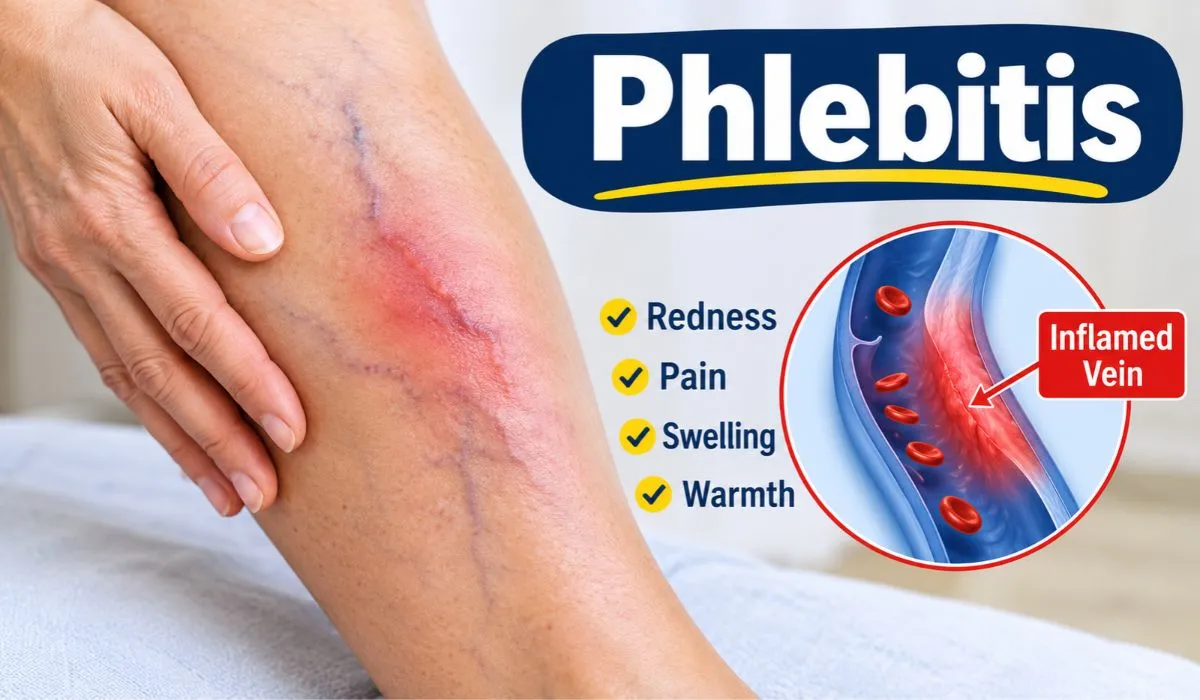
You’re standing in the kitchen, maybe five months pregnant, and you spot a red line down the back of your calf. It’s warm. It hurts when you press it, and under the skin there’s a firm little cord. You tell yourself it’s a pulled muscle. Then, because it’s midnight and you have a phone, you start googling.
Table of Contents
Okay, breathe. What you’re describing could be phlebitis, which simply means an inflamed vein. Most of the time it’s the mild kind, it sits close to the skin, and it settles within a week or two. The real question is whether yours is the mild kind.
Why Phlebitis Shows Up in Pregnancy
Your body is busy. Blood volume climbs, your growing uterus leans on the veins in your pelvis, and pregnancy hormones relax the vein walls, so blood crawls through your legs. Slow blood gets sticky. That’s why the CDC and ACOG both note that clot risk is higher during pregnancy and for a while after delivery, and phlebitis comes along with that.
It doesn’t take much to trigger it. A long flight, a day glued to a desk chair, varicose veins, a knock on the shin, or an IV in the hospital can all do it. Plenty of women get it in the weeks after a C-section, too.
How to Tell What You’re Dealing With
Mild phlebitis usually looks like a red, warm, tender streak following a vein. It can swell a little, itch a little, and the vein often feels hard, like a piece of string. That’s the superficial type, and doctors see it all the time.
The worry is a clot in a deeper vein, called DVT. At first it can look similar, but it tends to feel different. One whole leg swells more than the other. The pain is deep and throbbing instead of right on the surface, and the skin may turn dark red and feel hot. If that sounds like you, call your doctor the same day. If you ever get sudden chest pain, a racing heart, or trouble breathing, go straight to the ER and don’t wait to see if it passes.
Honestly, nobody can sort this out by staring at their own leg. A quick exam or an ultrasound confirms it, so the visit is worth it even when you feel fairly sure it’s nothing.
What Helps at Home
For mild phlebitis, doctors usually suggest a warm compress for fifteen or twenty minutes a few times a day and propping your leg up when you rest. Gentle walking helps more than people expect, because moving keeps blood from pooling. Compression stockings are another common suggestion, but ask your provider first so you get the right strength.
Painkillers are the tricky bit. Some of the ones sitting in most medicine cabinets aren’t recommended in pregnancy, so check before you take anything.
Everyday habits matter too. Drink enough water, eat well (solid prenatal nutrition supports your circulation and overall maternal health), and ask whether your pregnancy supplements are covering what you need. None of that treats phlebitis on its own, but it all adds up.
A few mistakes come up again and again. Massaging the sore spot feels natural, but it’s not wise if a clot might be there. Brushing off swelling in one leg as “just pregnancy” is another. Both ankles puffing up by evening is normal; one leg is worth a call. And on long drives or flights, stand up and stretch every hour or so, even when it’s a hassle.
Quick Answers About Phlebitis
Is phlebitis dangerous during pregnancy?
The superficial kind usually isn’t, but it can sit alongside a deeper clot, so get it checked.
How long does phlebitis last?
Mild cases often ease in one to two weeks, though the hard cord can hang around longer.
Can phlebitis go away on its own?
Often, yes. Still, let a doctor confirm what it is first.
What does phlebitis look like?
A red, warm, tender streak along a vein.