
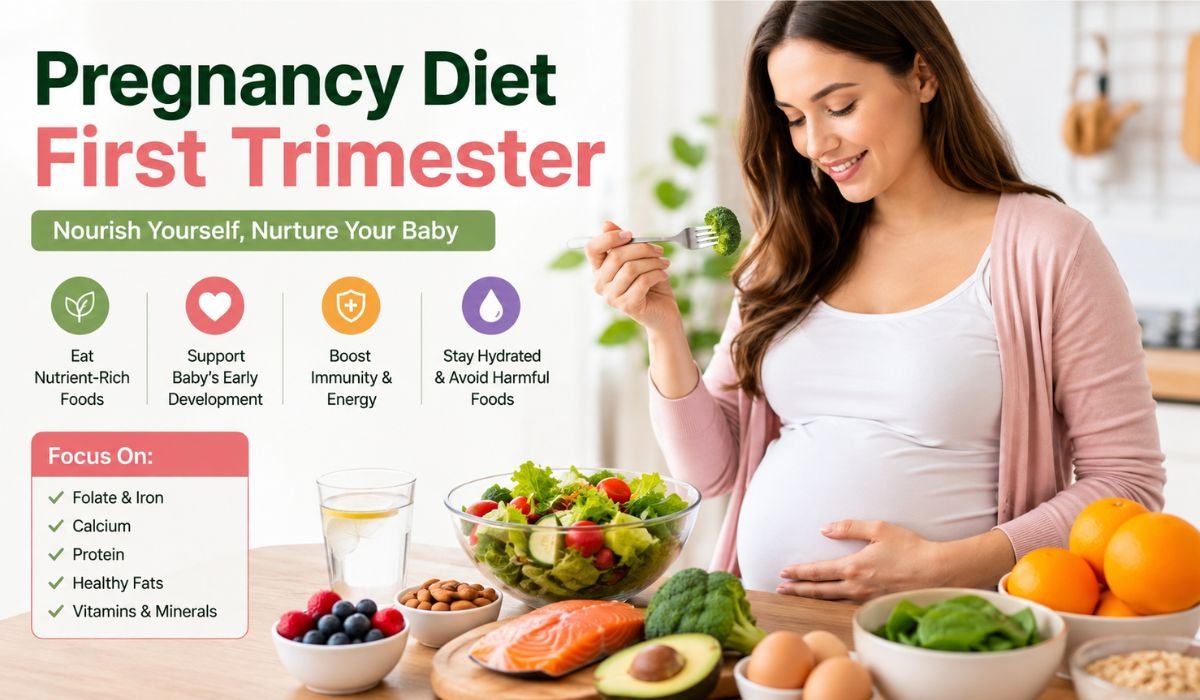
Somewhere around week 6, a lot of women hit the same wall: they know they’re supposed to be “eating healthy for the baby,” and yet the sight of chicken makes them gag and even water tastes wrong. If that’s you, take a breath — the first trimester pregnancy diet isn’t about eating perfectly. It’s about getting in folic acid, iron, a little protein, and enough fluids, in whatever form your body will actually accept right now.
You’re not failing at this. Early pregnancy is genuinely one of the hardest windows to eat “well” in, and your body knows it — which is part of why it doesn’t ask for much extra just yet.
Table of Contents
Why These First 12 Weeks Ask So Much of Your Body
It’s a strange contradiction: this is the trimester where the most is happening — your baby’s neural tube, heart, and major organs are all forming — but it’s also the trimester where you probably feel least capable of cooking a real meal. That’s exactly why the CDC recommends getting folic acid on board before pregnancy even begins, if you can. It’s one of the rare nutrients where the timing genuinely can’t wait for you to feel better.
Here’s the reassuring part, though: you don’t need more calories yet. That comes later. Right now your job is smaller than it feels — just get some good nutrients in, however they’ll go down.
The Nutrients That Actually Matter Right Now
You don’t need to memorize a chart. A handful of things matter more than the rest this trimester, and they’re worth knowing so you can reach for them when you do have an appetite.
Folic acid is the one everyone talks about, and for good reason — ACOG recommends 400–800 mcg a day because it meaningfully lowers the risk of neural tube defects. Lentils, leafy greens, citrus, and fortified cereal all help, but honestly, most doctors still lean on a prenatal vitamin as the safety net here, because hitting that number through food alone while nauseous is a big ask.
Iron matters too, quietly, in the background — your blood volume is expanding even when you can’t feel it, and your iron needs are climbing right along with it. Lean meat, beans, spinach, and fortified grains are solid sources, and pairing them with something like citrus or bell peppers helps your body actually absorb the iron rather than let it pass through.
Then there’s DHA, an omega-3 that’s doing real work on your baby’s brain and eyes this early. Salmon and sardines are the classic sources, but if seafood is the last thing on earth you want right now, an algae-based DHA supplement does the job just fine.
Protein deserves a mention too — eggs, Greek yogurt, tofu, beans — but don’t think you need a big steak dinner. Small amounts, spread through the day, tend to go down far easier than one large plate.
And don’t underestimate fluids. Dehydration quietly makes nausea worse, so water, broth, and the occasional electrolyte drink are doing more for you than they get credit for.
When Morning Sickness Is the Real Obstacle
Let’s be honest — the hard part usually isn’t knowing what to eat. It’s that nothing sounds good, or everything comes back up anyway. A few things genuinely help: keeping a snack by your bed for before you even sit up, eating small amounts often instead of forcing three big meals, sticking to bland, room-temperature food when smells set you off, and letting go of the guilt if crackers and toast are all that’s staying down this week. Your baby is still getting what they need. Nutrition evens out — it doesn’t have to be perfect in week 7.
What a Doable Day Might Look Like
- Morning: A few dry crackers before you even get out of bed, then a boiled egg once your stomach settles
- Midday: Greek yogurt with berries, or a small bowl of lentil soup if that feels more appealing
- Afternoon: Hummus and crackers, or a small handful of nuts
- Evening: Grilled chicken or tofu with rice and vegetables — if and when it sounds tolerable
- All day long: Sips of water, ginger tea, or an electrolyte drink, rather than trying to chug a big glass at once
A Few Common Missteps (and How to Fix Them)
So many women quietly stop taking their prenatal vitamin because it makes them queasy, and then feel guilty about it — but often, just moving it to nighttime, taking it with food, or switching to a gummy version solves the problem without needing to give it up entirely. The other trap is chasing a “perfect” diet and feeling defeated the moment it doesn’t happen. Some weeks really are just toast-and-water weeks, and that’s okay, as long as fluids and your prenatal vitamin are still going in. It’s also worth steering clear of raw fish, unpasteurized dairy, deli meats that haven’t been reheated, and high-mercury fish like swordfish or king mackerel.
FAQ
Do I need to eat more calories in the first trimester?
Not really. Most women don’t need extra calories until the second trimester — this stage is about nutrient quality, not quantity.
What if I can’t keep my prenatal vitamin down?
Try taking it at night, with a small snack, or switching to a chewable or gummy version. If vomiting is frequent, it’s worth mentioning to your doctor.
Is it normal to only want carbs right now?
Very normal. Bland, starchy foods are often the easiest to tolerate during early nausea, and things tend to balance out as symptoms ease.
Can I still have coffee?
Most guidelines, including ACOG’s, consider up to 200 mg of caffeine a day — roughly one 12-oz cup — safe during pregnancy.
When should I actually worry about not eating enough?
If you can’t keep any food or fluids down for more than 24 hours, or you’re losing weight, reach out to your provider. It could be hyperemesis gravidarum, which is treatable but does need medical attention.