
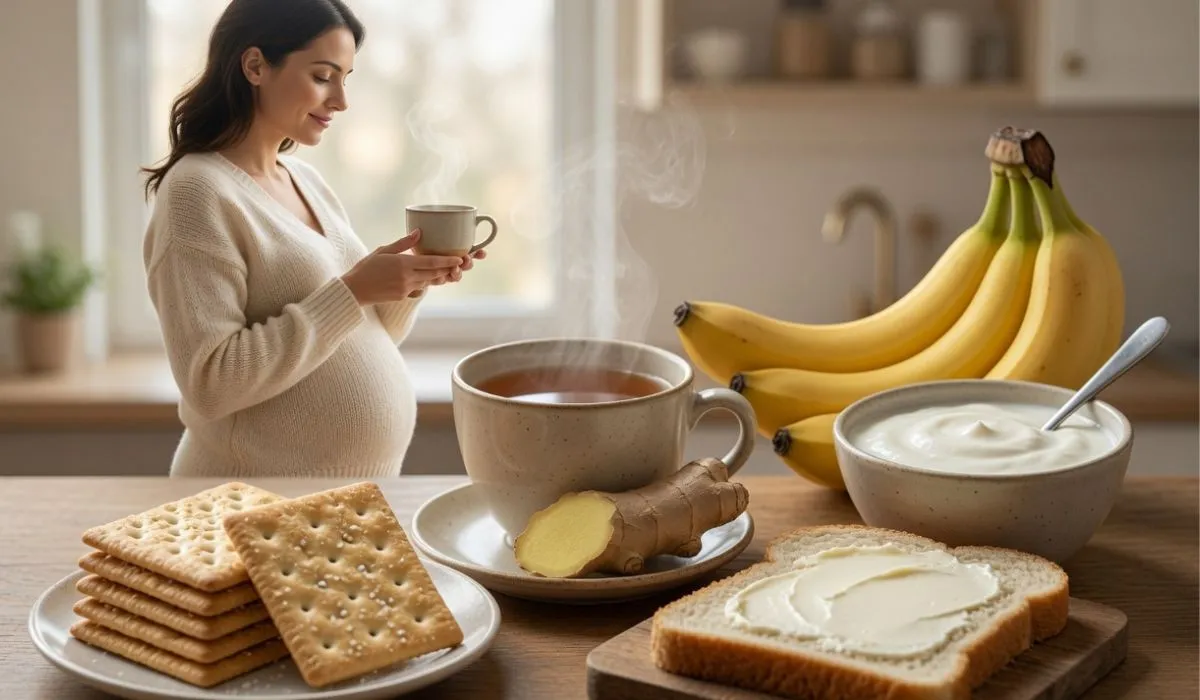
If you’re standing in front of the fridge right now feeling like absolutely nothing sounds good, take a breath — this is one of the most common (and most frustrating) parts of early pregnancy, and you’re going to get through it. keep things small, bland, and frequent. Crackers, ginger, dry toast, a few bites of banana. Cold or room-temperature food is usually your friend here, because hot food carries smells further, and smells are often the real culprit behind that wave of queasiness.
This is often called “morning sickness,” though anyone who’s actually lived through it knows that name is a bit of a joke — it can show up morning, noon, or 9pm, and it doesn’t always care what the clock says. It hits most pregnant women to some degree in the first trimester, and while it’s exhausting, it’s also very manageable once you figure out what your body will actually tolerate.
Table of Contents
Why This Is Happening to You
It helps to know you’re not imagining it and you’re not doing anything wrong. Your hormone levels — mainly hCG and estrogen — are climbing fast, and that shift is largely what triggers the nausea. On top of that, an empty stomach makes everything worse, because stomach acid ends up with nothing to do but irritate your stomach lining. That’s a big part of why mornings feel the roughest: you’ve gone all night without eating, and your blood sugar has quietly dropped while you slept.
Then there’s the smell thing. Pregnancy tends to crank your sense of smell way up, so coffee, garlic, or even a meal you used to love can suddenly feel unbearable. It’s not you being dramatic — it’s a real, documented pregnancy symptom, and it usually eases up as the weeks go on.
Foods That Actually Tend to Help
There’s no magic food that works for every single person, but a handful of things come up again and again as lifesavers.
Ginger is the one you’ll hear about most, and it’s earned that reputation — studies back it up as a genuine nausea reliever in pregnancy. Ginger tea, ginger chews, or just fresh ginger steeped in hot water and sipped slowly can take the edge off. Plain starches are another safe bet: saltine crackers, dry toast, plain rice, pretzels. Nothing fancy, but that’s the point — bland food is easy on a stomach that’s already working overtime. A lot of women keep a sleeve of crackers by the bed and eat a few before even sitting up, just to get ahead of the morning wave.
Cold, light snacks often beat warm meals, simply because heat releases more smell. Cold fruit, a small yogurt, a chilled smoothie — these can feel far more doable than a hot plate of anything. Protein deserves a mention too. A boiled egg, a spoonful of peanut butter, a small handful of nuts — these help steady your blood sugar so the nausea doesn’t come roaring back an hour later. And don’t forget water. Sipping small amounts throughout the day, rather than chugging a big glass all at once, tends to sit much better and helps with nausea that’s partly dehydration in disguise.
What Tends to Make It Worse
Just like some foods help, others seem almost designed to trigger a bad afternoon. Greasy or fried food, anything rich, slows digestion down and often makes nausea worse rather than better. Strong smells are a big one too — garlic-heavy dishes, fish, or leftovers reheated in the microwave can turn your stomach before you’ve even taken a bite. Spicy food often doesn’t sit well either.
Here’s the counterintuitive part: skipping meals to “wait out” the nausea usually backfires. An empty stomach tends to make things worse, not better, so pushing through hunger rarely pays off. Timing really does matter as much as what you eat. Eating a few crackers before you even get out of bed can soften that first wave of the day. Grazing every couple of hours instead of committing to three big meals tends to keep your blood sugar — and your stomach — much steadier. It also helps to space out food and drink a little; gulping water right alongside a meal can leave you feeling overly full, so many women find it easier to sip fluids between meals rather than during them.
What an Easy Day of Eating Might Look Like
Mornings might start with a few dry crackers before you even get up, then dry toast with a little peanut butter once you’re moving. Mid-morning, maybe some ginger tea and a handful of pretzels. Lunch could be something plain — rice with a boiled egg, or a small piece of grilled chicken — since heavier meals tend to sit less well. In the afternoon, cold fruit or a small yogurt can hold you over, and dinner is often best kept light too, like plain pasta or toast with a simple soup. This isn’t a strict meal plan you need to follow to the letter — just a loose shape to build around, since what sounds good can change from one hour to the next.
When It’s Worth Calling Your Doctor
Mild to moderate nausea is a normal, if miserable, part of many pregnancies, and it usually starts easing up by the second trimester. But please reach out to your healthcare provider if you can’t keep food or liquids down for a full 24 hours, you’re losing weight, you notice signs of dehydration like dark urine or dizziness, or the nausea just feels like more than “normal morning sickness.” This more severe pattern is sometimes diagnosed as hyperemesis gravidarum, and it genuinely needs medical support — this isn’t something to just tough out. According to ACOG (the American College of Obstetricians and Gynecologists), persistent vomiting in pregnancy should always be checked out rather than pushed through alone.
A Few Easy Mistakes to Avoid
Skipping meals entirely because nothing appeals to you. Forcing down a “healthy” food you know makes you feel worse just because it’s supposed to be good for you. Drinking a big glass of water all at once instead of sipping it slowly. Lying down right after eating. None of these are huge mistakes, but small shifts in timing and portion size often make a bigger difference than the specific food itself.
FAQ
Is it normal to only want bland food right now?
Completely normal. Hormonal shifts and a heightened sense of smell make bland, plain foods much easier to handle than rich or strongly flavored ones, especially in the first trimester.
Does ginger actually help, or is that just a myth?
It really does help for a lot of women — research supports ginger as a nausea reliever in pregnancy. Ginger tea, ginger chews, or fresh ginger in warm water are all worth trying.
Why does nausea feel worse in the morning?
After a night without food, your blood sugar drops and your stomach is empty, which tends to intensify nausea. A small snack before you even get out of bed can help take the edge off.
Can nausea last all day, not just in the mornings?
Yes, and if that’s you, you’re not alone — despite the name “morning sickness,” nausea can hit at any point in the day, and for some women it lingers most of the day.
When does this usually get better?
For most women, nausea peaks around weeks 9–10 and eases noticeably once the second trimester begins, though everyone’s timeline looks a little different.