
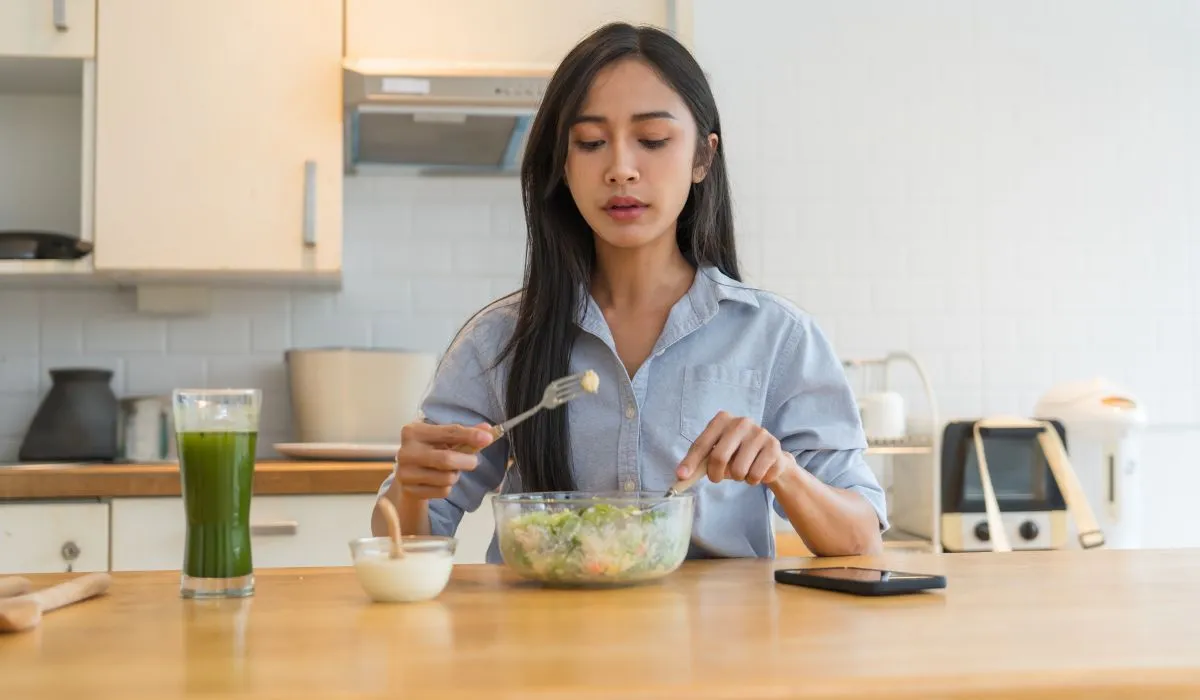
You’re hungry. Genuinely, stomach-growling hungry. And yet you just opened the fridge for the third time today and closed it again, because nothing in there looks like something you can actually eat. Maybe the smell of last night’s leftovers made you gag a little. Maybe even the thought of chewing feels like too much. It’s such a strange, frustrating place to be stuck — wanting food and dreading it at the exact same time.
If that’s you right now, please don’t take it as a sign you’re doing something wrong. This is one of the most common things women go through in early pregnancy, and it’s almost entirely your hormones talking, not your body being difficult on purpose.
The short version, if you need it fast: eat small amounts of plain, easy food often — before the hunger or the nausea gets a chance to build. Crackers. Dry toast. Half a banana. A warm mug of ginger tea. Nothing fancy. Just small, steady bites instead of trying to power through a full meal.
Table of Contents
Why It Feels Like Your Body Is Working Against Itself
There’s a real reason this feels so contradictory, and it’s not you.
In early pregnancy, hCG and estrogen climb fast, and both of those hormones slow your digestion down and make your stomach far more sensitive than it used to be. At the same time, your body is quietly demanding more energy to support the pregnancy, so your hunger doesn’t switch off. If anything, it gets louder.
So you end up caught between two signals that won’t stop arguing. One part of you wants food, badly. Another part recoils the moment food actually shows up. It’s exhausting, and it’s tempting to just skip eating altogether and hope it passes. But that usually backfires — an empty stomach tends to make nausea worse, not better. As unhelpful as it sounds when you’re feeling this way, eating really is what helps.
What Actually Tends to Sit Well
Every pregnancy reacts a little differently, so don’t be discouraged if something that worked wonders for your sister does absolutely nothing for you. Still, a few foods tend to be gentle enough for most people to get down.
Plain carbs are usually a safe starting point — saltine crackers, dry toast, plain rice, pretzels. A lot of women keep crackers within arm’s reach of the bed and eat a couple before even sitting up in the morning, since that first empty stretch of the day tends to hit the hardest.
Temperature matters more than most people expect. Hot food carries stronger smells, and smell is often the real trigger, not the food itself. A cold sandwich, a bit of yogurt, or a smoothie can go down far easier than a hot dinner plate.
Ginger genuinely earns its reputation here. It’s not just something your grandmother swears by — ginger tea, ginger chews, and even flat ginger ale have real research behind them for easing pregnancy nausea.
A little protein makes a noticeable difference too. A small handful of almonds, a spoonful of peanut butter, a hard-boiled egg, a bit of cheese — these small amounts help keep your blood sugar steadier, and shaky blood sugar is one of the sneakier reasons nausea flares up out of nowhere.
Juicy fruit is worth having close by. Watermelon, oranges, grapes — easy to nibble on, and they quietly help with hydration too, which tends to slip when plain water doesn’t sound appealing.
And on the roughest days, a simple broth, sipped slowly, can be enough. It asks almost nothing of your stomach, but it still gives you something.
What Tends to Make It Worse
Greasy or fried food is usually the first thing to go, along with anything heavy or rich. Strong smells — reheated leftovers especially — tend to set nausea off fast, so if someone offers to cook or reheat for you, take them up on it without guilt. Spicy food rarely goes over well either. And two habits quietly make everything harder: waiting too long between meals, and gulping a big glass of water all at once instead of sipping it slowly through the day.
A Few Things Worth Trying
Smaller meals, more often, beat three big ones by a wide margin right now. Keep something bland within easy reach — crackers by the bed, a granola bar in your bag — so you can eat the second hunger or nausea starts creeping in, instead of letting it build into something you can’t get ahead of. Sipping water slowly through the day, rather than downing it in big gulps, tends to help too.
One more thing worth knowing: prenatal vitamins can sometimes make nausea worse, especially taken on an empty stomach. Pairing them with a small snack, or moving them to a different time of day — some women find right before bed works better — might be worth trying. It’s worth mentioning to your doctor if it keeps being a problem.
Mild to moderate nausea is normal for most pregnant women, and it usually eases up once the second trimester arrives, according to ACOG (the American College of Obstetricians and Gynecologists). But if you genuinely can’t keep food or fluids down, you’re losing weight, or you feel dizzy and dehydrated, please don’t try to just push through it. Call your doctor. That level of nausea can point to hyperemesis gravidarum, and it needs real medical care.
Questions Women Often Ask
Is it normal to feel hungry and nauseous at the same time during pregnancy?
Yes, very normal, especially early on. It’s your hormones slowing digestion down while your body quietly asks for more energy at the same time.
What should I eat first thing in the morning if I feel sick?
A few plain crackers or a slice of dry toast, eaten before you even get out of bed, can help settle things before they get worse.
When should I be worried about nausea during pregnancy?
If you can’t keep anything down, you’re losing weight, or you feel dizzy and dehydrated, call your doctor rather than waiting to see if it passes on its own.
Can prenatal vitamins make nausea worse?
For some women, yes. Taking them with food, or at a different time of day like right before bed, often helps.