
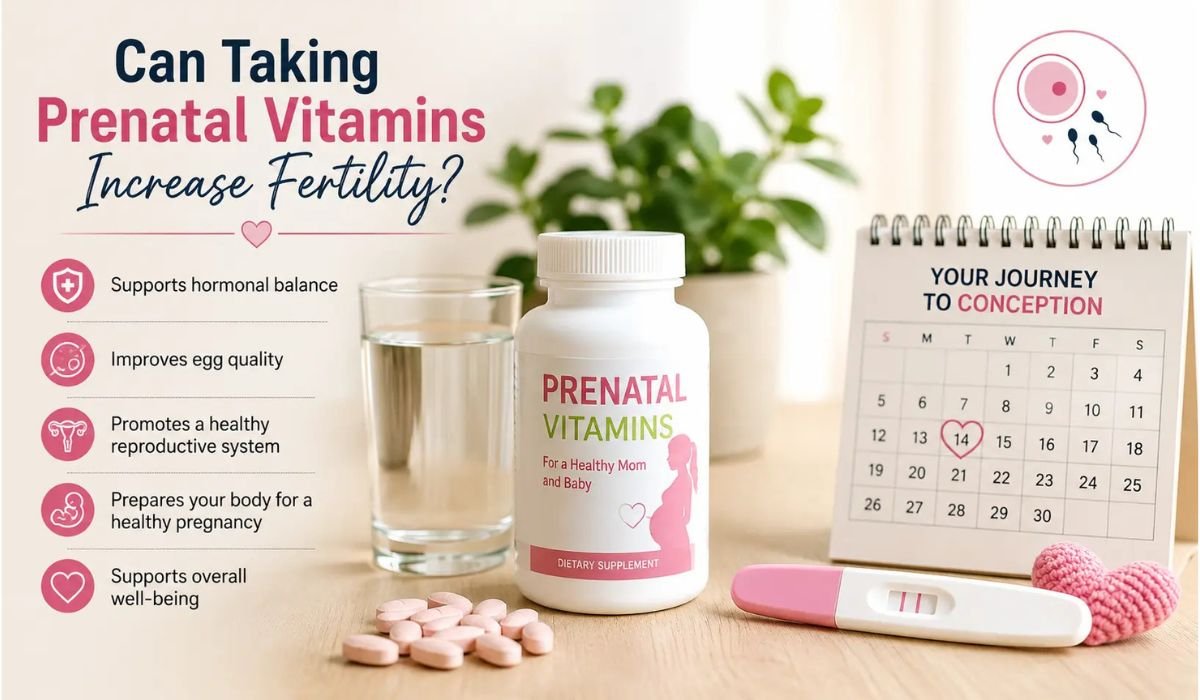
If you’ve been staring at a bottle of prenatal vitamins wondering whether popping them now, before you’re even pregnant, could actually help you conceive — the honest answer is: sort of, but not in the way you might be hoping. They’re not a fertility drug. They won’t make an egg release on command or magically speed things along. What they do is quietly fill in the nutritional gaps that make it harder for your body to do what it’s already trying to do — ovulate regularly, balance hormones, and build the kind of egg quality that gives conception its best shot.
So no, it’s not a shortcut. But it’s not nothing either.
Your body is already planning ahead — are you?
Here’s the part that surprises most people. An egg doesn’t just appear the month you decide to try. It’s actually been developing for about 90 days before it’s released during ovulation. Everything you’re eating, or not eating, during that stretch shapes how healthy that egg turns out to be. And it’s not only about you, either — sperm go through a similar maturation window, so this really is something both partners are part of, whether either of you realizes it or not.
That’s the reason so many fertility doctors will tell you to start a prenatal a couple of months before you even start trying, instead of waiting until the test comes back positive. By then, honestly, that early window has usually already closed.
What’s actually in there, and why it matters
Folic acid tends to get all the credit, and fair enough — it’s earned it. <cite index=”2-1″>ACOG recommends it for every woman of reproductive age, and 400 micrograms a day is considered enough for most people.</cite> It’s involved in cell division and DNA formation, which is happening constantly in your body, conception or not.
Iron is the quieter one nobody talks about as much. Low iron is far more common than people think, and once it’s depleted, it can take months to build back up — not days. That’s part of why nearly every prenatal has it. Keep it steady and you’re supporting ovulation, plus you’ll probably just feel less wiped out, which counts for something during a season of life that already asks a lot of you.
Then there’s vitamin D, tied into hormone regulation, though it needs a couple of consistent months before your levels actually settle. And B12, working right alongside folate in the background. There’s even some research on women going through fertility treatment showing that B-complex vitamins together — not just folic acid alone — were linked to better egg maturation and fertilization rates. It’s early, promising research rather than a settled fact, but it’s worth knowing about.
The part nobody likes to hear
Prenatal vitamins are not going to fix PCOS. They’re not going to open a blocked tube or resolve male-factor infertility. If anyone’s telling you otherwise, they’re overselling it. What they can genuinely do is close nutrient gaps that stand in the way of your body ovulating consistently and holding onto a pregnancy once it starts.
If you’re going to take one, take it right
Start earlier than feels necessary. One to three months before you start trying is the general rule of thumb, and earlier is better than later. Try to take it at roughly the same time each day — it sounds small, but consistency does more for absorption than people expect, and it turns into a habit faster than you’d guess. If it makes your stomach turn, taking it with a bit of food or right before bed usually smooths that out. And resist the urge to add a separate folic acid supplement on top unless your doctor tells you to — stacking supplements can push your vitamin A intake higher than you want. If you already know you’re dealing with something that affects fertility, loop your doctor in before you start, since your needs might not match the general advice here.
Two things worth avoiding: don’t wait for the positive test to start, because by then that early egg-development window is behind you. And don’t assume more is better — it’s the balance that matters, not the dose. Missing days here and there also makes it harder for your body to hold onto steady nutrient levels, so steady really does beat perfect.
Questions people usually have
Can prenatal vitamins help me get pregnant faster?
Not exactly a promise, but by closing nutrient gaps, they do create better conditions for ovulation and conception to happen.
How early should I start before trying to conceive?
At least a month, ideally three, so nutrients like folate and vitamin D actually have time to build up.
Is it safe to take a prenatal if I’m not pregnant yet?
Yes — it’s actually recommended specifically for this preconception stretch.
Will a prenatal treat infertility?
No. It supports general reproductive health, but underlying causes of infertility need an actual diagnosis and treatment from a doctor.
Which nutrient matters most for fertility?
Folic acid gets the spotlight, but don’t sleep on iron, vitamin D, and B12 — they’re all pulling weight too.
 Emma Gill