
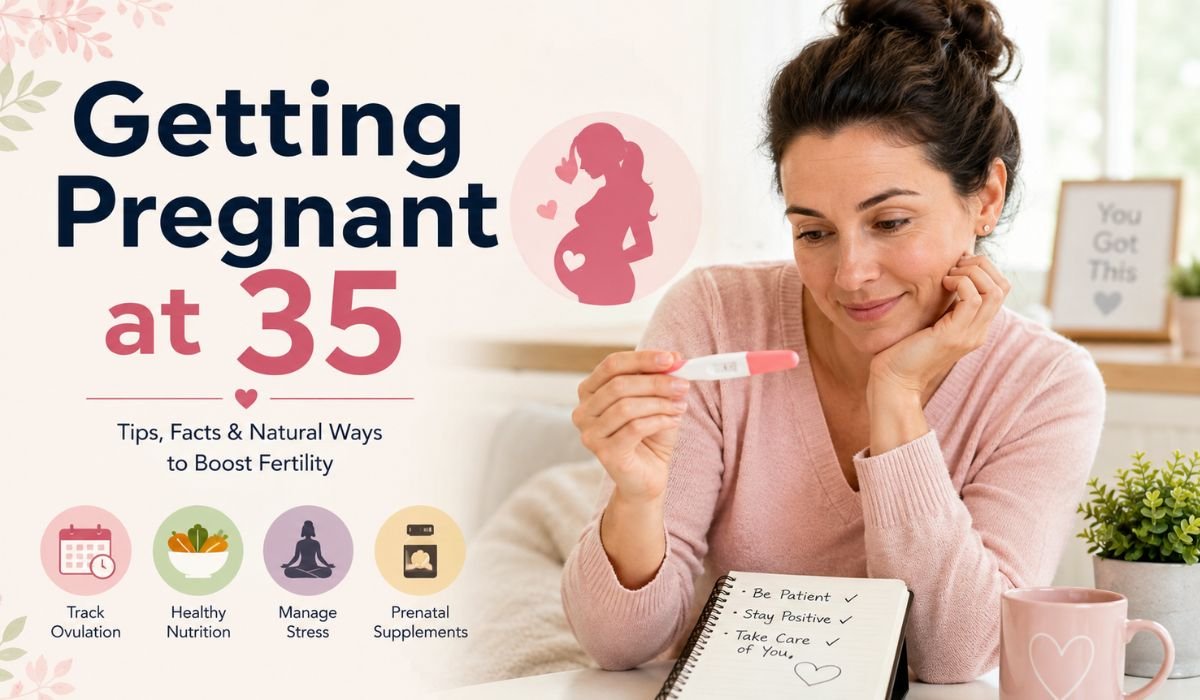
At some point, 35 became this number everyone treats like a countdown timer. Doctors call it “advanced maternal age,” which, honestly, sounds a lot more alarming than it needs to. Here’s the more honest version: yes, fertility shifts a little after 35. But plenty of women get pregnant naturally at this age and go on to have completely healthy pregnancies. What actually changes is that your body benefits from a bit more support, and it helps to be a little more intentional instead of just letting things happen and hoping for the best.
So if you’re trying to conceive at 35 and wondering what’s actually worth your energy, let’s talk through it.
What’s Really Going On in Your Body
You were born with every egg you’ll ever have, and that number has been quietly ticking down your whole life. It just tends to pick up the pace a bit after your mid-30s. Egg quality shifts too, which is part of why your odds of conceiving in any given month drop slightly compared to your late twenties. But here’s the thing that number doesn’t capture: it’s a slope, not a wall. It doesn’t mean you can’t get pregnant. It just means each cycle counts for a little more than it used to, so the small, boring habits start paying off more than they did at 25.
Learn When You’re Actually Ovulating
If there’s one thing genuinely worth doing properly, it’s this one. Guessing based on a generic 28-day calendar stops working once your cycles start shifting around, and that tends to happen more as you get closer to your late 30s. Tracking is how you actually catch your fertile window instead of missing it by a day or two without ever realizing.
There’s no single “right” way to do it, so pick whatever you’ll actually stick with. Ovulation predictor kits catch the LH surge right before you ovulate, which makes them useful for real-time timing. Basal body temperature charting shows a small rise after ovulation has already happened, so it’s better for confirming patterns over a few months than predicting today. Cervical mucus tends to go clear and stretchy as you get close to ovulating, which is free and doesn’t need a single test strip. And if none of that appeals to you, a fertility app can quietly do the pattern-spotting for you.
Once you know your window, try to have sex every one to two days through it, rather than white-knuckling one “perfect” day. Sperm can survive a few days waiting around for an egg, so a little consistency beats trying to be precise.
Get Your Body Ready Before You Even Start Trying
Preconception health matters at any age, honestly, but at 35 it carries a bit more weight, simply because there’s less room to fix things after the fact.
Start taking a prenatal vitamin before you’re even trying, not after a positive test shows up. Folic acid needs to already be in your system in the earliest weeks of pregnancy, often before you even know you’re pregnant, because that’s exactly when it protects against neural tube defects. A decent prenatal covering folic acid, iron, and vitamin D is a reasonable place to start, and it’s one of the few things here that costs almost no effort.
It’s also worth booking a preconception checkup, even if nothing feels wrong. Ask your doctor to check your thyroid, look over any medications you’re on, and confirm your vaccinations are current. If you’ve got something like PCOS, endometriosis, or a thyroid issue in the mix, now is the moment to get it managed, rather than trying to untangle it once you’re already pregnant.
Your weight and activity level matter here too, though not in the way diet culture likes to frame it. Being significantly underweight or overweight can both throw off ovulation, so a moderate, sustainable routine tends to support your cycle far better than anything extreme ever will. If you drink or smoke, cutting back now is genuinely easier than carrying the guilt of doing it after a positive pregnancy test. And caffeine doesn’t need to vanish completely — keeping it somewhere under 200mg a day is a reasonable target while you’re trying.
Your Partner’s Health Is Part of This Story Too
It’s easy to put all the pressure on your own body, but this was never a solo project. Sperm quality declines with age as well, just more gradually than egg quality does. If your partner cuts back on drinking, quits smoking, keeps stress in check, and avoids things like frequent hot tubs or saunas, that genuinely moves the needle for both of you, not just them.
Don’t Wait as Long to Ask for Help
Here’s probably the biggest mindset shift worth having: the “just relax and see what happens” window is shorter at 35 than it was in your 20s, and there’s no shame in that. Most fertility specialists suggest seeing a doctor after six months of trying, rather than the full year usually recommended for women under 35. If your cycles are irregular, or you’ve got a history of endometriosis or any known fertility concerns, it’s worth going in even sooner than that.
Getting checked doesn’t mean something’s wrong, and it definitely doesn’t mean you’re behind. More often than not, it just confirms things look normal, or it catches something small and fixable early, while you’ve still got plenty of room to work with.
Let Stress Be Background Noise, Not Another Task on Your List
Stress alone doesn’t cause infertility, but the chronic kind can throw off your cycle and make an already emotional process feel even heavier. You don’t need a rigid wellness routine you’ll end up resenting by week two. Walking, sleeping enough, moving your body in whatever way feels good, or just talking honestly to someone about what you’re going through, all genuinely help, and they ask a lot less of you than forcing yourself into something structured.
A Few Things Worth Watching For
Trying to conceive at 35 can quietly turn into a numbers game if you’re not careful about it. Watch out for tracking ovulation so obsessively that it starts adding more stress than it relieves — that’s not the point of any of this. Don’t put off the prenatal vitamin with an “I’ll start once I’m actually pregnant” mindset, because by then, the window it matters most for has often already passed. Don’t sit on irregular cycles for months without getting them looked at, just because you’re busy or hoping they’ll sort themselves out. And try not to assume that turning 35 automatically means IVF is somewhere down the road — a lot of women conceive naturally at this age and well beyond it, without any intervention at all.
When It’s More Than Just Timing
If you’ve been consistent about tracking and timing for six months and it’s just not happening, that’s genuinely worth a conversation with a doctor rather than more waiting it out. It’s not a failure on your part, and it doesn’t mean treatment is automatically the next step. It’s just the point where getting a clearer picture makes more sense than continuing to guess in the dark.
Questions Women Ask Most
Is 35 really that big a deal for fertility?
It’s more of a gradual slope than a cliff edge. Fertility declines slowly through your 30s and a bit more after 35, but plenty of women conceive naturally at this age without any extra help.
How long should I try before seeing a doctor?
Around six months is the general guideline after 35, compared to a full year for younger women. Sooner if your cycles are irregular or you have a known fertility condition.
Do I need fertility treatment automatically at this age?
Not at all. Many pregnancies at 35 and older happen with no treatment involved whatsoever. A checkup is really just there to rule out anything that might need early attention.
When should I start taking prenatal vitamins?
Ideally before you even start trying, since folic acid needs to be on board in the earliest weeks of pregnancy, often before a positive test even shows up.
Does egg freezing make sense at 35?
It’s worth a conversation with a fertility specialist, especially if you’re not trying to conceive right now but want to keep your options open. It really comes down to your own timeline and what feels right for you.
Does egg freezing make sense at 35?
It’s worth a conversation with a fertility specialist, especially if you’re not trying to conceive right now but want to keep your options open. It really comes down to your own timeline and what feels right for you.