
If you’re in your first trimester and half your meals are ending up back out of your stomach, you’re not doing anything wrong — this is just one of the hardest stretches of pregnancy to eat “perfectly” in. The good news is that your first trimester diet doesn’t need to be perfect. It mostly needs to cover a few key nutrients — folate, iron, and DHA — and meet you where you are, even if where you are right now is crackers in bed at 7am.
Table of Contents
Why This Stage Matters So Much (Even Though You Don’t Look Pregnant Yet)
It feels a little unfair, honestly. You’re exhausted, possibly nauseous, maybe even keeping the pregnancy a secret still — and yet this is the exact window when your baby’s brain, spine, and major organs are taking shape. Neural tube formation happens in the first month, often before most women even get a positive test, which is part of why folic acid gets talked about so early and so often. Meanwhile, your own body is quietly ramping up blood volume and shifting hormones behind the scenes. So no, you don’t need to eat perfectly. But a little bit of intention now really does go a long way.
The Few Nutrients Worth Actually Paying Attention To
You don’t need to memorize a nutrition chart. Just keep these on your radar.
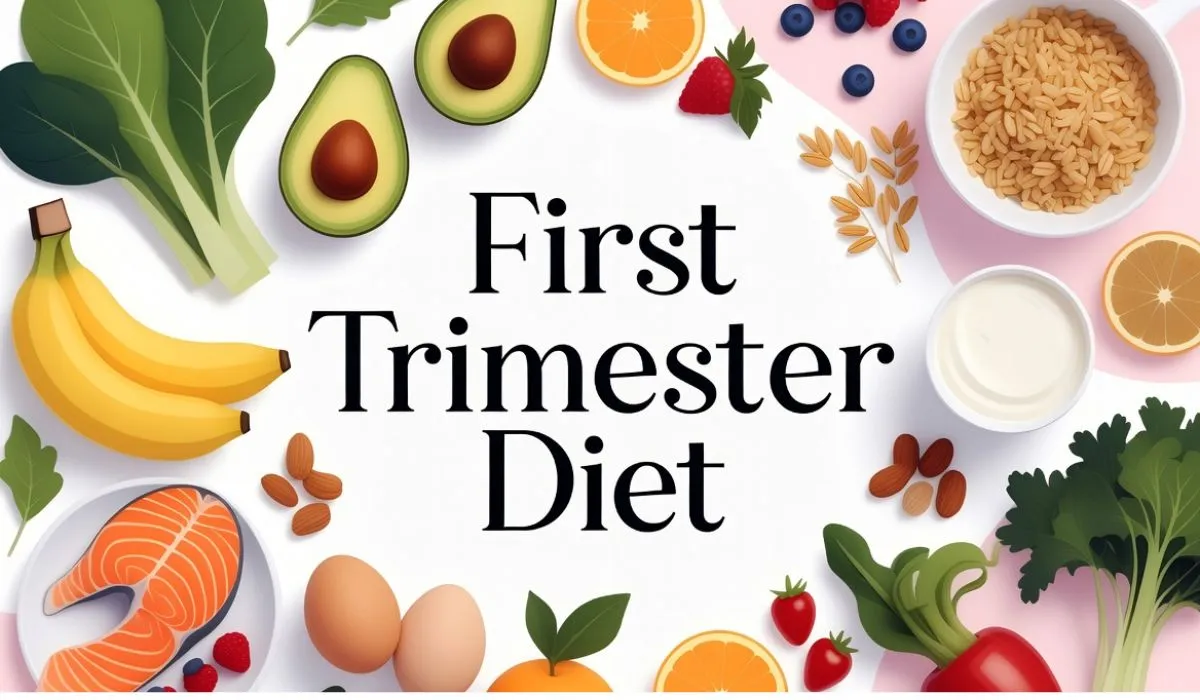
Folic acid is the big one — the CDC recommends 400 to 800 mcg a day, and you’ll find it in leafy greens, citrus, beans, and fortified cereal. Iron matters too, since your blood volume is expanding fast; lentils, spinach, and lean red meat help, and a little vitamin C alongside them (an orange with your lentil soup, say) helps your body actually absorb it. DHA, an omega-3 found in salmon, walnuts, and algae-based supplements, supports your baby’s developing brain and eyes. And calcium and vitamin D matter for the bones being built right now — dairy, fortified plant milk, and a bit of sunshine all count. A prenatal vitamin is worth taking as backup for the days food just doesn’t cooperate, not as a replacement for it.
When Nausea Makes “Eating Healthy” Feel Like a Joke
Let’s be honest about this part, because most articles gloss right over it. Morning sickness rarely respects mornings, and on a bad day, the idea of a balanced meal can feel laughable. What tends to help isn’t eating more — it’s eating smaller, more often. Five or six small meals usually sit better than three big ones, since an empty stomach often makes nausea worse, not better. Bland, cold, or room-temperature food is often easier to keep down than anything hot or greasy — crackers, toast, rice, or a smoothie instead of a stir-fry. Ginger tea or ginger candy genuinely works for a lot of women, and it’s worth trying before reaching for anything stronger. And if absolutely nothing is staying down for more than a day or two, that’s not a “push through it” situation — call your provider, because that’s what they’re there for.
What to Set Aside for Now
A handful of foods are worth skipping while you’re pregnant, not forever. Raw or undercooked eggs, meat, and fish carry a higher risk of foodborne illness right now. High-mercury fish like swordfish and king mackerel are best avoided, though lower-mercury options like salmon and shrimp are fine in moderation. Unpasteurized dairy and soft cheeses can carry listeria risk, caffeine is best kept under about 200 mg a day (roughly one 12-ounce coffee), and alcohol has no known safe amount during pregnancy, so it’s simplest to skip it entirely.
What an Actual Day Might Look Like
Some mornings start with dry crackers before you’ve even swung your legs out of bed — that’s normal, not a failure. Once your stomach settles a little, breakfast might be scrambled eggs and fruit, or oatmeal with berries on days eggs sound unbearable. A mid-morning yogurt or a small handful of almonds keeps your blood sugar from dipping. Lunch could be a lentil soup with a bit of citrus on the side, and an afternoon snack of hummus and crackers bridges you to dinner — something simple like baked salmon, rice, and steamed vegetables. A small bowl of fortified cereal with milk before bed rounds the day out nicely. None of this needs to happen every single day. It’s the pattern over weeks that matters, not any one meal.
A Few Things Worth Knowing Before You Assume Otherwise
“Eating for two” is one of those phrases that sounds true and isn’t — your calorie needs barely budge in the first trimester. Plenty of women stop taking their prenatal vitamin because it makes them nauseous, when switching to a gummy or taking it with food at night often solves that. And if you’ve had a rough week where nothing “healthy” happened, that’s not undoing anything — one hard week doesn’t erase months of otherwise decent eating. Give yourself the grace here that you’d give a friend going through the same thing.
Questions You’re Probably Actually Asking
Do I really need more calories right now?
Not yet. Most women don’t need extra calories until the second trimester, when needs rise by roughly 300–450 calories a day.
What if I genuinely can’t keep anything down for days?
Call your doctor. Persistent vomiting (hyperemesis gravidarum) needs medical attention, especially if you’re losing weight or can’t hold down fluids.
Is it okay to take my prenatal on an empty stomach?
It’s usually more comfortable with food — taking it at a meal or before bed tends to cut down on nausea.
Can I still have coffee?
Yes, in moderation. Most guidelines cap it around 200 mg a day, about one cup of coffee.
 Emma Gill