
Two lines on a test, and suddenly you’re standing in your kitchen wondering if the turkey sandwich you had for lunch was a mistake. That’s usually how this starts. So let’s clear the air first: a good first trimester diet really comes down to a handful of things — folic acid, protein, iron-rich foods — and a short list of things to ease off for now, like caffeine, raw fish, and unpasteurized dairy. That’s genuinely most of it. Nobody expects you to eat flawlessly. Half the time nausea is going to decide your menu for you anyway, and that’s fine. Small, steady choices, made over and over, matter far more than any single “perfect” meal ever will.
Why These First 12 Weeks Are Doing So Much Work
Here’s the part that’s hard to wrap your head around: you might not look pregnant yet, might barely feel it beyond some tiredness and maybe a sore chest, but your baby’s brain, spine, and major organs are forming right now. This week. Possibly today. That’s the whole reason nutrients like folic acid and DHA get talked about so much this early — they’re carrying real weight during a stretch when everything is happening fast, often before you’ve even told anyone your news.
And this, inconveniently, is also usually when nausea, sudden food aversions, and a bone-tired exhaustion move in like uninvited houseguests. So let go of any idea of a picture-perfect meal plan. The actual goal for weeks one through twelve is smaller than that: get the essentials in, however that looks for you on a given day, and be gentle with yourself about everything else. Nobody eats a textbook-balanced diet through the first trimester. Not one person.
What Your Body Actually Needs Right Now
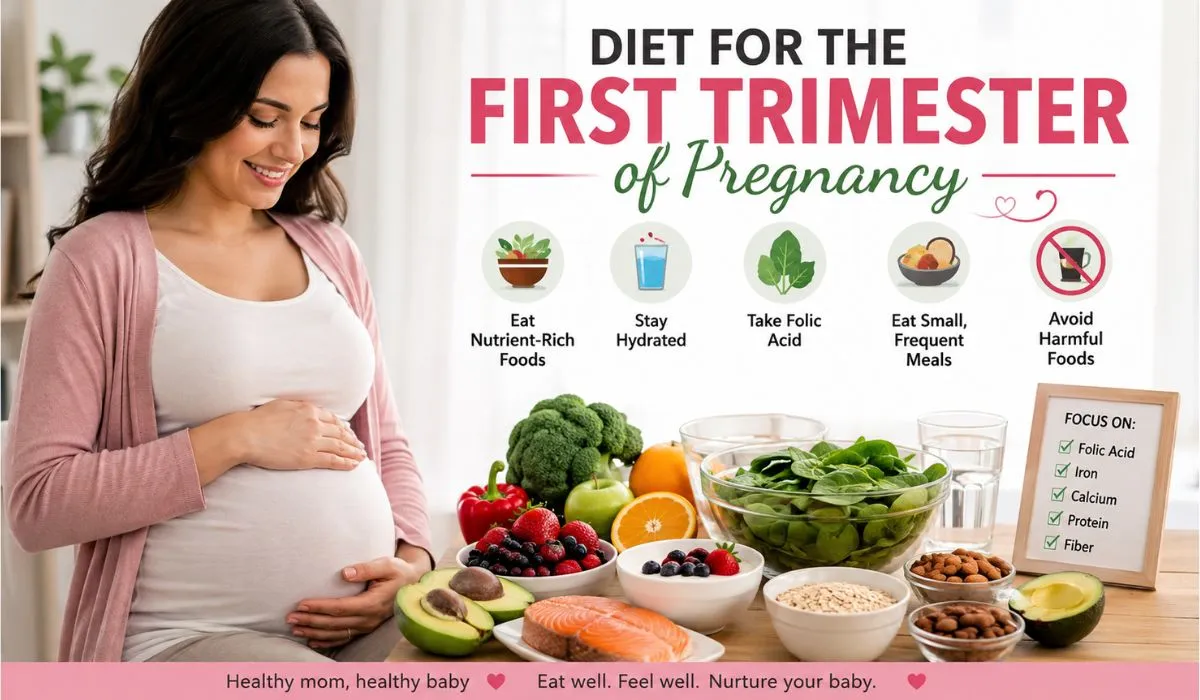
Folic acid usually comes up first in any conversation about early pregnancy, and it earns that spot — it helps prevent neural tube defects during this exact window. The CDC recommends 400 micrograms a day, ideally starting even before conception, through a mix of prenatal vitamins and folate-rich foods like lentils, spinach, and fortified cereal. If you’re already taking a prenatal, you’ve likely got this covered; food is just extra insurance on top.
Iron matters more than most people realize this early. Your blood volume starts expanding almost right away, and iron helps your body keep up. Lean red meat, beans, and dark leafy greens are good sources, and pairing them with a little vitamin C — an orange, some bell pepper — helps your body actually hold onto it instead of letting most of it pass through unused.
Protein doesn’t get nearly enough credit. Eggs, poultry, tofu, Greek yogurt, beans — they all support your baby’s developing tissue, and you don’t need huge portions to make a difference. Spreading a little protein across the day usually works better than one big serving at dinner, especially on mornings when eating anything feels like a lot.
Then there’s DHA, an omega-3 that supports early brain development. If the thought of fish makes your stomach turn — a genuinely common first-trimester reaction, so you’re not alone there — low-mercury options like salmon, plus walnuts or DHA-fortified eggs, can quietly do the job without a fight.
And rounding it out, calcium and vitamin D, found in dairy, fortified plant milks, and leafy greens, help build your baby’s bones while protecting yours too, since your body will borrow from your own reserves if it has to.
A Day of Eating, Roughly
You don’t need to overhaul your whole diet overnight — honestly, trying that rarely sticks, especially when your appetite seems to have developed opinions of its own lately. A realistic day might start with scrambled eggs, spinach, and whole-grain toast, then Greek yogurt with berries when the mid-morning slump hits. Lunch could be lentil soup with a citrus-dressed salad on the side, followed by a handful of walnuts and an orange in the afternoon. Dinner might land on something uncomplicated, like baked salmon, brown rice, and steamed broccoli — food that does its job without asking much of you in return.
And if nausea makes even that sound like too much, that’s okay. Smaller, more frequent bites — crackers, plain toast, a smoothie sipped slowly over an hour — often go down easier than forcing three full meals. Some days will just be survival food. That still counts. It really does.
Foods to Set Aside for Now
Some foods carry a higher risk of bacteria or contaminants that matter more during early pregnancy, so it’s worth steering clear of raw or undercooked meat, eggs, and fish — sushi included — along with unpasteurized milk, cheese, and juice. High-mercury fish like swordfish, king mackerel, and shark are worth skipping too, and deli meats and soft cheeses should wait unless they’ve been heated until steaming.
Caffeine doesn’t have to disappear entirely, so no, your coffee isn’t going anywhere for good. Health experts generally suggest staying under 200 mg a day, roughly one 12-ounce cup. Alcohol is the one place without any real gray area — there’s no known safe amount during pregnancy, so it’s best left aside for now.
When Nausea Makes Eating Feel Impossible
Morning sickness has a cruel sense of humor, honestly, showing up whenever it wants instead of politely sticking to mornings like its name suggests. Keeping bland snacks like crackers or plain toast close by helps more than people expect, and eating small amounts often works better than forcing three big meals. Ginger tea or ginger candies settle things for a lot of women, and cold or room-temperature food is sometimes easier to manage than anything hot and fragrant filling up the kitchen. And sip water throughout the day rather than trying to drink a big glass all at once — your stomach will thank you for going slow.
A Few Things Worth Watching Out For
It’s easy to think meals alone should cover everything and skip the prenatal vitamin, but it’s meant to be a backup, not a replacement — and that backup matters most on the days when eating well just isn’t happening. On the other hand, powering through large meals during a wave of nausea usually backfires; smaller and more frequent almost always wins. Cutting out entire food groups on your own, without checking with your doctor, isn’t the best idea either, and neither is assuming every supplement on the shelf is automatically safe for pregnancy. When in doubt, a quick message to your provider is always worth sending.
Frequently Asked Questions
Do I need to eat for two in the first trimester? Not really.
Calorie needs barely shift this early — it’s much more about nutrient quality than quantity, so don’t stress over portion sizes just yet.
Is it safe to take prenatal vitamins on an empty stomach?
For a lot of women, taking them with food or right before bed helps with nausea. If they’re consistently upsetting your stomach no matter what, it’s worth asking your provider about alternatives.
Can I still drink coffee during the first trimester?
Most guidance from ACOG points to staying under 200 mg of caffeine a day, which works out to roughly one cup of coffee — so your morning ritual probably doesn’t have to go anywhere.
What if I can barely eat because of nausea?
That’s genuinely common, and you’re not doing anything wrong. Focus on whatever you can keep down, stay hydrated, and let your prenatal vitamin cover some of the gaps. If it turns severe — hyperemesis gravidarum, for instance — please reach out to your provider.
Are prenatal vitamins enough on their own?
They’re built to fill gaps, not replace food entirely. A varied diet alongside a prenatal vitamin is really the combination you’re aiming for.
 Emma Gill