
If you’re wondering how to prepare for labor now that you’ve hit the third trimester, here’s the short answer: focus on your body, your birth plan, your support team, and your mind — in that order. The next nine or so weeks are your window to get ready, and a little intentional preparation now can make the actual day feel a lot less overwhelming.
The third trimester has a way of sneaking up on you. One week you’re still working full days, and the next you’re waddling to the bathroom for the fifth time before lunch, wondering if you’re actually ready for what’s coming. That mix of excitement and low-grade panic is completely normal — and it’s exactly why having a real plan for how to prep for labor matters so much right now.
Below are five practical, doable ways to prepare for labor in the third trimester, all things you can realistically fit into your day without needing a complete lifestyle overhaul.
1. Talk to Your Doctor About What “Normal Delivery” Looks Like for You
Every pregnancy is different, so one of the best things you can do early in the third trimester is sit down with your OB or midwife and ask what to do in the third trimester for normal delivery specifically in your case. Bring your questions written down — it’s easy to blank out once you’re in the room.
Ask about things like your baby’s position, your due date range, any risk factors, and what signs mean it’s time to head to the hospital or call your birth center. Health experts, including ACOG, recommend more frequent prenatal visits in the third trimester precisely because things can change quickly, so don’t skip these appointments even if you’re feeling great.
This conversation also gives you a chance to talk through pain management preferences, whether you’re hoping for an unmedicated birth, considering an epidural, or just want to stay open-minded. Getting clarity here is one of the most grounding ways to prepare for labor, because it replaces a lot of the “what if” anxiety with an actual plan.
2. Build Strength and Flexibility With Gentle, Pregnancy-Safe Movement
Labor is physical work, honestly some of the hardest physical work your body will ever do, so staying active in the third trimester helps more than people expect. You don’t need an intense routine. Walking daily, prenatal yoga, and pelvic floor exercises like Kegels can all support stamina and help your body open up for delivery.
Squats and hip circles are especially popular for encouraging optimal fetal positioning, and a birthing ball (sometimes called a “labor ball”) is a cheap, low-effort tool that many moms swear by for easing pelvic pressure and practicing labor positions at home.
Just check in with your provider before starting anything new, especially if you have a high-risk pregnancy. And if a day comes where all you can manage is a slow walk around the block, that still counts. This is one of those ways to prepare for labor that’s less about intensity and more about consistency.
3. Learn the Stages of Labor So Nothing Catches You Off Guard
A lot of first-time labor fear comes from simply not knowing what to expect. Understanding the three stages of labor — early and active labor, pushing and delivery, and delivering the placenta — can make the whole experience feel far less mysterious.
Consider taking a childbirth education class, whether in person through your hospital or online at your own pace. These classes usually walk through breathing techniques, comfort measures, when to go to the hospital, and what actually happens during each phase. Many moms say this single step is what helped them feel like they truly knew how can I prepare for labor, because it turns a scary unknown into something with a clear roadmap.
It also helps to read up on early labor signs specifically, so you’re not second-guessing every twinge in your final weeks.
4. Pack Your Hospital Bag and Finalize Your Birth Plan Early
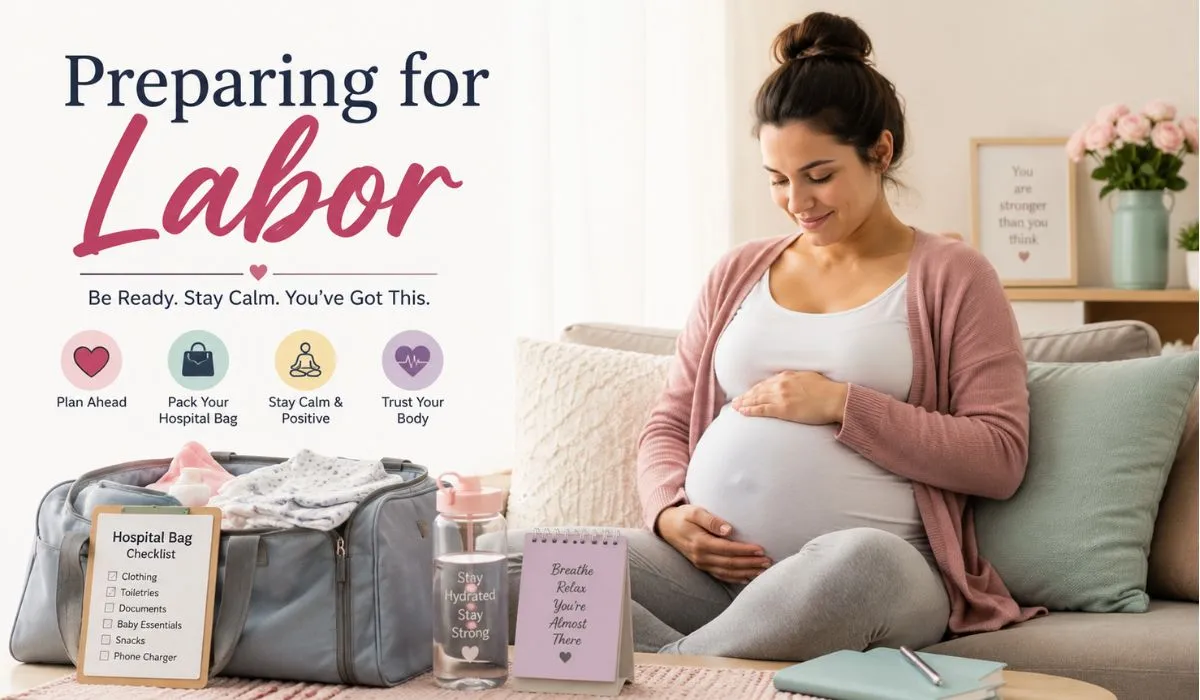
Somewhere around 35 to 36 weeks is a good time to have your hospital bag packed and by the door, because babies don’t always wait for your due date. Pack for yourself, your baby, and your partner: comfortable going-home clothes, toiletries, phone chargers, snacks, important documents, and anything that’ll make the hospital room feel a little more like home.
Alongside your bag, write out a simple birth plan. It doesn’t need to be a legal document, just a clear page covering your preferences for pain relief, who you want in the room, feeding plans, and any cultural or personal requests. Share it with your provider and your support person so everyone’s on the same page when the moment arrives.
This is one of those ways to prepare for labor that feels small but saves a lot of stress later, because you won’t be scrambling to remember your phone charger while you’re timing contractions.
5. Line Up Your Support System and Practice Relaxation Techniques
You genuinely cannot do labor entirely on your own, and you shouldn’t have to. Talk with your partner, doula, or family member about their role during labor: who’s driving you, who’s holding your hand, who’s advocating for you if you can’t speak up in the moment.
Alongside logistics, start practicing relaxation and breathing techniques now, not for the first time in the delivery room. Deep breathing, visualization, and even simple meditation apps can train your nervous system to stay calmer under stress. Some moms also find that practicing with their birthing ball or during a warm shower helps the techniques feel more natural when it counts.
Getting your support system and your calm-down toolkit ready together is one of the most reassuring ways to prepare for labor, because it means you won’t be facing the big day feeling alone or unprepared.
Common Mistakes to Avoid
- Waiting until 39 weeks to pack your bag or finish your birth plan
- Skipping childbirth classes because you think you’ll “figure it out”
- Ignoring pelvic floor and prenatal nutrition needs in these final weeks
- Not asking your provider directly what to do in the third trimester for normal delivery based on your specific health history
FAQs
When should I start preparing for labor?
Most experts suggest starting active preparation — classes, hospital bag, birth plan — around 32 to 35 weeks, though it’s never too early to start learning.
How can I prepare for labor if I’m scared?
Education helps the most. Understanding what’s actually happening in your body during each stage of labor reduces fear far more than avoiding the topic does.
What to do in the third trimester for normal delivery?
Stay active with pregnancy-safe movement, attend all prenatal appointments, practice relaxation techniques, and follow your provider’s guidance on positioning and nutrition.
Do I need a doula to prepare for labor?
No, but many moms find continuous support from a doula helpful for both physical comfort and emotional reassurance during labor.
 Emma Gill