
Yes — and if you’ve been eating half a sandwich and suddenly feeling done, you’re not imagining it. Getting full fast is one of those pregnancy symptoms nobody warns you about ahead of time. It usually shows up in the first trimester, it’s driven by hormones rather than anything you’re doing wrong, and for most people it eases up as things go on.
Why It Happens
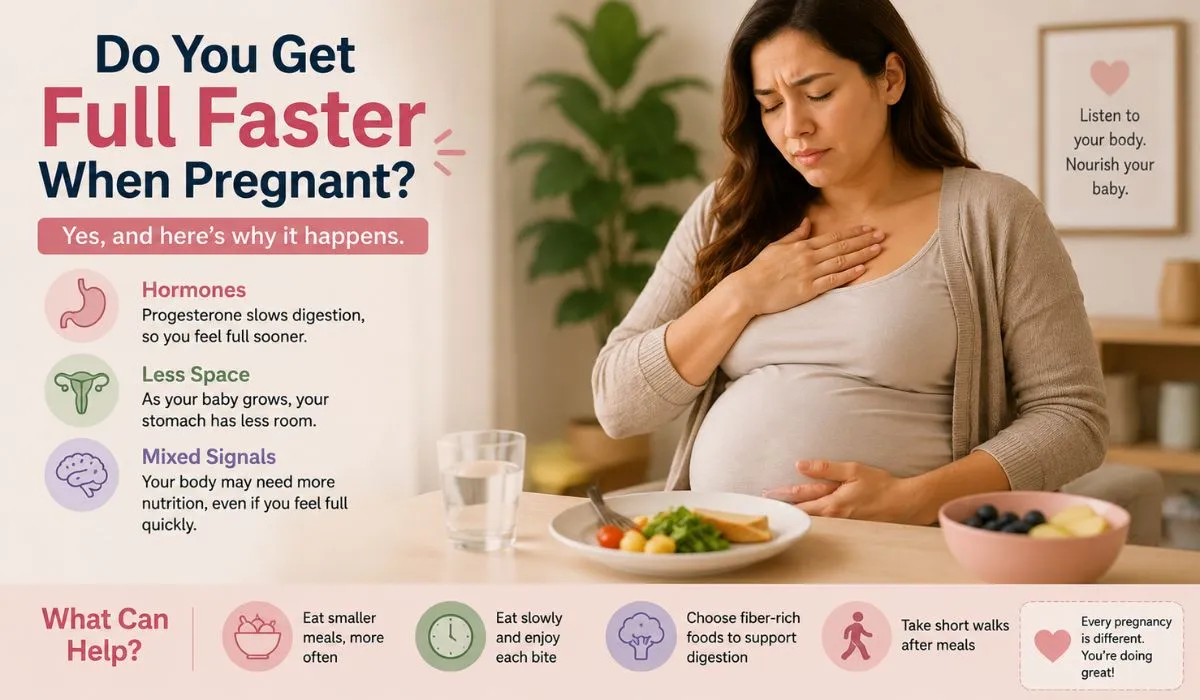
Blame progesterone. Levels shoot up once you’re pregnant, and by the first trimester they can be running around 40 times higher than usual. One of this hormone’s main jobs is relaxing smooth muscle everywhere in the body, including the muscle that moves food through your gut. Digestion slows way down. Food just sits there longer than it used to, so you hit “full” sooner, often with bloating or gas tagging along.
Later on, a second thing kicks in. As the baby grows and the uterus takes up more room, there’s literally less space for your stomach to expand into. So even if your appetite is completely normal, fullness arrives earlier because there’s nowhere for a big meal to go.
Why It Can Feel Backwards
Here’s the confusing part: a lot of women are hungry and full at the same time. Your body wants more food to keep the pregnancy going, but your slower digestion is telling you you’re done before you’ve actually eaten enough. Wanting to eat and physically not being able to finish what’s on your plate — that combination is more common than you’d think. It doesn’t mean anything’s wrong.
What Actually Helps
Smaller meals, more often, work better than three big ones. Think five or six mini-meals spread through the day instead. That gives your slower system less to deal with at once, so you can still get enough food in without the uncomfortable, overstuffed feeling.
Slow down when you eat, too. It sounds small, but rushing doesn’t give your body time to catch up with what’s actually in your stomach, and that tends to make the sudden “I’m stuffed” feeling worse.
Fiber deserves some attention as well, since progesterone’s slowing effect on digestion often brings constipation along with it, and the two problems make each other worse. Vegetables, whole grains, fruit — these help keep things moving. Just don’t load up on fiber all at once, or you’ll trade fullness for gas.
A short walk after meals can help too, if your provider’s given you the okay for light activity.
When It’s More Than Normal Fullness
Feeling full fast now and then is completely expected. It’s worth calling your provider if you consistently can’t eat enough to feel satisfied, if you’re losing weight instead of gaining it, or if the fullness shows up with severe pain or vomiting that won’t quit. Those combinations aren’t the norm, and they’re worth a real look rather than something to just manage at home.
The Bottom Line
Getting full fast is a genuinely normal, hormone-driven part of early pregnancy for a lot of women, and it tends to settle down as your body adjusts. Smaller meals, eating slower, steady fiber, and a bit of movement are what make the day-to-day of it easier. You’re not aiming for a full plate — you’re aiming for enough food, in amounts your stomach can actually handle right now.
 Alona Smith