

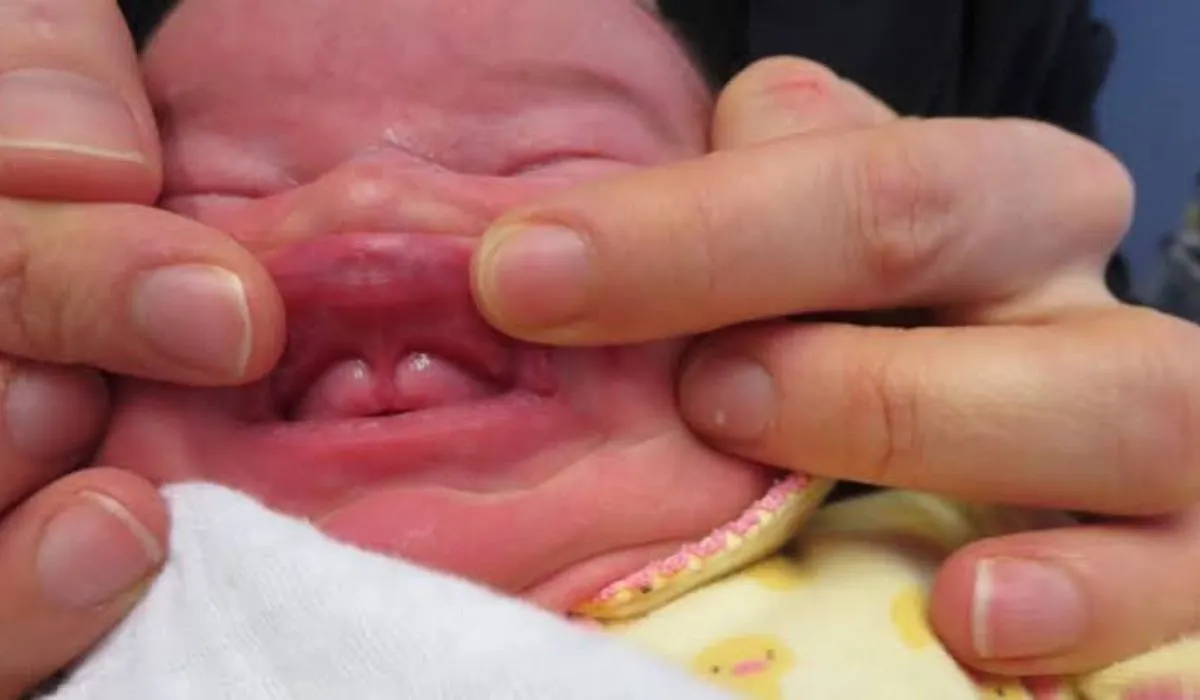
You’re three weeks into this whole motherhood thing, and nursing still feels like it shouldn’t be this hard. Your baby latches, then loses it. There’s a clicking sound. Feeds drag on forever and somehow your baby is still fussy afterward. If any of that sounds familiar, there’s a decent chance you’re dealing with a lip tie, and honestly, you’re not imagining things.
Table of Contents
Here’s the short version: a lip tie is when the little band of tissue connecting your baby’s upper lip to their gums (called the labial frenulum, if you want the technical name) is tighter or thicker than it’s supposed to be. That tightness stops the lip from flaring outward the way it needs to during a feed, and that’s usually where everything starts to go sideways.
Nobody really tells you about this before baby arrives. It’s not exactly dinner-table conversation. But it’s more common than people realize, and once you know the signs, it clicks into place pretty fast (pun sort of intended). So let’s get into it, what it actually looks like, how to spot it, and what to do if you think this is you.
What’s Actually Going On With a Lip Tie
Every single baby is born with that little strip of tissue linking the upper lip to the gum line. Most of the time, it’s thin, stretchy, and totally forgettable. But in some babies, it’s thicker or attaches lower than it should, and that restriction is what we’re calling a lip tie.
One thing worth knowing: lip ties rarely show up alone. Since they come from the same kind of tight tissue as a tongue tie, a lot of babies end up with both. So if something feels off with feeding, it’s worth asking your provider to check the tongue too while they’re at it.
The Signs That Usually Tip Moms Off
Feeding is where this shows up first, because that’s the moment your baby really needs that lip to move freely. Here’s what a lot of moms notice.
The latch just never feels right. You might see your baby’s upper lip curling inward instead of flanging out like it should, and no amount of repositioning seems to fix it. Then there’s that clicking sound during feeds, which honestly a lot of moms describe as one of the first things that tipped them off. It usually means the latch keeps breaking and your baby is re-latching over and over, which is exhausting for both of you.
Feeds that stretch on forever are another big one. If you’re nursing for 45 minutes to an hour and your baby still acts hungry right after, they’re probably working really hard without actually getting much milk. You might also notice milk leaking out of the corners of their mouth mid-feed, because a shallow latch just doesn’t seal the way it should.
Gas, fussiness, and reflux-like symptoms tend to tag along too, since babies with lip ties swallow more air while they’re struggling to feed. Some babies even get a little pale callus or blister on the upper lip from rubbing against that tight tissue over and over.
And then there’s weight gain. When feeding isn’t efficient, milk transfer suffers, and some babies with an untreated lip tie start falling behind on the growth chart, even though they’re basically attached to you around the clock.
If you’re breastfeeding, please don’t ignore your own pain either. Cracked, bleeding, seriously sore nipples, even when you feel like your latch technique is fine, that’s often your body telling you something on baby’s end isn’t working right.
Does Every Lip Tie Actually Need to Be Treated?
Not necessarily, and this part matters. Plenty of babies have a slightly tight labial frenulum and nurse just fine, no drama at all. What really matters isn’t how the tie looks, it’s whether it’s actually causing problems with feeding, your comfort, or weight gain. That’s why an in-person feeding evaluation tells you so much more than someone just glancing into your baby’s mouth for a second.
What To Do If This Sounds Like Your Baby
If you’re reading this nodding along, the next move is getting your baby seen by a pediatrician, an IBCLC lactation consultant, or a pediatric dentist who actually specializes in tongue and lip ties. Ask them to watch an actual feed instead of just examining the mouth, because that’s where the real answers are.
Depending on how significant the tie is, treatment might just mean lactation support and trying new positions. Or it could mean a quick in-office procedure called a frenotomy, where they release the tight tissue. It sounds scarier than it is, and for a lot of families, it makes a huge difference almost right away.
A Few Things That Might Actually Help
Before your appointment, try jotting down a rough feeding log for a few days, how long feeds take, whether you’re hearing that clicking sound, how your baby seems afterward. It gives your provider way more to work with than just “something feels off.”
It’s also worth playing around with positioning. Some moms swear by a laid-back nursing position or a football hold, since it takes some of the pressure off that tight tissue. And seriously, don’t just push through nipple pain because you think that’s normal. It’s not something you have to grit your teeth through.
A mistake a lot of moms make, totally understandably, is waiting it out because “all babies click and fuss sometimes.” But if feeding pain or slow weight gain is still hanging around past the first couple of weeks, that’s your sign to get it looked at instead of hoping it fixes itself.
Questions Moms Ask a Lot
Will a lip tie just resolve on its own?
Not really, no. The tissue doesn’t loosen up over time on its own. Some mild cases just never cause enough of an issue to matter, but the tie itself sticks around unless it’s actually treated.
Does this only mess with breastfeeding, or bottles too?
Both, actually. People talk about it mostly in the context of nursing, but bottle-fed babies with a significant lip tie can show the same clicking, air-gulping, milk-leaking pattern.
Do I have to do surgery?
Nope, not always. A lot of families manage it just fine with lactation support and different positioning. A frenotomy usually only comes up when the tie is clearly getting in the way of feeding.
Could this turn into a dental issue later?
For some kids, yeah. An untreated lip tie can sometimes contribute to a gap between the front teeth or make brushing harder down the line, which is why some providers keep an eye on it as your child grows.
How is this different from a tongue tie?
A lip tie limits how the upper lip moves. A tongue tie limits the tongue. Some babies have just one, some have both, and they each show up a little differently at feeding time.
 Emma Gill